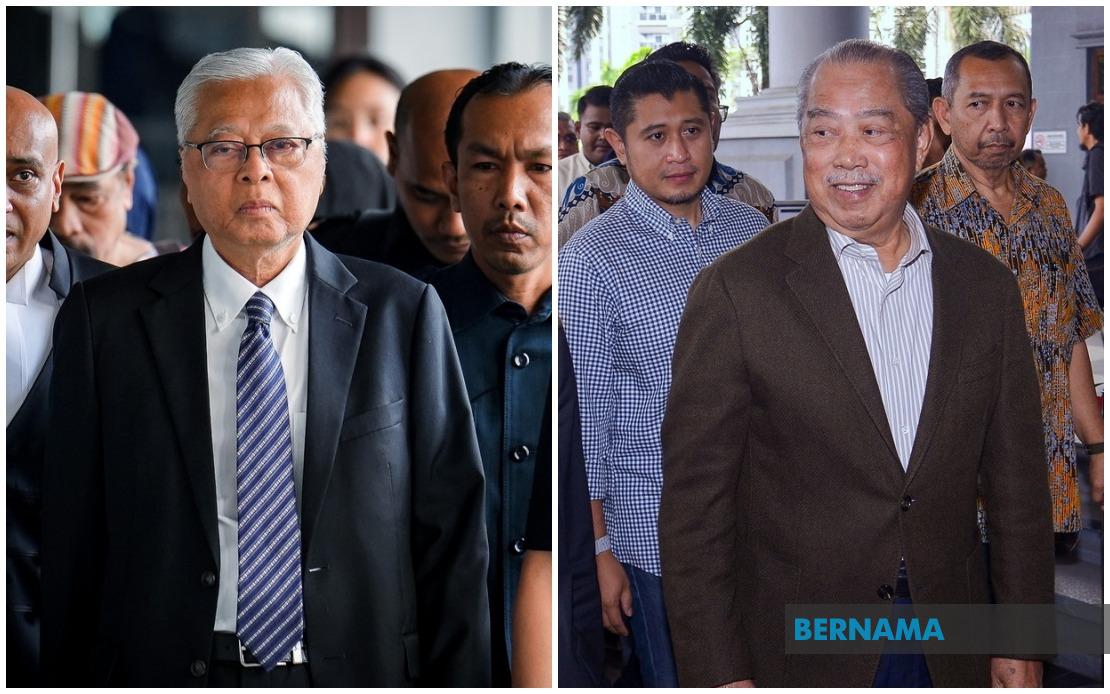
Malaysia's political and judicial landscape reached an extraordinary crossroads on Tuesday when three former prime ministers convened at the Kuala Lumpur Court Complex at the same time for separate legal proceedings. The convergence of Datuk Seri Najib Tun Razak, Tan Sri Muhyiddin Yassin and Datuk Seri Ismail Sabri Yaakob—all former heads of government now entangled in distinct court cases—created a singular moment in the nation's contemporary history that few observers anticipated would ever materialise.
For journalists covering the Malaysian legal beat, the occasion represented something genuinely unprecedented. Veteran court reporter V. Anbalagan of Free Malaysia Today reflected on the historical significance, noting that his decades of experience had never encompassed such a scenario. "This is a day in history," he remarked, emphasising that the simultaneous presence of three former premiers at a single court complex transcended typical news cycles and entered the realm of historic record. Such an occurrence, he suggested, may prove so rare that it could establish a benchmark unlikely to be surpassed in future Malaysian jurisprudence and political transitions.
The sheer rarity of the event extended beyond Malaysia's borders. Observers noted that even in comparable democracies elsewhere, such simultaneous judicial appearances by multiple former heads of state remain exceptionally unusual. The convergence underscores the complexity of Malaysia's recent political evolution, wherein successive changes in national leadership have generated overlapping legal challenges that span years and involve former administrations. Each former premier's presence reflected distinct legal battles rooted in different governance periods and separate allegations.
As dawn broke over the capital, the court grounds began filling with media personnel from 7 am onwards, creating an unusually congested press environment. Television crews, still photographers and print journalists positioned themselves strategically to capture the arrivals and departures of the three principals and their legal representatives. Bernama TV news officer Siti Zanariah Nor Zin, reflecting on her sixteen years in journalism, described the situation as extraordinarily rare, underscoring that her entire professional career had not previously encountered such circumstances. The staggered arrivals of the former prime ministers and their accompanying legal teams, she noted, provided sufficient breathing room for media logistics, allowing her team to relay real-time updates to headquarters and maintain continuity of coverage.
The judicial proceedings themselves involved materially different matters. Najib attended hearings in a substantial USD5.64 billion civil lawsuit initiated by 1Malaysia Development Berhad (1MDB) and its subsidiary, with Judicial Commissioner Mohamad Redzuan Idrus presiding. Muhyiddin, by contrast, faced seven criminal charges related to alleged abuse of power and money laundering connected to the Jana Wibawa programme before Judge Noor Ruwena Md Nurdin. Ismail Sabri appeared before Judge Suzana Hussin on charges involving the non-declaration of assets, including RM14.7 million held in cash, multiple foreign currency deposits, and gold bars. The divergence of charges and judicial officers underscored how each case represented a distinct legal trajectory.
Security coordination proved instrumental in managing what could have descended into chaos. Police personnel deployed from Sentul district police headquarters, supplemented by court security officers and Palace of Justice police, maintained orderly conditions throughout the morning. Court officials, conducting thorough preparations from the preceding afternoon, established a carefully calibrated security framework designed to accommodate the extraordinary circumstances. Between three and six categories of security passes were distributed among different constituencies—members of the general public, accredited journalists attending open proceedings, and those requiring access to video-link facilities. This granular approach to credential management ensured that legitimate participants could function effectively whilst maintaining robust perimeter control.
Security officer Nik Zainab Jusoh highlighted the success of pre-event coordination, emphasising that a comprehensive briefing conducted the previous day ensured all personnel remained alert and adequately prepared for the substantial crowd anticipated. Monitoring resources concentrated on upper floors and courtroom adjacencies, areas where crowding posed the greatest risk, whilst ground-level operations proceeded with stability and composure. Journalist Amirul Aiman Osman of Utusan Malaysia, who had commenced his vigil from 7 am, acknowledged that whilst the atmosphere remained relatively crowded and hectic, the security apparatus functioned sufficiently to prevent any untoward incidents.
The controlled environment outside the court complex granted media representatives the capacity to monitor movements systematically throughout the day's proceedings. This orchestrated management prevented the scenario that initially concerned some correspondents—namely, that coverage of three simultaneous court appearances might overwhelm available journalistic resources and result in fragmented reporting. The staggered nature of arrivals and departures, combined with fixed courtroom schedules, allowed reporters to transit between different proceedings with reasonable efficiency.
Ismail Sabri departed the complex at 11.43 am following his posting of RM300,000 bail secured through one surety, representing the first of the three former leaders to exit the premises. His early departure reflected the procedural status of his charges and the court's bail determination. The day's unfolding illustrated the distinct temporal cadences of three parallel legal matters, each progressing according to its own judicial calendar and procedural requirements.
This convergence carries significance beyond mere novelty value. It reflects the accumulation of legal complexities inherited from recent political turbulence in Malaysia. The simultaneous judicial involvement of three recent prime ministers—spanning administrations from different electoral cycles and political configurations—illustrates the persistent legal legacies of governance transitions and the extended timeframes within which allegations, investigations and prosecutions can unfold. For Malaysian observers and regional watchers, the scene encapsulated a broader narrative concerning accountability mechanisms, the judiciary's independence, and the protracted process through which political transitions generate legal consequences.
The event also speaks to Malaysian media's capacity to manage logistically complex assignments and to historic record-keeping functions that journalism performs. The presence of experienced correspondents who had spent decades covering courts, combined with technological infrastructure permitting real-time dissemination, ensured that this singular moment received comprehensive documentation. Whether such a confluence ever recurs remains genuinely uncertain, lending weight to characterisations of this Tuesday as a watershed moment in Malaysian political and judicial annals.

