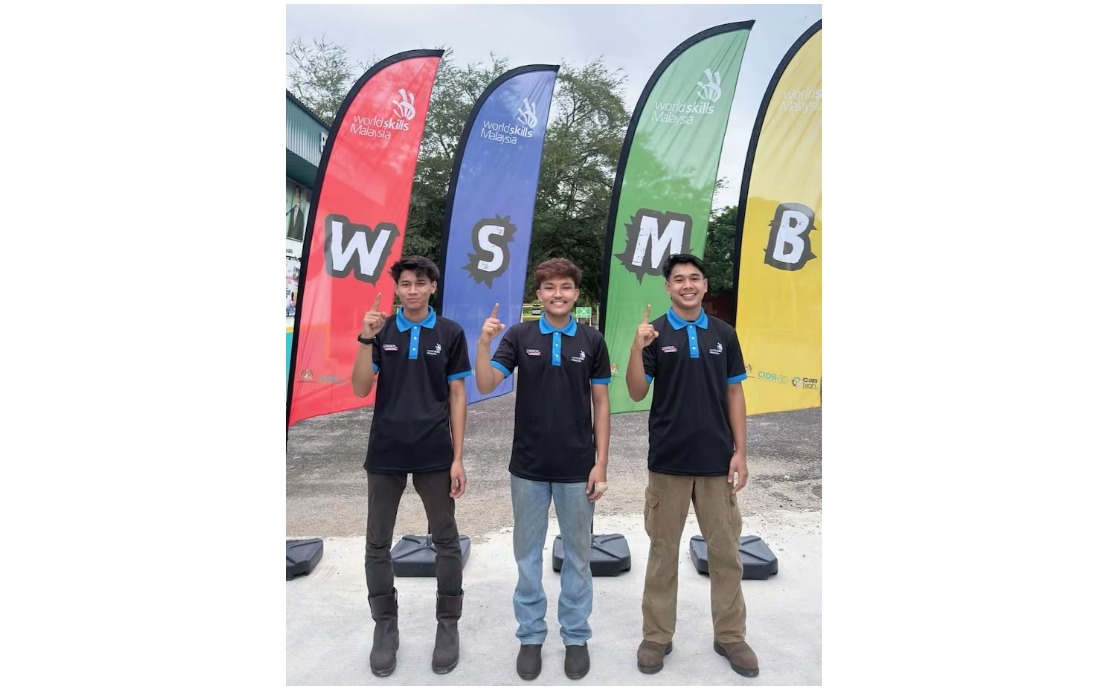
Three decades after its inception, WorldSkills Malaysia Belia (WSMB) remains a cornerstone of the nation's talent development strategy, consistently producing construction industry professionals equipped with skills meeting international standards. What began in 1990 as the Malaysian Skills Champion Competition—an initiative spearheaded by former Prime Minister Tun Dr Mahathir Mohamad—has evolved through several iterations, including its transformation into the Anugerah Tangan Emas Perdana Menteri from 1991 to 2006, followed by MySkills from 2007 to 2013, before adopting its current WSMB identity from 2014 onwards. This progression reflects the country's commitment to adapting skills development frameworks in response to changing industry demands and technological advancement.
The programme operates as a comprehensive pipeline designed not merely to identify exceptional performers but to cultivate an entire cohort of industry-ready professionals capable of meeting both domestic and international expectations. Successful WSMB champions progress into structured development pathways that prepare them for representation at WorldSkills international competitions, which serve as benchmarks for technical excellence globally. This dual-track approach—supporting both domestic workforce development and fostering international ambassadors for Malaysian technical capability—positions WSMB as a unique mechanism for demonstrating the nation's competitive advantage in skilled trades.
Delivery of WSMB programming occurs through strategically positioned training infrastructure, namely the Malaysian Construction Academy (ABM) and CIDB Technologies, both accredited by the Construction Industry Development Board and equipped with facilities meeting international operational standards. This institutional framework ensures that participants benefit from learning environments mirroring real-world conditions, bridging the traditional gap between classroom instruction and workplace application. According to Mohd Hafiz Dasahi, chief executive officer of CIDB Technologies, the programme transcends conventional competition formats by functioning as an incubator for the next generation of construction professionals capable of driving sectoral transformation. His perspective underscores how WSMB functions as strategic human capital investment, with contemporary talent development decisions directly influencing Malaysia's future competitive positioning in an increasingly technology-driven global construction marketplace.
The assessment methodology employed throughout WSMB evaluation encompasses far more than technical proficiency alone. Participants face rigorous evaluation across multiple dimensions including dimensional accuracy, workmanship quality, adherence to established procedures, temporal management, analytical problem-solving capabilities, and compliance with occupational health and safety frameworks. According to Zarulhakim Abdul Rahim, head of CIDB Technologies Welding operations, this multifaceted approach simultaneously cultivates non-technical competencies including self-confidence, discipline, resilience, and a mindset oriented toward continuous improvement. Exposure to contemporary technologies and international operational standards through WSMB participation fundamentally reshapes participants' preparedness for employment, equipping them with frameworks enabling adaptation to evolving workplace conditions and technological environments.
From an industry perspective, WSMB functions as a critical labour supply mechanism for sectors extending well beyond construction. The competition generates workforce capabilities demanded across construction, manufacturing, oil and gas operations, energy infrastructure, and maritime industries, each characterised by increasingly sophisticated technical requirements. Zarulhakim emphasised how WSMB strengthens institutional linkages between training providers and industry stakeholders, ensuring training content remains genuinely responsive to technological evolution and market requirements rather than becoming stalled in outdated pedagogical approaches. This alignment between educational provision and industry need represents a fundamental distinction separating WSMB from conventional vocational training, as the programme inherently embeds continuous feedback mechanisms ensuring relevance.
Private sector engagement constitutes an essential dimension of WSMB's effectiveness. Companies such as Lincoln Energy and Vinxus Mark, operating within the welding technology sector, actively contribute equipment, consumables, and technical expertise throughout competition cycles. Putra Faisal Ashraf Idris, representing these commercial participants as a sales engineer specialising in welding technology, articulated how industry contributors recognise their collective responsibility in developing emerging talent pipelines. By providing authentic equipment and operational conditions throughout the competition, sponsoring companies ensure participants develop proficiencies transferable directly to employment contexts, simultaneously enabling commercial entities to identify potential recruits already demonstrated to possess both technical aptitude and competitive drive.
Participant narratives reveal how WSMB functions as a transformative developmental experience extending beyond technical skill acquisition. Ahmad Syafie Dasuki, twenty years old and from Tumpat, Kelantan, brought pre-existing practical experience from nearly two years of workshop employment in Terengganu to his WSMB participation, demonstrating how the programme serves as an accelerator enabling practitioners to advance beyond foundational competencies. His engagement with contemporary technology and systematic skill refinement through WSMB created trajectory alignment between his personal aspirations and genuine industry requirements, exemplifying the programme's capacity to validate career pathways while simultaneously enhancing technical capability. The competition's emphasis on actual industry applications resonated strongly with his professional objectives, suggesting WSMB successfully operates as an authenticity mechanism connecting aspiration with operational reality.
Muhammad Fazran Md Rashid @ Yusoff, aged twenty-one and currently employed by a welding company in Kedah, similarly articulated how WSMB participation transformed his professional development calculus. Beyond technical skill enhancement, he identified psychological and professional attributes—self-confidence, discipline, resilience, and achievement orientation—as competition outcomes equally valuable as measurable technical progress. His commitment to deepening welding expertise while establishing himself as a skilled, experienced operator reflects how WSMB participants internalise competitive frameworks encouraging perpetual improvement rather than satisfaction with baseline competency. This mindset cultivation represents perhaps the programme's most significant long-term contribution, as adaptive, improvement-oriented professionals generate substantially greater organisational value than technically proficient practitioners lacking growth orientation.
Mohd Sahmi Irfan Sulaimi, twenty years old from Setiu, Terengganu, actively promoted WSMB participation to his peers, emphasising how the competition simultaneously delivers immediate skill advancement and longer-term career architecture benefits. His advocacy highlighted how WSMB creates professional networks spanning trainers, industry experts, and peer participants, generating social capital extending well beyond the competition period itself. He particularly stressed how competition experience, confidence development, and professional relationship formation collectively position participants advantageously for sustained career progression. His encouragement that prospective participants view challenges as learning opportunities rather than obstacles suggests WSMB cultivates not merely technical capacity but psychological resilience enabling professionals to navigate evolving workplace demands throughout their careers.
The sustainability of WSMB's impact partly derives from its explicit connection to international standards and global competition structures. By positioning domestic champions for WorldSkills participation, WSMB ensures Malaysian technical professionals maintain awareness of global best practices and competitive benchmarks. This international orientation prevents skills development from calcifying around local conditions, instead maintaining dynamic engagement with worldwide technological advancement and methodological innovation. For Southeast Asia broadly, Malaysia's investment in structured skills development through WSMB creates demonstration effects, illustrating pathways through which other regional economies might systematically develop technical workforces capable of competing globally rather than remaining confined to domestic or regional labour markets.
The evolution from Tun Dr Mahathir Mohamad's original 1990 vision through successive rebranding iterations reflects Malaysia's recognition that talent development frameworks require periodic reinvention maintaining responsiveness to industrial transformation. Contemporary WSMB operates within contexts where artificial intelligence, advanced manufacturing technologies, and digital integration penetrate even traditionally craft-based trades. The programme's emphasis on latest technology exposure, international standards familiarity, and problem-solving capability development positions it advantageously for this evolving landscape. Rather than treating skills development as fixed curriculum transmission, WSMB operates as adaptive systems ensuring Malaysian construction and related industry professionals maintain competitive capability as technological frontiers advance.
Looking forward, WSMB's continued relevance depends upon maintaining institutional agility enabling rapid curriculum adaptation to technological change while preserving emphasis on human-centred professional qualities—resilience, ethical standards, collaborative capability—that technology cannot readily replicate. The programme's track record across three and a half decades suggests Malaysian policymakers and industry stakeholders have successfully constructed mechanisms enabling this balance. Participant testimonies reveal genuine enthusiasm for technical mastery coupled with awareness that sustainable careers require continuous learning, professional network cultivation, and psychological adaptability. As Malaysia positions itself within increasingly sophisticated value chains requiring advanced technical capacity, WSMB remains positioned as strategic infrastructure ensuring the nation develops talent equal to these evolving requirements.

