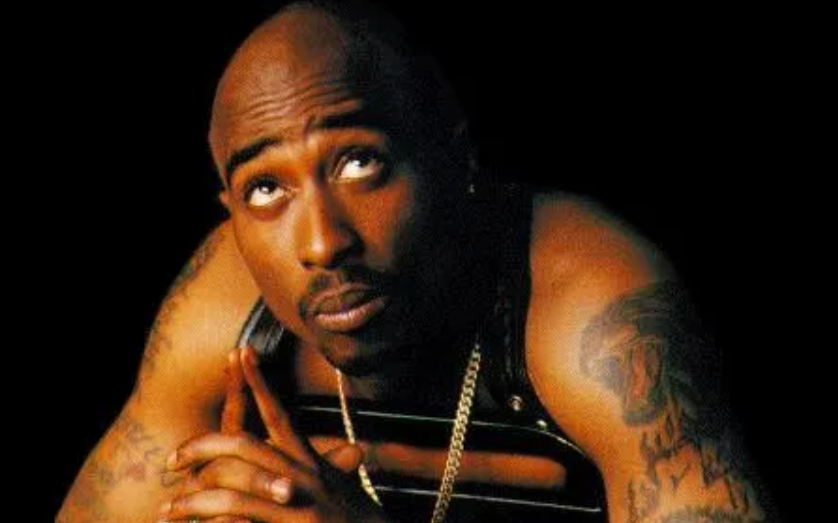
The trial of Duane "Keffe D" Davis, a former South Side Compton Crips leader, opened this week with jury selection, marking the first time anyone has faced trial for the 1996 murder of hip-hop icon Tupac Shakur. The case, which has captivated music fans and true crime enthusiasts for three decades, centres on the September 7 killing that occurred while Shakur attended a Mike Tyson boxing match in Las Vegas. Davis, now 63, faces life imprisonment without parole if convicted of orchestrating what became America's most celebrated unresolved homicide.
Prosecutors intend to build their case around a straightforward narrative: Davis, acting as leader of the South Side Compton Crips, ordered Shakur's assassination and supplied the weapon used in a fatal drive-by shooting. The trial is projected to consume approximately one month, though legal observers note that the proceedings may not definitively establish who pulled the trigger on the night in question. That crucial detail has eluded investigators for thirty years, driving countless theories and speculations within hip-hop communities worldwide.
The Shakur killing emerged from one of popular music's most bitter rivalries—the legendary East Coast versus West Coast hip-hop feud of the mid-1990s. Shakur, who recorded under the stage name 2Pac, was a central figure in this conflict, aligned with Death Row Records, the West Coast powerhouse founded and controlled by Marion "Suge" Knight. His rivals operated from Bad Boy Records on the East Coast, a label anchored by Sean "Diddy" Combs and featuring the late Christopher "The Notorious B.I.G." Wallace. The Notorious B.I.G. himself was murdered just months after Shakur's death in March 1997, creating a tragedy that fundamentally altered hip-hop's trajectory and left deep scars across the industry.
The immediate circumstances leading to Shakur's death involved a confrontation at the MGM Grand casino. According to prosecutors, after the Tyson fight concluded, Knight and Shakur attacked Orlando "Baby Lane" Anderson, Davis's nephew and a Crips member, in retaliation for an alleged earlier assault on a Death Row Records employee. This incident, prosecutors argue, sparked Davis's desire for vengeance and set the stage for the subsequent violence. The assault created a personal motive that transcended the larger label rivalry, transforming a business conflict into a matter of street honour and family retaliation.
The trajectory from unsolved mystery to courtroom proceeding took an unexpected turn through Davis's own memoir, published in 2019. Within those pages, Davis acknowledged his presence in the white Cadillac from which shots were fired at Shakur's vehicle. He admitted to handing a pistol to occupants seated behind him, placing himself directly within the scene of the shooting. However, Davis deliberately refrained from identifying who actually fired the fatal shots. The timing of his confession proved significant—everyone else who occupied that Cadillac on the night of the murder has since died, leaving Davis as the sole surviving witness to the event.
Davis's voluntary disclosures in his memoirs aligned with earlier statements he had provided to journalists and law enforcement, creating a consistent record of his involvement dating back to a 2008 police interview conducted while he was treated as a witness rather than a suspect. The accumulated weight of these admissions, combined with renewed interest in cold cases and the development of new investigative techniques, ultimately led to his arrest in September 2023—nearly a quarter-century after the original crime.
Yet Davis now strenuously contests his earlier accounts. In a March 2025 interview conducted from prison with ABC News, he declared his complete innocence, stating simply, "I'm innocent. I ain't killed nobody. Never did ever kill nobody." He has pleaded not guilty and completely reversed course on the substance of his memoir, claiming he was actually in Los Angeles on the night of Shakur's death and that he has never even read the book bearing his name. Davis now suggests his co-author fabricated details and embellished his life story to boost commercial sales, fundamentally undermining the memoir's credibility as a source of truth.
Before the trial commenced, Davis's legal team mounted vigorous efforts to exclude both the memoir and his 2008 police interview from evidence presented to jurors. These motions failed, meaning prosecutors will likely rely heavily on Davis's own words to establish his proximity to the crime scene and his willingness to participate in or facilitate violence. The admissibility of the memoir creates a peculiar dynamic: the defendant's best-selling account of events now serves as a primary weapon in the state's arsenal against him, turning his attempt to profit from his story into potential legal jeopardy.
The Shakur homicide transcended ordinary criminal investigation from its inception because of the victim's cultural significance. Tupac was not merely a successful recording artist; he was a transformative figure in hip-hop who influenced generations of musicians, and his death at age 25 occurred during the genre's most commercially explosive period. The killing generated an ecosystem of speculation, from amateur investigators dissecting evidence on social media to professional documentary filmmakers exploring competing theories about the shooter's identity.
Shakur's family has made clear that the criminal trial represents only partial justice. In May, the rapper's stepbrother Maurice Shakur filed a civil wrongful death lawsuit, contending that multiple individuals involved in the murder remain unaccountable after thirty years. The complaint references recent documentary investigations that have explored alternative narratives and potential accomplices beyond Davis. This legal action signals that even if Davis faces conviction, questions about the complete truth of what occurred in Las Vegas that September night may persist indefinitely.
For Southeast Asian audiences, this trial offers a window into American criminal justice procedures and the lasting impact of violent crime on cultural narratives. The case also illustrates how celebrity status can paradoxically both attract intense scrutiny and enable extended evasion of accountability. The three-decade delay between crime and trial reflects systemic challenges in solving complex cases involving gang networks and witnesses unwilling to cooperate with authorities. As jury selection proceeds, the question of whether three decades of elapsed time and cultural memory can still yield a meaningful verdict in a courtroom remains unresolved.

