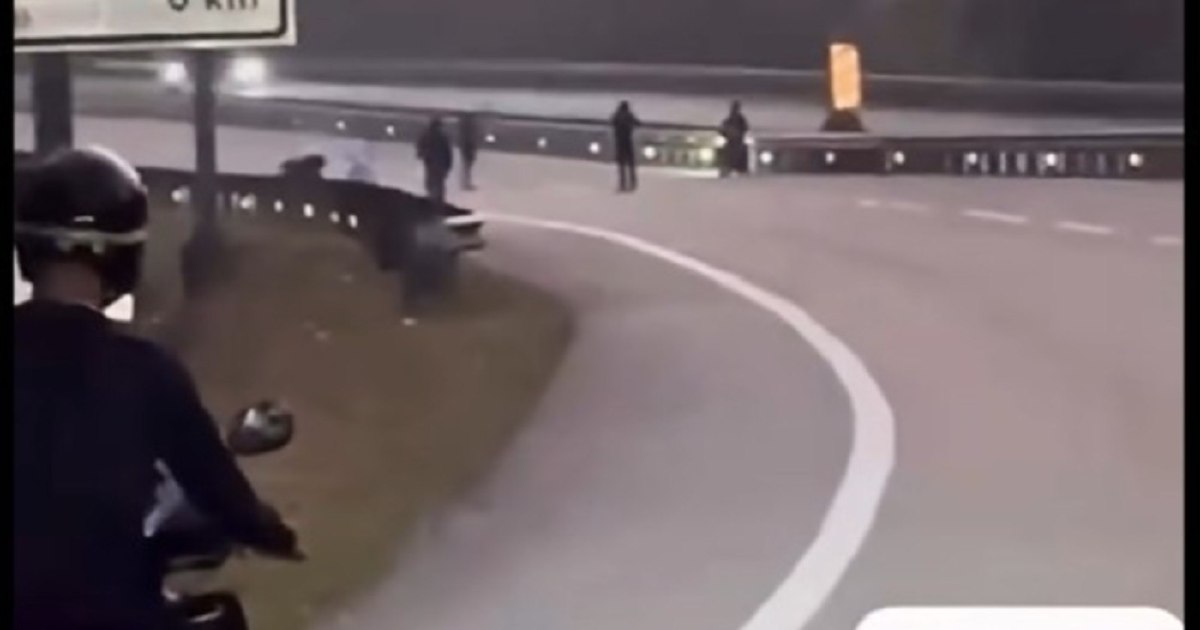
Authorities have expanded their investigation into a high-profile illegal racing incident on the Second Link by detaining three additional suspects in Kuala Lumpur. The arrests centre on a widely circulated video that purportedly shows a group of motorcyclists deliberately obstructing the busy highway corridor to facilitate an unauthorised racing event. This marks an escalation in police action against the organisers and participants of an incident that triggered significant public concern about road safety and lawlessness on one of Malaysia's most critical transport arteries.
The Second Link, which connects Johor to Singapore, serves as a vital economic and transport corridor handling thousands of vehicles daily. The alleged closure of sections of this highway for an illegal motorsport event represents not merely a traffic disruption but a serious breach of public order with potentially severe ramifications for legitimate commerce and commuter access between the two nations. The viral nature of the footage suggested widespread participation and raised troubling questions about the level of coordination required to execute such an operation in broad daylight.
The investigation has progressively widened as authorities piece together the network of individuals involved in planning and executing the illegal race. By apprehending suspects in Kuala Lumpur, police indicate that the conspiracy extended beyond Johor, suggesting participants and organisers travelled across state lines to participate in or facilitate the event. This geographic spread complicates the investigation whilst simultaneously highlighting how social media and digital communication have enabled spontaneous assembly for purposes that violate traffic laws and endanger public safety.
Motorcycle racing communities have long operated in the shadows of Malaysian society, with informal track events occasionally escalating into public road incidents that capture viral attention. Such occurrences create acute tensions between enforcement authorities seeking to suppress illegal activities and segments of enthusiast communities that view these gatherings as cultural expression. The Second Link incident exemplifies how modern digital dissemination transforms localised transgressions into nationwide talking points that demand official response and regulatory scrutiny.
The decision to block an interstate highway corridor represents an exceptionally brazen manifestation of this phenomenon. Unlike clandestine racing events staged in industrial areas or secondary roads, the Second Link strategy involved deliberate obstruction of critical infrastructure during operational hours. This aggravates the legal violations involved, potentially triggering charges related to not merely illegal racing but also unlawful obstruction of a federal highway, endangering public safety, and conspiring to disrupt essential transport linkages.
Police methodologies for addressing such incidents have evolved considerably, with officers now leveraging social media surveillance, video analysis, and digital forensics to identify participants from viral footage. The progressive nature of arrests—beginning with initial detentions and subsequently expanding to additional suspects—suggests investigators are systematically working through networks of coordination, likely identifying organisers, lookouts, and participants through communication records and witness statements. Digital evidence preservation has become as critical as traditional investigative techniques.
For Malaysian commuters and logistics operators, the incident underscores vulnerabilities within highway security protocols and response mechanisms. The ability of a determined group to temporarily commandeer a major transport artery raises questions about surveillance systems, rapid police deployment capabilities, and preventative intelligence gathering. Questions naturally arise regarding how such coordination escaped early detection and what procedural gaps might exist in monitoring suspicious activity on federal highways.
The expansion of arrests to Kuala Lumpur also reflects the increasingly interconnected nature of street motorcycle culture across the Klang Valley and southern regions. Participants often traverse multiple jurisdictions, participating in organised but illegal events that operate through encrypted messaging applications and social media platforms. Law enforcement agencies must now coordinate across state boundaries, sharing intelligence and coordinating simultaneous operations to dismantles these networks effectively.
The broader context involves Malaysia's persistent challenge with enforcement against organised illegal racing. Despite periodic crackdowns and media campaigns, the cultural appeal of high-speed motorcycle gatherings sustains demand among younger participants seeking thrills and community affiliation. The Second Link incident suggests that certain groups have escalated tactics from simple speed violations to territorial claims over significant public infrastructure, representing a qualitative shift in the nature of infractions and requiring correspondingly enhanced enforcement responses.
For Singapore and Malaysian bilateral relations, highway safety and unobstructed cross-border movement remain economically important shared concerns. Incidents that jeopardise the Second Link's operational integrity potentially strain cooperation frameworks and invite regulatory scrutiny from both jurisdictions. Authorities in both nations maintain vested interests in ensuring seamless traffic flow across the crossing.
Looking forward, the arrests signal authorities' determination to pursue participants comprehensively and deter similar incidents through meaningful prosecutorial action. The police emphasis on expanding detentions across state lines demonstrates commitment to dissolving these informal networks rather than addressing symptoms through isolated enforcement. Completed investigations will likely produce court proceedings with penalties sufficient to discourage future coordination of illegal highway racing events.
The incident ultimately illustrates contemporary urban law enforcement challenges where traditional policing confronts digitally enabled communities capable of rapid mobilisation. Effective responses require sophisticated evidence gathering, multi-jurisdictional coordination, and understanding the social dynamics sustaining participation. Only through sustained, systematic enforcement can authorities disrupt the operational continuity these groups depend upon.

