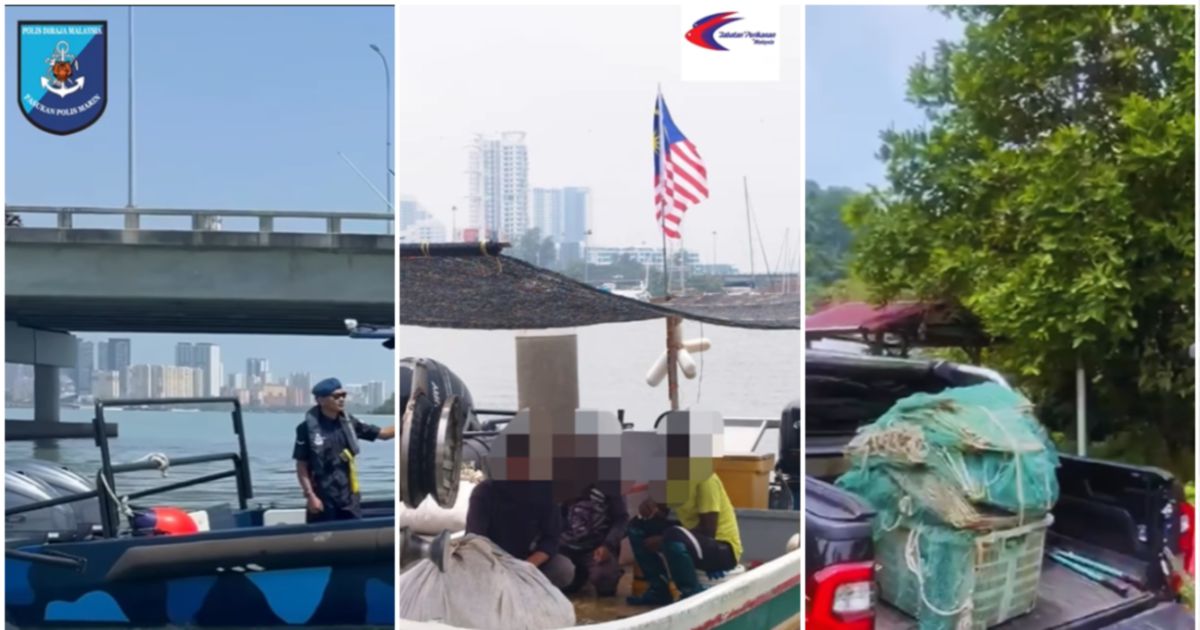
A coordinated crackdown in Penang waters has netted three individuals accused of illicit fishing activities, culminating in the seizure of equipment and a vessel collectively valued at RM75,360. The operation, carried out by multiple enforcement agencies working in tandem yesterday, marks the latest in an intensifying campaign to combat unlicensed and illegal fishing operations that continue to plague Malaysian maritime zones.
The arrests underscore the persistent challenges facing Penang's marine regulatory authorities as they seek to manage fishing activities across busy commercial and residential waterways. Illegal fishing not only threatens legitimate fishermen's livelihoods but also depletes local fish stocks, disrupts ecosystem balance, and undermines the authority of local maritime law. The three detainees now face investigation to determine the full scope and duration of their alleged violations.
The seizure of substantial fishing assets—including both equipment and a working vessel—suggests coordinated law enforcement targeting operations of notable scale rather than isolated incidents. The combined valuation of RM75,360 indicates sophisticated operations that would warrant significant enforcement attention. Authorities in George Town are likely examining whether the detained individuals operated as part of a broader network engaging in systematic illegal harvesting.
Penang's position as a major maritime hub places particular enforcement pressure on state authorities. The waterway serves as a crucial shipping corridor, fishing ground, and tourism destination, creating competing demands on limited enforcement resources. Joint operations between multiple agencies, as demonstrated in this case, represent an attempt to maximize impact despite budgetary constraints that frequently limit individual agency patrols and monitoring capacity.
The illegal fishing phenomenon extends beyond simple regulatory violation into broader concerns about food security and sustainable resource management. Southeast Asia's fishing stocks face mounting pressure from overharvesting, with Malaysia's fisheries sector increasingly reliant on stock replenishment and conservation measures. Unauthorized fishing operations circumvent quotas and closed-season restrictions specifically designed to maintain long-term sustainability.
These enforcement operations carry particular significance for small-scale and artisanal fishermen who depend on regulated access to local waters. When large unauthorized operators deplete stocks unchecked, traditional fishing communities bear the economic consequences through reduced catches and declining incomes. Coastal states like Penang therefore face dual obligations: protecting marine resources while safeguarding dependent fishing populations.
The coordination demonstrated in this joint operation reflects evolving approaches to maritime law enforcement in Malaysian waters. Rather than operating independently, agencies increasingly pool resources and intelligence to create more effective deterrence. Such cooperation allows authorities to respond rapidly to reported violations and maintain higher visibility across territorial waters, signaling to potential offenders that enforcement risk has genuinely increased.
The investigation phase will prove crucial in determining whether prosecution will target the three individuals for simple equipment violations or more serious charges relating to systematic illegal harvesting. Prosecutors and investigators will examine vessel registration documents, equipment licensing, catch records if any, and any connection to larger organized operations. The evidence gathered may influence sentencing recommendations and signal enforcement priorities to maritime communities.
For Malaysian fisheries policy more broadly, the seizure reflects ongoing tension between open-ocean access traditions and modern conservation imperatives. Regional cooperation on fishing regulation remains imperfect, with some neighboring jurisdictions maintaining inconsistent enforcement standards. This creates opportunities for violations to occur in contested or inadequately patrolled zones, complicating Malaysian authorities' efforts to maintain domestic stock sustainability.
The detained men face an uncertain legal process that will likely consume months of investigation and potential prosecution. Convicted violators in Malaysia typically face substantial fines and possible imprisonment, though sentences vary depending on violation severity and offender history. First-time offenders caught with valuable equipment often negotiate settlements, while repeat offenders face harsher judicial responses.
Looking forward, enforcement agencies will need to sustain operational momentum to achieve meaningful deterrence. Single seizures, however valuable, rarely eliminate illegal fishing without consistent follow-up. Building public awareness among fishing communities about enforcement intensification, combined with selective prosecution of major violators, creates the conditions where legal compliance becomes more attractive than circumvention.
The operation also highlights Penang's vulnerability to maritime crime more broadly. Busy waterways with numerous entry and exit points present enforcement challenges that extend beyond simple fishing violations to human trafficking, drug smuggling, and other transnational crimes. Enhanced maritime surveillance benefits multiple enforcement objectives simultaneously, justifying continued investment in joint agency operations and modern monitoring technology.

