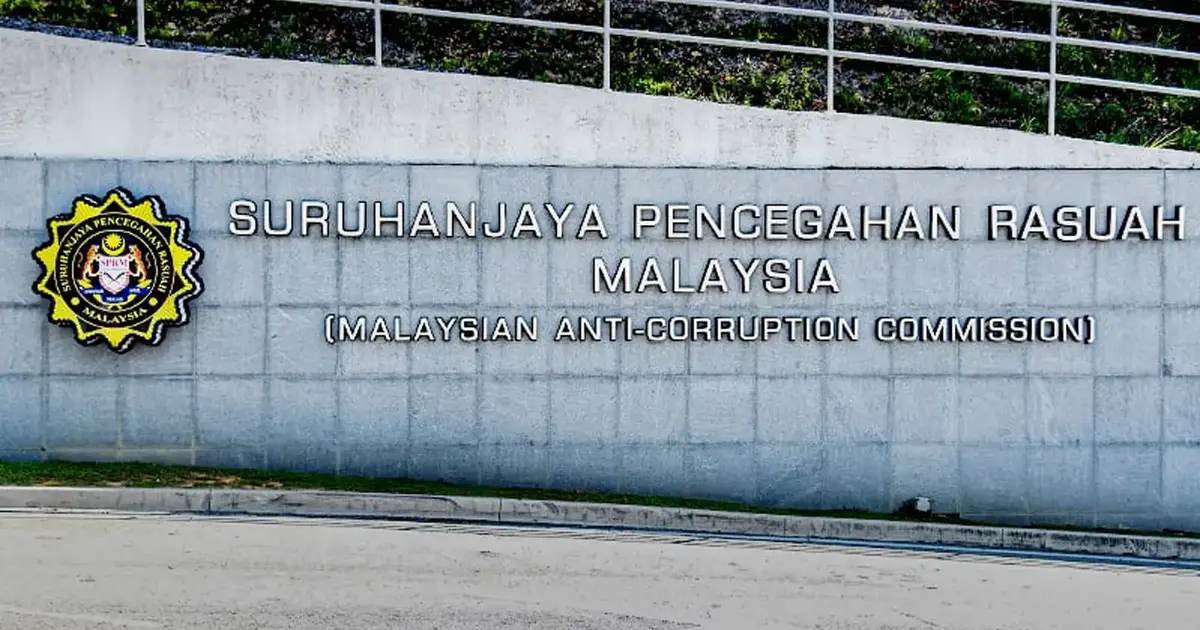
The Malaysian Anti-Corruption Commission has lined up thirteen company owners for court proceedings tomorrow following an investigation that uncovered irregularities connected to the government's Daya Kerjaya 2.0 employment programme. The move represents a significant escalation in enforcement efforts targeting what officials have identified as compliance breaches within a flagship national initiative designed to support job creation and skills development across the country.
Daya Kerjaya 2.0, a comprehensive workforce development programme, represents a substantial government investment aimed at equipping Malaysian workers with contemporary skills and facilitating employment opportunities in an evolving economic landscape. The scheme has been positioned as critical infrastructure for Malaysia's ambitions to maintain competitiveness within the Southeast Asian region and beyond. When irregularities emerge within such programmes, they undermine not only the integrity of government initiatives but also erode public confidence in institutional mechanisms designed to support economic participation and opportunity.
The MACC's investigation has methodically documented the nature of these irregularities, which the agency determined warranted formal legal action. While the specific nature of the contraventions remains under investigation, the scale of enforcement—targeting thirteen separate entities simultaneously—suggests the breaches were either systemic in nature or reflected a pattern of non-compliance across multiple operators participating in the programme. This coordinated approach signals that authorities have moved beyond preliminary inquiries into the formal prosecution phase.
For Malaysian readers and observers of governance trends, the development carries implications beyond the immediate cases involved. The MACC's willingness to pursue legal action against multiple company owners demonstrates renewed institutional capacity to investigate complex programmes involving multiple stakeholders and substantial financial flows. Government initiatives of this scale necessarily involve numerous private sector participants, contractors, and service providers, creating vulnerability to irregularities if oversight mechanisms prove insufficient or inadequately resourced.
The timing of these proceedings also reflects broader concerns about programme management accountability. Daya Kerjaya 2.0 operates within a competitive employment environment where skills training and job placement carry significant stakes for thousands of Malaysian workers seeking to advance their careers. Any deviation from intended programme outcomes—whether through misallocation of resources, fraudulent claims, or breach of contract terms—directly compromises the opportunities available to legitimate beneficiaries and diminishes the overall effectiveness of public investment.
Regionally, Malaysia's experience with this enforcement action mirrors challenges other Southeast Asian governments face in implementing large-scale workforce development initiatives. The region's rapid economic transformation has created substantial demand for structured reskilling programmes, yet the administrative complexity of managing multiple programme participants across diverse sectors creates enforcement demands that often exceed institutional capacity. The MACC's willingness to pursue these cases suggests Malaysia is prioritising programme integrity even where enforcement requires substantial investigative resources.
The proceedings also merit attention from companies and industry observers currently engaged with government programmes. Clear enforcement against irregularities sends a market signal that compliance is not optional and that deviation from programme requirements carries real consequences. For conscientious operators, such enforcement may actually enhance competitive positioning by demonstrating that programme benefits accrue only to compliant participants. For prospective participants, it underscores the necessity of rigorous internal controls and transparent record-keeping when interfacing with government schemes.
The investigation and subsequent prosecution illustrate the intricate relationship between government programme design, private sector execution, and regulatory oversight. Irregularities often emerge not from overt fraud alone but from ambiguous programme requirements, inadequate monitoring systems, or misaligned incentive structures that inadvertently encourage non-compliance. Understanding how these elements interact remains essential for policymakers designing future initiatives intended to reach broad beneficiary populations across the workforce.
Looking ahead, the resolution of these thirteen cases will provide important precedents regarding how courts interpret Daya Kerjaya 2.0 programme requirements and penalties for breach. The legal outcomes may influence how similar programmes are structured, monitored, and enforced in subsequent iterations. Additionally, lessons learned from the investigation may inform strengthening of oversight mechanisms for government initiatives currently operational, potentially leading to revised audit protocols and compliance frameworks across the broader portfolio of workforce development schemes.
Beyond the immediate legal proceedings, this enforcement action underscores the MACC's operational priorities regarding economic crime and programme governance. The commission's decision to pursue multiple cases simultaneously suggests that programme integrity violations rank sufficiently high among enforcement priorities to warrant dedicated investigative resources and court attention. This positioning reflects acknowledgement that public sector resource protection remains fundamental to institutional credibility and effective policy implementation across Malaysia's development agenda.

