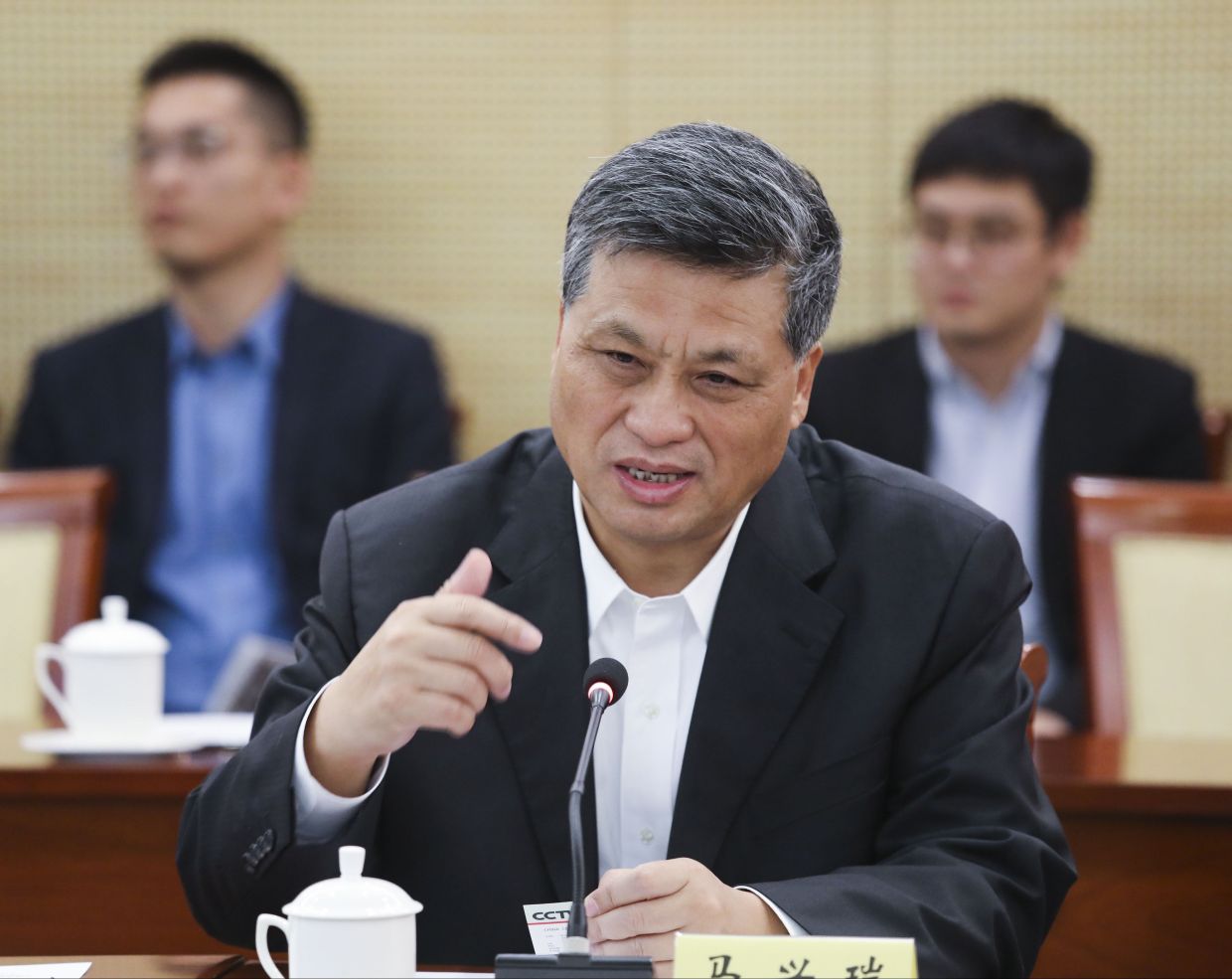
China's anti-corruption apparatus has formally presented a damning case against Ma Xingrui, the 67-year-old former Politburo member and one-time overseer of the country's next-generation rocket programme, connecting his family to what authorities describe as systemic graft. The Politburo's review of the Central Commission for Discipline Inspection (CCDI) findings on June 30 represents a watershed moment in Xi Jinping's anti-corruption campaign, positioning Ma as merely the third member of the Communist Party's elite decision-making body to face such scrutiny during the leadership term that commenced in 2022—a frequency that observers say has no parallel in recent Chinese political history.
The charges paint a portrait of institutional betrayal and moral decay. Beyond the standard accusations of taking improper gifts and accepting cash, Ma allegedly exploited his authority to procure discounted housing for relatives and engaged in exchanges of power for sexual favours and monetary benefit. What distinguishes his case is the allegation that he permitted his family members to weaponise his political standing for financial advantage, creating what the CCDI characterised as "rampant corruption across his family." This family-based corruption represents a structural failure in party discipline, suggesting that Ma's influence extended into the domestic sphere in ways that undermined the integrity of state institutions.
Ma's career trajectory illuminates the pathways through which elite officials accumulate authority and, potentially, the opportunities for misuse. After a stint at the Ministry of Industry and Information Technology, he progressed to become deputy party secretary of Guangdong in 2013, subsequently ascending to party chief of Shenzhen before moving into provincial administrative roles as vice-governor and ultimately governor. The apex of his career came when he inherited Chen Quanguo's position as party secretary of the sensitive Xinjiang Uygur Autonomous Region in 2021, earning elevation to the Politburo at the following year's party congress. This trajectory underscores how positions of territorial control, particularly in strategically important regions, provide exceptional leverage for personal enrichment.
Prior to his political ascent, Ma established credentials as an aerospace specialist, serving as general manager of the China Aerospace Science and Technology Corporation from 2007 to 2013. During that period, he held the positions of deputy commander-in-chief of China's manned space programme and commander-in-chief of the country's new-generation carrier rocket initiative. This dual expertise—combining technical credibility with political authority—may have amplified his capacity to influence procurement decisions and project allocations, potentially creating additional avenues for corrupt dealings. The CCDI's investigation revealed that several of Ma's former subordinates in the aerospace sector have themselves been ensnared in the anti-corruption crackdown over recent years, suggesting that misconduct may have been endemic to networks under his supervision.
The disciplinary report details how Ma converted public authority into an instrument for private accumulation. Through personal intervention and via family members and business associates, he allegedly channelled substantial sums of money and property into his own possession through illegitimate mechanisms. He used his positional power to broker advantages for associates in commercial transactions, project contracting and occupational advancement. In personnel matters, he abused his authority over cadre appointment processes, securing posts for individuals connected to him while circumventing standard meritocratic selection procedures. Such abuse of patronage networks represents a corrosion of institutional competence, as positions flow to loyalists rather than the most capable administrators.
Particularly damning is the finding that Ma failed to maintain adequate supervisory control over his staff, permitting subordinates to commit serious violations of party discipline and law without intervention. This negligence cascaded into "severe consequences," according to the CCDI, suggesting that the misconduct of his personnel inflicted measurable institutional damage. The inaction itself constitutes a breach of fiduciary duty, as senior officials bear responsibility for maintaining standards throughout their organisations. When Ma declined to enforce accountability among his direct reports, he enabled corrupt networks to proliferate and entrench themselves within state structures.
The investigation also uncovered a problematic pattern regarding Ma's candour during the CCDI's initial questioning. He failed to provide truthful confessions when first confronted with the evidence, an evasiveness that compounds the severity of his transgressions. The CCDI noted that his misbehaviour persisted even after the 18th party congress, when Xi announced the sweeping anti-corruption campaign and established strict codes of official conduct. Despite these highly publicised measures and clear warnings about the consequences of misconduct, Ma apparently continued to exploit his position, suggesting either contempt for the system or confidence that his seniority would shield him from accountability.
With Ma's expulsion from the Politburo, the body now comprises just 21 members, down from the previous complement. Alongside Ma, two prominent military leaders have been removed. He Weidong, the former vice-chairman of the Central Military Commission, was expelled from both the party and military in October, while broader investigations have ensnared other military officials. This pattern of purges across both civilian and military hierarchies reflects Xi's determination to consolidate control through the anti-corruption mechanism, using the disciplinary apparatus to eliminate potential rivals and enforce conformity to his leadership.
Xinjiang has emerged as a particular epicentre of corruption investigations. Beyond Ma, the region has produced at least two other cases in recent months. Chen Weijun, the former executive vice-chairman of Xinjiang, saw his investigation announced in December, while Li Xu, a former deputy commander of the Xinjiang Production and Construction Corps, faced similar scrutiny when his case became public in January. This concentration of cases in Xinjiang likely reflects both the substantial economic flows through the region—related to infrastructure development, military operations and industrial projects—and the heightened political sensitivity attached to governance there, making oversight more stringent.
For Southeast Asian observers, Ma's case carries implications regarding the predictability and stability of Chinese governance. The removal of Politburo members at this rate introduces uncertainty about succession planning and factional alignments within the party's upper echelons. Regional governments and businesses operating in China must contend with the reality that senior partners may face sudden political collapse, creating risks for joint ventures and bilateral arrangements. Moreover, the anti-corruption campaign's reach into aerospace, defence and strategic industries raises questions about whether commercial partners and technical collaborators could face indirect consequences through association with investigated officials. The Malaysian business community, engaged in various sectors of the Chinese economy, should monitor these developments as indicators of institutional risk.

