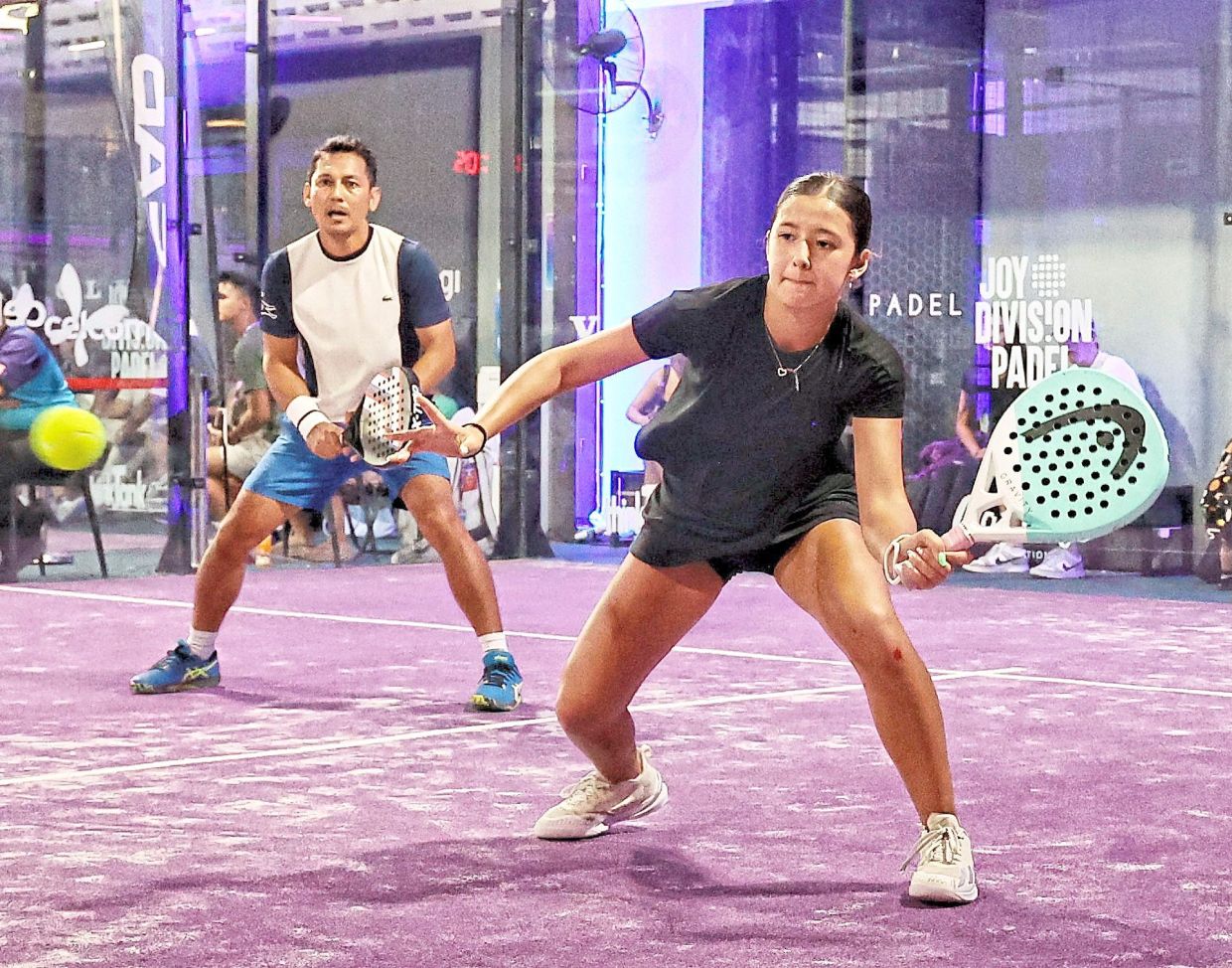
Malaysia's leisure landscape has undergone a quiet but profound transformation. Where Malaysians once filled their free time scrolling through phones or lingering at coffee shops, thousands now flock to padel courts tucked into warehouse conversions and shopping mall rooftops across the Klang Valley, book reformer pilates sessions weeks in advance, and join running clubs that now enforce membership caps. The shift is unmistakable: the nation's urban population is rediscovering physical activity with genuine enthusiasm, and the commercial world has mobilised rapidly to meet this demand. Padel courts are booked solid days ahead, pickleball—long dismissed as an activity for retirees—now attracts players in their twenties and thirties, and running clubs that struggled to maintain WhatsApp engagement five years ago now turn members away. The momentum will intensify when Kuala Lumpur hosts Malaysia's first Hyrox event on December 12 and 13 at the Malaysia International Trade and Exhibition Centre, a hybrid fitness race combining eight one-kilometre runs with eight functional workout stations including sled pushes, rowing and wall balls. If neighbouring Singapore's experience is any indicator, where Hyrox tickets vanished within minutes, Malaysia's appetite will be voracious.
The financial markets have taken notice of this shift with considerable conviction. Oura, the Finnish company manufacturing smart rings that millions now use to track sleep, heart rate and recovery metrics, recently filed confidentially for a United States listing at a valuation near US$11 billion (RM45.6 billion), with accumulated sales exceeding 5.5 million units and anticipated revenue approaching US$2 billion (RM8.3 billion) this year. Its rival Whoop, which produces a screenless fitness monitoring strap, secured US$575 million (RM2.39 billion) in funding during March at a valuation of US$10.1 billion (RM41.9 billion). Tellingly, investors are not valuing these companies primarily as hardware manufacturers but as health platforms positioned to extract recurring monthly subscription revenue from consumers eager to decode their own physiological data. This capital influx reflects a genuine structural shift: wellness technology is no longer a niche consumer indulgence but a mainstream market with expanding revenues and engaged user bases.
Multiple forces underpin this recreation renaissance. One significant factor is a cultural backlash against screen dependency. Following a decade of what observers term doomscrolling, millions of Malaysians have reached the intuitive but consequential conclusion that additional phone hours diminish wellbeing while hours spent on a court or running track generate tangible improvement in mood and energy. Simultaneously, these activities fulfil a deeper hunger for community that modern office work, especially remote arrangements, increasingly fails to satisfy. Padel and pickleball are deliberately social experiences, played in doubles format, engineered to be quickly learnable yet genuinely competitive, and structured to discourage excessive seriousness. Modern gyms and running clubs function as contemporary equivalents of the traditional kopitiam—social anchor points for a demographic that consumes less alcohol and maintains flexible work schedules. The quantification enabled by wearable technology creates an additional behavioural reinforcement loop: once sleep duration and training strain become measurable rather than abstract, exercise transforms from a vague intention into a trackable habit with visible progress markers.
From a public health perspective, the upswing in recreational activity represents genuinely encouraging news. Malaysia confronts a significant metabolic disease burden: more than half of Malaysian adults carry excess weight or obesity classifications, whilst diabetes, hypertension and cardiovascular disease exact enormous tolls on individual families and collective healthcare infrastructure. Physical activity remains the single most cost-effective therapeutic intervention available to clinicians, delivering blood pressure reductions, enhanced insulin sensitivity, improved mental health outcomes, preserved cognitive function and extended healthy lifespan. The surge in padel courts and running club participation therefore represents an opportunity to address some of the nation's most intractable health challenges through voluntary behavioural change rather than medical intervention.
Yet this optimism confronts a sobering clinical reality. Orthopaedic and sports medicine specialists across Malaysia are documenting a concerning trend with escalating frequency: the injured weekend athlete. The archetypal patient profile emerges with striking consistency—typically a man or woman between forty and fifty years old, sedentary throughout two decades of desk-based employment, who encounters padel or commits to a Hyrox race alongside friends and accelerates from zero training to four weekly sessions within a single month. Whilst cardiovascular and pulmonary systems demonstrate remarkable adaptability to such rapid intensity escalation, the musculoskeletal structures—tendons, ligaments and articular cartilage—strengthen according to entirely different timelines. These tissues require months of graduated loading to develop requisite tensile strength; they are fundamentally incompatible with weekly volume jumps that exceed their current adaptation capacity, and they extract a painful price for such miscalculation.
The injury patterns emerging from this population are remarkably predictable. Padel and pickleball impose specific physical demands: explosive lunging movements, rapid directional changes and overhead striking mechanics create particular vulnerability to specific tissue damage. Calf muscle tears are increasingly common, along with Achilles tendon ruptures, knee ligament injuries and shoulder impingement syndromes. Wherever these sports proliferate globally, orthopaedic emergency departments report corresponding injury surges. The financial implications extend far beyond individual patient burden. Analysis conducted by investment bank UBS estimated that pickleball injuries alone would generate between US$250 million and US$500 million (RM1.04 billion to RM2.07 billion) in direct medical expenditures annually in the United States, with disproportionate impact among players over sixty years old.
Malaysia's healthcare system faces compounding pressure from this emerging injury epidemic. Many Malaysian hospitals already operate near capacity, with emergency departments and orthopaedic surgical services frequently overwhelmed during peak periods. A significant increase in sports-related musculoskeletal injuries—many entirely preventable through appropriate progression protocols—threatens to divert limited surgical capacity and emergency resources from acute trauma and life-threatening conditions. Younger weekend athletes sometimes face multi-month delays before accessing physiotherapy, whilst those requiring surgical intervention navigate prolonged waiting lists. The economic burden falls not only on the health system but on individual patients through lost productivity, out-of-pocket rehabilitation costs, and in some cases permanent functional limitations that prevent return to the activities that motivated their initial participation.
The injury prevention literature provides clear guidance that remains remarkably underutilised. The fundamental principle is straightforward yet frequently violated: tissue adaptation requires graduated loading increases, typically not exceeding ten percent weekly volume escalation, coupled with adequate recovery time between sessions. A person returning to structured sport after prolonged inactivity requires a fundamentally different training architecture than an athletic individual implementing a new sport. Medical screening should precede participation, particularly for older adults or those with cardiovascular risk factors. Technique instruction from qualified coaches substantially reduces injury risk, yet many weekend athletes self-teach through internet videos or learn informally from friends of similar incompetence. Appropriate equipment—properly fitted footwear in particular—substantially reduces lower extremity injury probability. Warm-up and mobility work addressing individual limitations prevents many acute injuries.
The contrast between the enthusiasm driving Malaysia's fitness boom and the clinical preparedness of most weekend athletes represents a critical vulnerability. Many individuals launching into padel or Hyrox training possess limited understanding of sport-specific injury patterns, inadequate body awareness regarding their current physical capacities, and unrealistic expectations regarding adaptation timelines. They compare themselves to friends who may have superior baseline fitness or different genetic injury susceptibility, creating pressure to match their training volumes. Social media amplifies this dynamic, showcasing highlight-reel performances whilst obscuring the months of careful preparation underlying sustainable participation. The weekend warrior mentality—driven by productivity culture and optimisation obsession—inadvertently mirrors workplace excess: if four sessions weekly feels good, six must be better, and injury occurs precisely when enthusiasm outpaces physical adaptation capacity.
Addressing this emerging epidemic requires coordinated action across multiple stakeholders. Sports facility operators should provide or subsidise access to qualified coaching instruction rather than simply opening courts to self-directed athletes. Medical professionals need to engage with popular sports communities through educational initiatives rather than treating injuries only after they occur. Public health communications should emphasise graduated training progression as explicitly as they promote sports participation. Equipment retailers should prioritise fitting quality over transaction volume. Perhaps most importantly, the digital ecosystem surrounding fitness—apps, wearables, social media—should integrate injury prevention intelligence alongside performance tracking. An Oura ring that tracks sleep and training strain could readily incorporate coaching cues regarding safe progression thresholds. A running app could calculate weekly volume increases and alert users approaching ten percent escalation thresholds. These interventions would cost essentially nothing to implement yet would prevent thousands of injuries and redirect healthcare resources toward conditions beyond individuals' control.
Malaysia's transformation into an active, community-oriented wellness culture represents genuine progress toward healthier population foundations. The economic growth generated through padel courts, pilates studios and running clubs creates employment and entertainment value. Yet this expansion occurs precisely when a generation of previously sedentary adults is entering structured sport for the first time in decades, often possessing limited understanding of injury risk and prevention principles. The window for preventing an epidemic remains open, but only if stakeholders recognise that encouraging participation without simultaneously ensuring safe participation creates precisely the healthcare burden that activity promotion seeks to prevent. The challenge ahead is straightforward: maintain the enthusiasm whilst building the infrastructure ensuring that Malaysia's weekend warriors finish their journeys intact.

