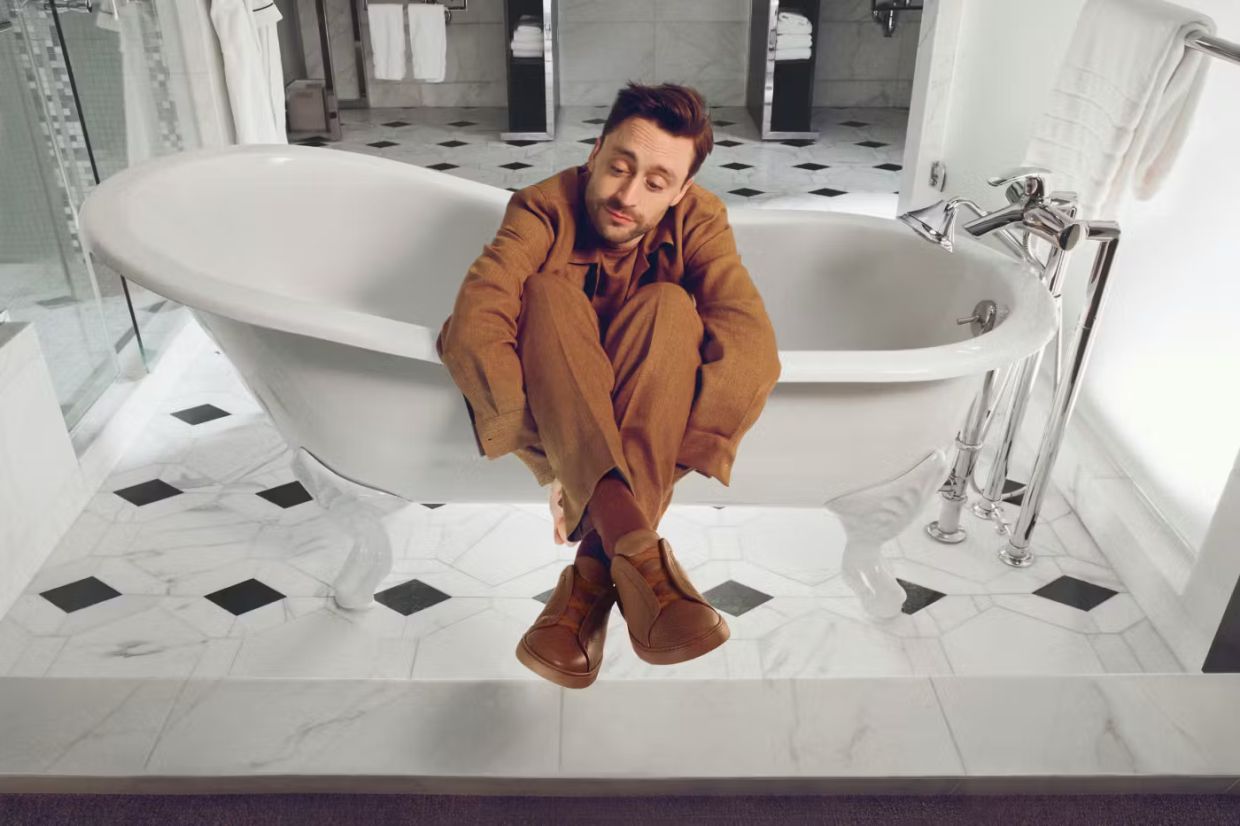
The dress sneaker represents one of contemporary fashion's most polarising innovations: a shoe that marries the practicality of athletic footwear with the formality of traditional dress shoes. Whether celebrated as the perfect symbol of modern versatility or dismissed as an awkward compromise, this hybrid silhouette has undeniably reshaped how professional men present themselves in the workplace and beyond. Its ascent from niche curiosity to mainstream staple reveals much about changing attitudes toward comfort, status, and professional identity in the 21st century.
The origins of this particular fashion moment lie in three broader cultural shifts. The normalisation of casual Fridays in corporate America created legitimate space for more relaxed dressing at work. Simultaneously, the rise of stealth wealth—the preference for understated luxury over ostentatious branding—made minimalist designs increasingly desirable among the affluent. A parallel shift toward comfort-driven dressing reflected deeper anxieties about wellness and work-life balance. Together, these movements created fertile ground for a shoe that could satisfy all three impulses at once.
What distinguishes the dress sneaker from its various failed predecessors is its remarkable staying power. Earlier attempts at hybrid footwear—the snoafer, the sneakerina, the smule—largely collapsed into something indistinguishable from regular trainers. The dress sneaker, by contrast, successfully maintained its dual identity. It promised wearers the ability to enjoy both comfort and polish, to signal professional seriousness while remaining approachable and modern. This balance proved irresistible to an expanding audience.
The shoe's ascent through social hierarchies offers a fascinating case study in how fashion legitimises itself. US Democratic House Minority Leader Hakeem Jeffries wore them to a presidential meeting; actor Ben Stiller paired them with formal attire at the New York Film Festival and at basketball games; and Kieran Culkin incorporated Cole Haan dress sneakers into his costume as Roman Roy in the acclaimed television series Succession. Apple chief executive officer Tim Cook posed in Zegna Triple Stitch dress sneakers for a major magazine cover, effectively blessing the style from the summit of Silicon Valley.
Perhaps most tellingly, traditionally strict private clubs began revising their historical dress codes to accommodate white-soled leather shoes while continuing to ban conventional sneakers. This institutional flexibility demonstrates how thoroughly the dress sneaker had penetrated elite spaces. The shoe had achieved something remarkable: it offered wearers the symbolic language of respectability and professional commitment whilst maintaining the comfort previously associated with casualness. The implicit message was unmistakable: "I take myself seriously, but not so seriously that I've abandoned common sense."
Historically, male professional dress remained remarkably static. For most of the twentieth century, men's offices were dominated by hard-soled dress shoes, predominantly black calfskin leather. Loafers introduced a modest note of flexibility in the late 1960s, but the casualisation of workplace dress effectively halted at that point. Sneakers remained firmly outside acceptable business territory. This rigid hierarchy persisted until the millennium shifted, when economic, technological, and cultural forces began reshaping professional aesthetics in earnest.
Menswear historians generally trace the dress sneaker's formal emergence to the Achilles Low, produced by Italian luxury label Common Projects and launched in 2004. These shoes embodied the aesthetic parameters that would define the category: all-white leather construction, minimal branding, meticulous Italian craftsmanship, and a deliberately elevated price point that positioned them as status symbols rather than functional footwear. The pricing strategy proved crucial—by establishing the dress sneaker as an expensive item, Common Projects protected it from being perceived as mere casualwear.
Once Common Projects had established the category's prestige, the market rapidly diversified. Heritage brands like Allen Edmonds, contemporary menswear specialists Wolf & Shepherd, and luxury heavyweights including Tom Ford, Loro Piana, and Cole Haan all introduced competing interpretations. The category's expansion across price points and design philosophies suggested genuine staying power rather than passing trend. When NBA Hall of Famer Steve Nash appeared playing basketball in Wolf & Shepherd dress sneakers, the shoe gained further athletic legitimacy alongside its executive credentials.
The dress sneaker's spread followed a predictable pathway through cultural gatekeepers. Sports commentators began wearing them on ESPN broadcast sets, transforming them from niche accessory to familiar mainstream sight. Silicon Valley's technology entrepreneurs then embraced them as visual shorthand—the dress sneaker signalled that "move fast and break things" founders had matured into something slightly more professional whilst maintaining their essential informality and innovation-oriented ethos. From there, the transition to investment bankers and finance professionals proved inevitable. These groups sought to communicate alignment with tech's perceived dynamism and forward-thinking approach, and the dress sneaker offered a visual proxy for such values.
Yet the shoe's symbolic power may now be deteriorating. As social media platforms face intensifying legal and regulatory scrutiny—with executives placed literally on trial—the dress sneaker's association with tech culture represents an increasingly liability rather than an asset. New York Times business columnist Andrew Ross Sorkin has observed that formal dress may be experiencing a post-pandemic resurgence among media and finance professionals. Multiple explanations exist for this potential shift: it could reflect genuine cyclical fashion rotation, a delayed reaction to pandemic-era informality finally reaching exhaustion point, or a calculated response to contemporary economic anxiety.
The current economic environment may also discourage the dress sneaker's relaxed confidence. Rising unemployment concerns and uncertain job markets create psychological incentives to project maximum professional gravitas. In this context, the dress sneaker's compromising middle ground—neither fully casual nor completely formal—loses its appeal. If employment prospects feel precarious, the strategic calculation favours visual conservatism.
Ultimately, the dress sneaker occupies an awkward cultural position. As one fashion analyst has noted, it resembles t-shirts with tuxedos printed on them—a fundamentally kitsch attempt to have things both ways rather than making genuine commitments. Fashion history suggests that hybrid items ultimately satisfy no one and rarely endure. The dress sneaker's remarkable decade-long run may represent an unusual exception to this pattern, but its current softening suggests the exception is not permanent. Whether professional men ultimately recommit to formal shoes or embrace fuller casualisation may depend less on fashion logic than on broader economic, technological, and workplace transformations currently reshaping white-collar work.

