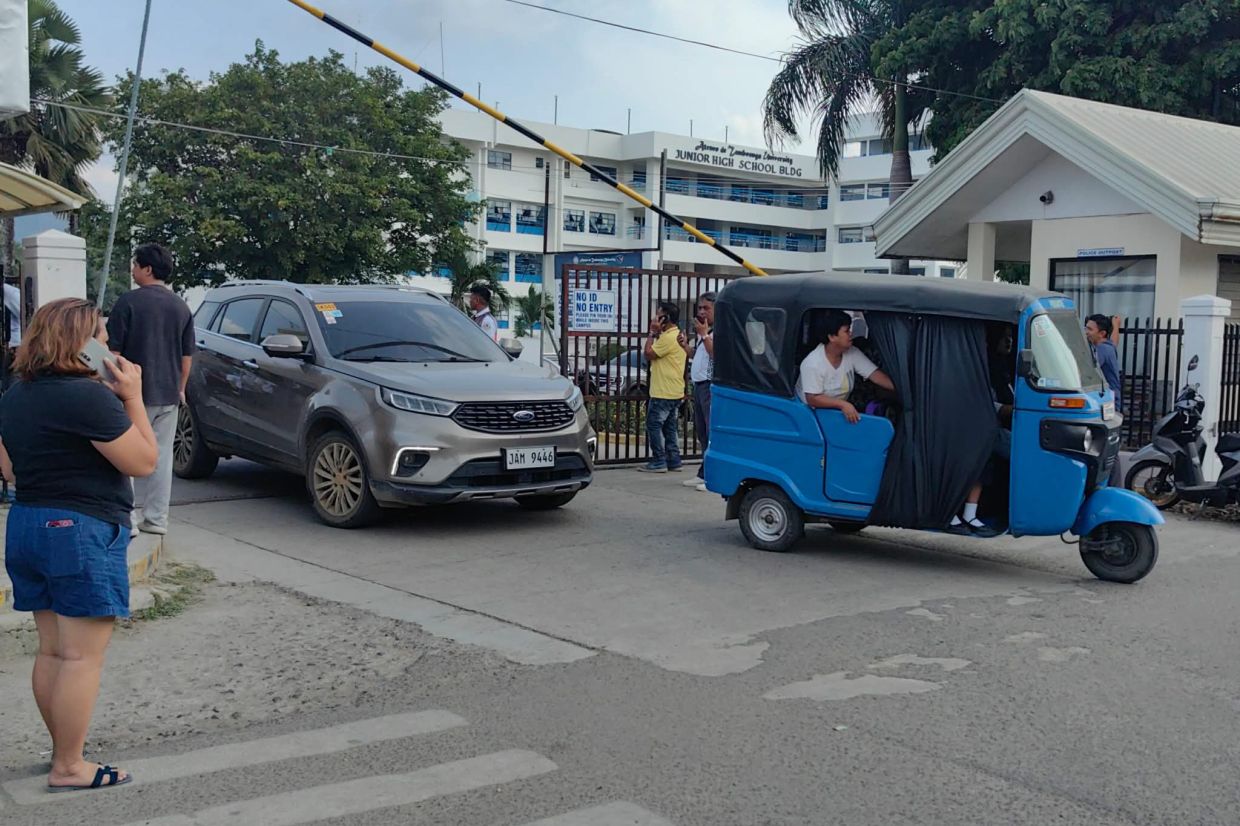
The Philippines is confronting an unfamiliar threat to its education system. After two school shootings in Tacloban in July and Zamboanga in August, followed by a cascade of bomb threats, stabbings and recovered firearms on campuses nationwide, a country once insulated from such mass violence has been forced to reckon with its own crisis. Though gun violence persists across Philippine society and the nation maintains one of Southeast Asia's highest civilian gun ownership rates, large-scale school shootings had remained virtually unknown until recently. The Department of Education's hastily planned active shooter drills in late August were cancelled after psychological experts warned that such exercises could deepen trauma rather than build resilience among vulnerable children, highlighting the challenge authorities face in responding to a phenomenon for which the country lacks institutional experience.
Behind the immediate crisis lies what experts describe as a convergence of social and cultural factors operating in concert. Senator Risa Hontiveros, who led parliamentary inquiries into both shootings, has pointed directly to the lingering aftermath of former president Rodrigo Duterte's brutal anti-drug campaign, which resulted in tens of thousands of killings between 2016 and 2022. The normalisation of state-sanctioned violence, delivered through political rhetoric that positioned killing as a legitimate policy instrument, may have seeped into the broader fabric of Filipino society in ways that extend far beyond the drug war itself. Duterte now faces trial at the International Criminal Court in The Hague on allegations of crimes against humanity, yet the cultural damage inflicted by his administration's methods continues to reverberate through Philippine institutions.
The conceptual framework through which Filipinos understand conflict resolution appears to have shifted. Sociologist Filomin Gutierrez of the University of the Philippines Diliman argues that the drug war created a powerful cultural backdrop suggesting that violence represents a viable solution to social problems. By elevating killing, death and firearms to the status of legitimate problem-solving tools, the state may have inadvertently widened the intellectual space in which extreme violence becomes conceivable to those already predisposed toward it. Yet experts caution against oversimplification. Psychologist Peejay Bengwasan, a board member of the Psychological Association of the Philippines, resists claiming direct causation between the drug war and school violence. Instead, he describes the political climate's glorification of violence as raising the statistical likelihood that children will adopt aggressive responses, creating an environment where violence transforms from aberration into normalcy. A child repeatedly exposed to messages valorising brutality may gradually come to view it not as exceptional but as an available, even expected, response to frustration or rejection.
The second critical vulnerability lies in how Filipino adolescents navigate the digital world. Government data indicates that 60 percent of children aged 10 to 17 possess internet access and actively participate in online communities. Notably, both shooters in Tacloban were aged 14 and 15, while the Zamboanga attacker was 14, all part of a generation that has never known a world without social media. Unlike older cohorts who encountered the internet after establishing primarily face-to-face social bonds, today's Filipino teenagers have been immersed in digital social networks since early childhood. This fundamental difference in developmental trajectory creates novel vulnerabilities. These young people encounter random individuals online whose values, backgrounds and worldviews differ dramatically from their immediate social circles, at an age when psychological research demonstrates heightened susceptibility to external influence and group identification.
Extremist networks have become sophisticated in exploiting these digital vulnerabilities. Cybersecurity expert Angel Redoble, testifying before Senate hearings, outlined a methodical recruitment process targeting socially isolated adolescents. Recruiters initially contact lonely children on mainstream platforms such as online gaming spaces, building rapport before gradually transitioning conversations to private servers and encrypted messaging applications where surveillance becomes impossible. Within these hidden environments, trust-building escalates into psychological isolation, coercion and blackmail. Algorithms actively facilitate this process, efficiently identifying and promoting content designed to appeal to vulnerable youth. The progression follows a clear trajectory toward what Redoble termed "status through brutality"—a dynamic where increasingly extreme acts earn social standing within the group, eventually culminating in violence carried into the physical world. Police reported to senators that they had managed 74 such extremist cases and rescued 42 minors, 30 of them aged 15 or younger, suggesting a significant hidden problem extending well beyond the publicised shootings.
Yet digital networks alone do not generate all vulnerabilities that extremist recruiters exploit. Gutierrez identifies a paradox embedded in Philippine culture itself. Despite widespread celebration of strong family bonds and tight-knit communities, this very cohesion creates marginalisation for those who fail to fit established social patterns. Adolescents perceived as weak, strange, delinquent or problematic become isolated, with pathways to reintegration sealed off by social judgment. These exclusions drive vulnerable youth toward alternative subcultures and online networks that offer acceptance and belonging, however destructively. The problem intensifies through compounding childhood trauma. Bengwasan notes that Filipino children routinely experience distressing events—natural disasters including typhoons, floods and earthquakes, plus pervasive societal violence. Children process such trauma through varied psychological mechanisms; some internalise distress as anxiety or depression, while others channel it into aggressive expression and acting out.
Within this psychological landscape, schools occupy enormous significance as spaces where adolescents discover their social status. Whether they are deemed popular, accepted, visible or invisible profoundly shapes identity formation and self-worth. Researchers studying rampage shooters have identified patterns suggesting that some perpetrators employ spectacular public violence as a mechanism for overturning perceived exclusion. These attacks serve a dual purpose: destroying the devalued identity imposed by peers and institutions, while simultaneously writing an alternative biography of significance through notoriety and terror. The shooters in the Tacloban and Zamboanga incidents appear to fit this profile, using violence to invert their social powerlessness into horrific visibility.
The cascade of incidents following the initial shootings reveals another danger: online copycat phenomena. Posts glorifying the Tacloban attackers circulated within hours of their deaths, while footage from the Zamboanga shooting has continued to be reposted across platforms, potentially inspiring vulnerable youth who view such attacks as pathways to recognition. This amplification through digital networks transforms isolated incidents into patterns, creating a dangerous feedback loop where media attention and online glorification generate social pressure toward escalation among susceptible populations.
Addressing this convergent crisis requires multifaceted intervention operating across cultural, institutional and technological domains. Authorities must confront the legacy of normalised violence through explicit cultural messaging rejecting the frameworks established during the drug war years. Schools require investment in mental health infrastructure, trained counsellors and early intervention systems capable of identifying isolated or distressed students before extremist recruitment occurs. Digital literacy programs must teach young people to recognise recruitment strategies and resist manipulation through encrypted networks. Platform companies face pressure to implement more effective content moderation preventing glorification of school violence and disrupting algorithm-driven isolation of vulnerable youth. Family support systems need strengthening to reduce the social conditions producing isolation.
Yet the most fundamental challenge may be reconceptualising how Filipino society manages adolescent marginalisation and exclusion. The problem is not the existence of misfits—every society contains individuals struggling to belong—but rather the pathways available for their integration. When alternative subcultures offering acceptance operate exclusively in online extremist spaces, and when schools lack resources to support struggling students, vulnerable youth face binary choices between enduring isolation and joining networks promising belonging through violence. Building genuine pathways to inclusion, reducing social stigma around mental health challenges and creating diverse spaces where different adolescent identities can find legitimate expression represents preventive work extending far beyond law enforcement or technological solutions. The Philippines confronts not merely a school violence crisis but a fundamental question about how to construct a society where young people on its margins can find dignity, acceptance and hope without resorting to destruction.

