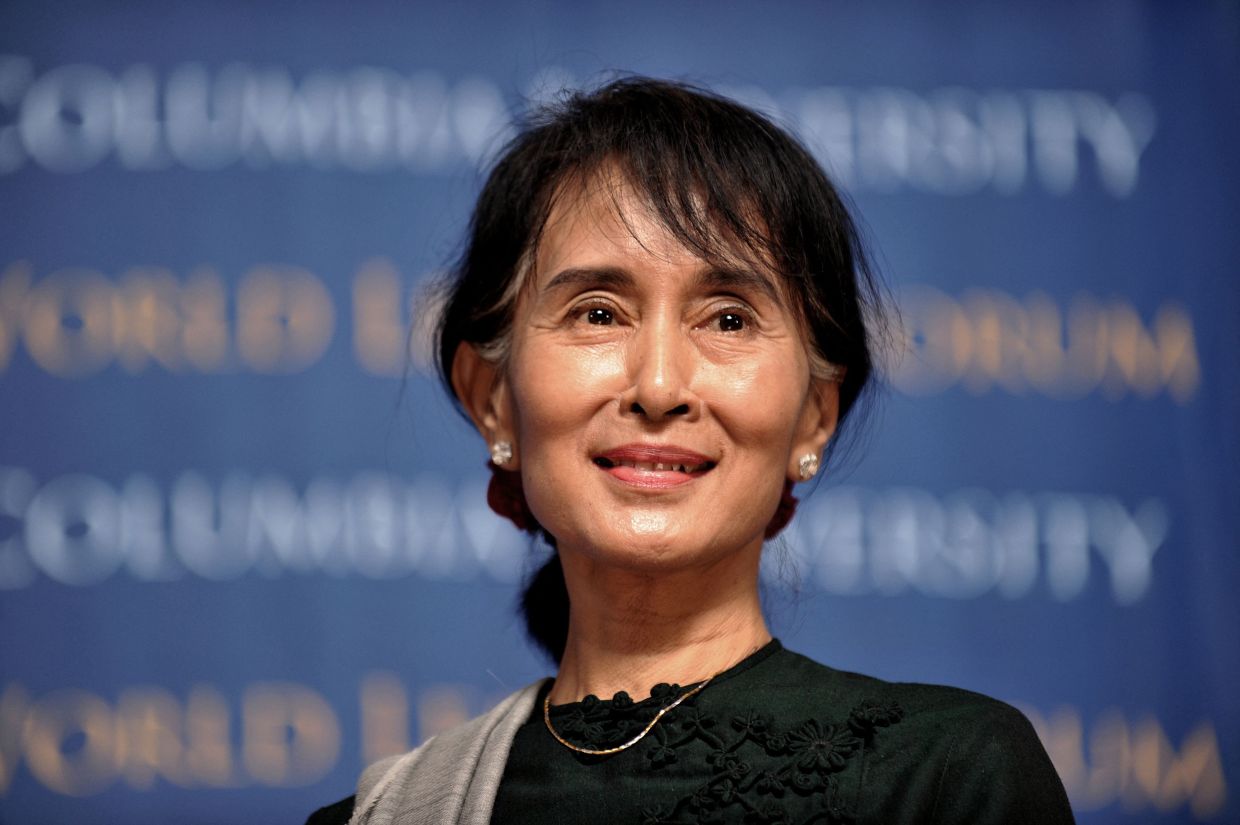
The whereabouts of Myanmar's deposed leader Aung San Suu Kyi have become one of Southeast Asia's most intriguing puzzles, with the 81-year-old politician confined to an undisclosed address somewhere in Naypyidaw following her removal from prison in April. General Min Aung Hlaing, who orchestrated the 2021 coup that toppled her government, announced the transfer as a humanitarian gesture—a shift toward civilian rule buttressed by carefully choreographed elections. Yet the relocation has done little to change the substance of her confinement, with critics arguing that the decision was merely a public relations exercise designed to rehabilitate the general's international image while maintaining her effective imprisonment in one of the world's most peculiar capitals.
Naypyidaw itself presents a landscape fundamentally at odds with conventional urban planning. Covering an area nine times larger than New York with just one million residents, the city sprawls across jungle and agricultural land connected by enormous empty highways that can stretch for miles with barely a vehicle in sight. The disparity between infrastructure and population density creates an almost otherworldly atmosphere—orderly on the surface yet profoundly alienating to those who inhabit it. This vastness is no accident. Military rulers deliberately envisioned Naypyidaw as a capital removed from the democratic aspirations concentrated in older urban centres like Yangon and Mandalay, a retreat into controlled geography that would insulate the country's leaders from popular movements and foreign pressure.
The original decision to relocate the capital from Yangon to Naypyidaw in 2005 under General Than Shwe's administration reflected decades of paranoia about public uprisings and external interference in Myanmar's affairs. Rather than remaining in a port city historically exposed to international commerce and cosmopolitan influences, the junta constructed an entirely new administrative centre from scratch, essentially building a city designed specifically to house government functions in isolation. The parliament campus alone sprawls across 800 acres—one of the world's largest legislative complexes—creating physical monuments to state power that dwarf actual human activity. The infrastructure tells a story of architects serving political masters who valued security and secrecy above livability and organic urban development.
Today, navigating Naypyidaw presents challenges that extend far beyond simple geography. Mobile internet jammers interfere with navigation applications, rendering digital mapping tools unreliable at best and useless at worst. The maintenance of perfectly manicured lawns along those cavernous highways often requires more human labour than the actual movement of traffic. This apparent contradiction—immense resources devoted to beautification while functionality remains secondary—encapsulates the city's fundamental purpose: to present an image of order while concealing the mechanics of authoritarian control. Architect Galen Pardee, an adjunct professor at Columbia University's urban planning programmes, has observed that Naypyidaw embodies everything antithetical to sound urban design principles, operating instead as a physical manifestation of political ideology in concrete and asphalt.
The difficulty in locating Suu Kyi within this deliberately obscure landscape has become apparent even to officials within Myanmar's own government machinery. When her house arrest was publicly announced, law enforcement sources from two separate police jurisdictions acknowledged that she had been moved to locations explicitly off-limits even to them. One senior official, speaking anonymously due to security concerns, stated flatly: "Even generals do not have her information." This revelation is striking—it suggests that knowledge of her imprisonment has been compartmentalised to such an extreme degree that the military hierarchy itself cannot access the details. Such operational secrecy, while common in authoritarian contexts, represents a particularly severe form of isolation that transcends the normal restrictions accompanying house arrest.
A young Naypyidaw resident, herself a permanent inhabitant of the capital, acknowledged the disorientation that defines daily life there. At 25 years old, she confessed to being consistently lost despite years of residence, noting that "everything looks the same to us" and that many of the city's roads remained confusing even to those supposedly familiar with them. When asked about Suu Kyi's location, her response was categorical: "We do not know where she's kept." This inability even for civilians to orient themselves through the city's landscape underscores how Naypyidaw functions simultaneously as a residence for millions yet as an effective prison for anyone seeking to move through it with purpose or comprehension. The architectural environment itself becomes an instrument of control.
The contrast between Suu Kyi's current circumstances and her previous house arrest speaks volumes about the trajectory of Myanmar's political situation. During the 1990s and early 2000s, when she was confined to her family's mansion in Yangon—itself under military restrictions—her home became a pilgrimage site for democracy activists and a visible symbol of resistance. That residence embodied her struggle in tangible ways that resonated across Myanmar and internationally. Her 15 years of confinement there ultimately enhanced her political standing, earning her the Nobel Peace Prize in 1991 and establishing her as an unavoidable figure in Myanmar's political consciousness. The current arrangement in Naypyidaw, by contrast, renders her invisible not just to the public but potentially to history itself, locked away in a capital designed precisely to absorb and conceal such inconvenient truths.
Suu Kyi's son, Kim Aris, speaking from London, has rejected the government's framing of the arrangement as a meaningful improvement in his mother's circumstances. He characterised her current house arrest as fundamentally identical to her previous imprisonment, merely relocated to a different geography. "I don't see really how different it is to what she's been subjected to over the past number of years," he observed, pointedly noting that any villa in which she is held functions as a private prison rather than a residence offering genuine freedom of movement or comfort. His assessment touches on a crucial distinction: the legal classification of confinement matters far less than its substantive reality. Whether labelled house arrest or imprisonment, whether housed in an urban mansion or an undisclosed compound in a sprawling capital, the outcome remains deprivation of liberty.
General Min Aung Hlaing's presentation of Suu Kyi's transfer as humanitarian mercy was accompanied by the staging of elections in January 2024, in which his pro-military Union Solidarity and Development Party secured a decisive electoral victory. The USDP subsequently controlled enough parliamentary seats to ensure Min Aung Hlaing's elevation to the presidency, completing his transition from martial administrator to elected civilian leader—at least nominally. This electoral choreography allowed him to claim legitimacy while excluding Suu Kyi's National League for Democracy from participation, effectively decapitating the opposition. The spectacle of democratic procedure served to legitimise what remained fundamentally a military-dominated state.
Within parliament itself, remnants of Suu Kyi's era persist as uncomfortable relics. Old magazines and publications lauding her achievements still circulate in the corridors of power, a physical reminder of the period when she governed during Myanmar's brief democratic opening. Yet the current political establishment has moved decisively to consign her legacy to irrelevance. USDP parliamentarian Aye Chan stated bluntly that "her era is over," capturing the sentiment of a military-aligned government determined to erase her political significance. This attempted erasure carries particular weight given that Suu Kyi inherited her political stature from her father Aung San, the independence hero whose legacy defined modern Myanmar for generations. The current regime's effort to extinguish her relevance represents an implicit challenge to that foundational narrative.
For Malaysia and other Southeast Asian democracies, the situation surrounding Suu Kyi carries sobering implications about the fragility of democratic gains in the region. Myanmar's brief democratic period—roughly from 2011 to 2021—appeared to represent irreversible progress toward pluralism, yet the 2021 coup demonstrated how quickly such transitions can collapse when military institutions retain structural power and security forces remain unaccountable to civilian authority. Naypyidaw itself stands as a physical monument to the vulnerabilities inherent in democratic systems that lack robust institutional safeguards against military intervention. The mystery of Suu Kyi's precise location ultimately symbolises broader uncertainties about Myanmar's political future and the durability of democratic norms across the region.
The question of where exactly Aung San Suu Kyi is being held may never receive a definitive public answer, buried as it is within the intentional opacity of a capital designed to obscure such inconvenient facts. Her confinement represents not merely an individual tragedy but a commentary on the state of democracy and human rights in contemporary Myanmar. That a leading political figure's location can remain unknown even to senior government officials speaks to the degree to which Myanmar's military has consolidated control through mechanisms of secrecy, compartmentalisation, and architectural intimidation. In the absence of transparent governance and institutional accountability, such mysteries become features rather than aberrations of the political system.

