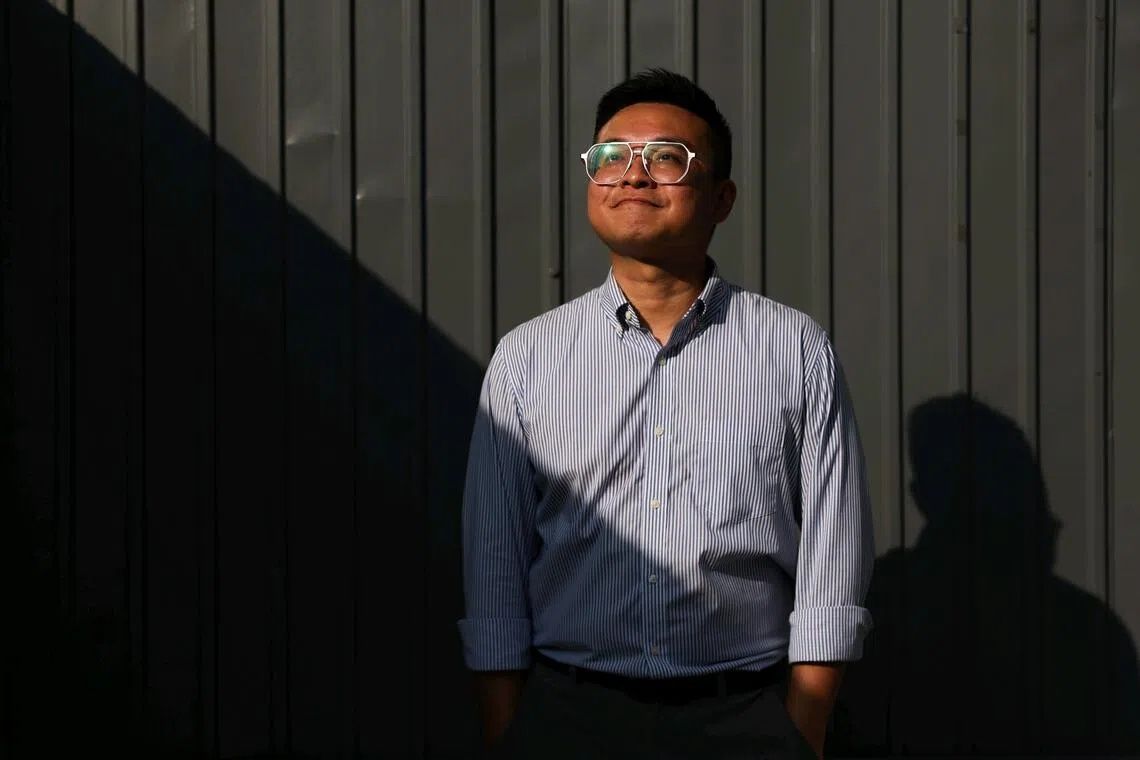
The polished exterior often masks a hidden crisis. Cornelyus Tan presented himself to the world as a successful marketing professional with an impressive portfolio, yet behind closed doors he was locked in an escalating battle with methamphetamine addiction. His carefully constructed double life finally collapsed in 2022 when he was arrested and confined to the Drug Rehabilitation Centre at Changi Prison for half a year. What emerged from his experience was a striking revelation: the detention facility housed not drifters or the economically marginalised, but teachers, lawyers, bankers and other accomplished white-collar workers grappling with the same demons. "On paper, we look well. We are all very successful. But at the core of it, we had a common problem – the heart," Tan reflected publicly for the first time at age 37, articulating a truth that challenges deeply held assumptions about who becomes addicted to drugs.
The statistics paint an unmistakable picture of shifting demographics in Singapore's drug problem. Data from the Singapore Prison Service reveal that 293 inmates in the Drug Rehabilitation Centre possessed tertiary education or higher qualifications in 2025, a substantial increase from just 204 in 2021. These individuals, whose credentials ranged from polytechnic diplomas to doctoral degrees, constituted approximately one in ten newly admitted inmates last year, up from 8.8 per cent four years earlier. While officials from the Central Narcotics Bureau attribute this partly to the overall educational advancement of Singapore's population—where those aged 25 and above with tertiary qualifications grew from 42.9 per cent to 54.5 per cent over the past decade—they also acknowledge that highly educated individuals remain proportionally under-represented in the rehabilitation centre population. Nevertheless, the absolute numbers and upward trajectory signal a worrying trend that defies conventional wisdom about addiction's socioeconomic boundaries.
The assumption that education and professional success provide natural immunity against substance abuse has long dominated public discourse in developed societies. Yet addiction counsellors and mental health professionals working directly with offenders increasingly recognise this as a dangerous myth. Gopal Mahey, a senior counsellor at the Centre for Psychotherapy, emphasises that addiction operates independently of educational attainment or social standing, cutting across all demographic categories with remarkable indifference. The recognition that drug use respects no class boundaries represents a fundamental shift in how Singapore's treatment and enforcement communities understand the problem, moving away from the stigmatised image of addiction as a marker of failure or social dysfunction.
Technological transformation has fundamentally altered the drug ecosystem in ways that level the playing field between educated and underprivileged populations. Where previous generations required personal connections—a family member with addiction history, neighbourhood dealers, or friends willing to introduce them to illicit markets—today's drugs arrive through impersonal digital channels. Tham Yuen Han, executive director of We Care Community Services, notes that Telegram channels and social media platforms have democratised access to narcotics, removing the geographic and social barriers that once protected certain segments of society. A message on Instagram or a link shared in a Telegram group bypasses the need for street-level connections entirely, placing substances within reach of anyone with a smartphone and internet access. This shift explains partly why professionals of various backgrounds now find themselves ensnared by addiction at unprecedented rates.
The expansion of global synthetic drug markets has further intensified availability and variety. Methamphetamine, known colloquially as Ice, has become particularly prevalent among educated cohorts alongside cannabis, Ecstasy and heroin. These substances, especially the potent stimulants, present a seductive appeal to high-performing professionals trapped in demanding careers and competitive work environments. What begins as occasional use at social gatherings—Tan's introduction at a house party in 2014, or a junior college teacher's attempt to fit in at a gathering in 2015—can rapidly evolve into psychological and physical dependence. The initial experience often feels not like addiction but like a performance enhancer, a solution rather than a problem, particularly for individuals accustomed to measuring success through measurable output and achievement.
Tan's own trajectory illustrates this mechanism with remarkable clarity. Introduced to methamphetamine at age 25 while studying at an arts college and aspiring toward a photography career, he experienced what he describes as a "Superman effect"—an adrenaline-fuelled state of constant efficiency and euphoria that seemed to unlock creative potential. "I was able to think creatively. There were many good comments about my work," he recalled, describing how the drug felt like pure inspiration. A news profile identifying him as a promising young photographer followed in 2015. For several years he maintained this trajectory, quitting temporarily when physical consequences became undeniable—extreme weight loss and profuse perspiration—only to relapse catastrophically in 2020 when stress mounted during his tenure as a regional marketing manager at an e-commerce company. The voice in his mind returned with seductive familiarity, whispering that he knew exactly how drugs could restore his coping capacity.
Experts identify multiple pathways through which otherwise successful individuals rationalise continued drug use. Samuel Chua, principal counsellor at the Institute of Mental Health's National Addictions Management Service, observes that educated professionals fundamentally experience the same desperate need to escape psychological pain and distress as any other addict, yet possess additional psychological mechanisms—confidence in their own capabilities, belief in their capacity for self-regulation—that paradoxically enable deeper denial. Tham emphasises that highly educated individuals often construct elaborate internal justifications for continued use, convinced that their intelligence and discipline will allow them to control consumption as they control other aspects of their lives. Tan developed such a formula: he would use methamphetamine intensively, then abstain for weeks when mood crashes became intolerable, maintaining a veneer of functionality while progressively deepening his dependence.
The ability to compartmentalise addiction represents both a vulnerability and a barrier to treatment. John, a former junior college teacher, sustained his hidden habit for approximately six months while continuing classroom duties after being introduced to methamphetamine in 2015. He framed his initial use as social connection, a way to integrate with peers at a gathering, before recognising too late that the combination of drug use and an abusive personal relationship was systematically dismantling his professional competence. When his reporting officer noticed absences from classes, he constructed explanations rather than acknowledging the underlying crisis. This capacity for compartmentalisation allows educated addicts to maintain employment longer, to preserve relationships with colleagues and family, and paradoxically to delay intervention—they appear functional until suddenly they are not.
Other catalysts for drug use among this demographic reflect broader social and cultural trends that affect educated populations disproportionately. Peer influence operates differently in professional networks than in marginalised communities, often cloaked in sophistication and normalisation. Social media and entertainment figures who glamorise drug use or minimise its harms exert particular influence on educated consumers more likely to encounter such messaging through digital channels. Exposure to more permissive drug cultures overseas—whether through international business travel, study abroad experiences, or entertainment consumption—plants seeds of rationalisation that drugs exist on a spectrum of acceptability. The Central Narcotics Bureau spokesperson notes these factors collectively create a distinct pathway to addiction that cannot be predicted or prevented through conventional risk factors associated with socioeconomic disadvantage.
The implications for Singapore's public health and drug policy are profound. If addiction no longer correlates reliably with education, employment status, or social position, then prevention and treatment frameworks must evolve beyond targeting at-risk populations traditionally defined by poverty or instability. The rise of drug use among professionals suggests that substance abuse prevention must be integrated into workplace mental health initiatives, professional association programming, and community spaces frequented by educated cohorts. Treatment approaches must address not only the physiological aspects of addiction but also the particular psychological defences—rationalisations rooted in confidence, capability and control—that educated addicts construct to justify continued use.
The stories emerging from Changi Prison's rehabilitation facility represent a clarion call to abandon stereotypes about who becomes addicted. Tan's journey from aspiring photographer to marketing executive to rehabilitation inmate, and back toward recovery, demonstrates that addiction respects no credential. The challenge for Singapore moving forward involves recognising that the educated professional struggling in private isolation may face steeper psychological barriers to acknowledging the problem, seeking help, and accepting treatment than individuals with fewer resources for denial and compartmentalisation. Only through destigmatising addiction across all educational and professional tiers can the nation hope to reach those whose very accomplishments and confidence become obstacles to recovery.

