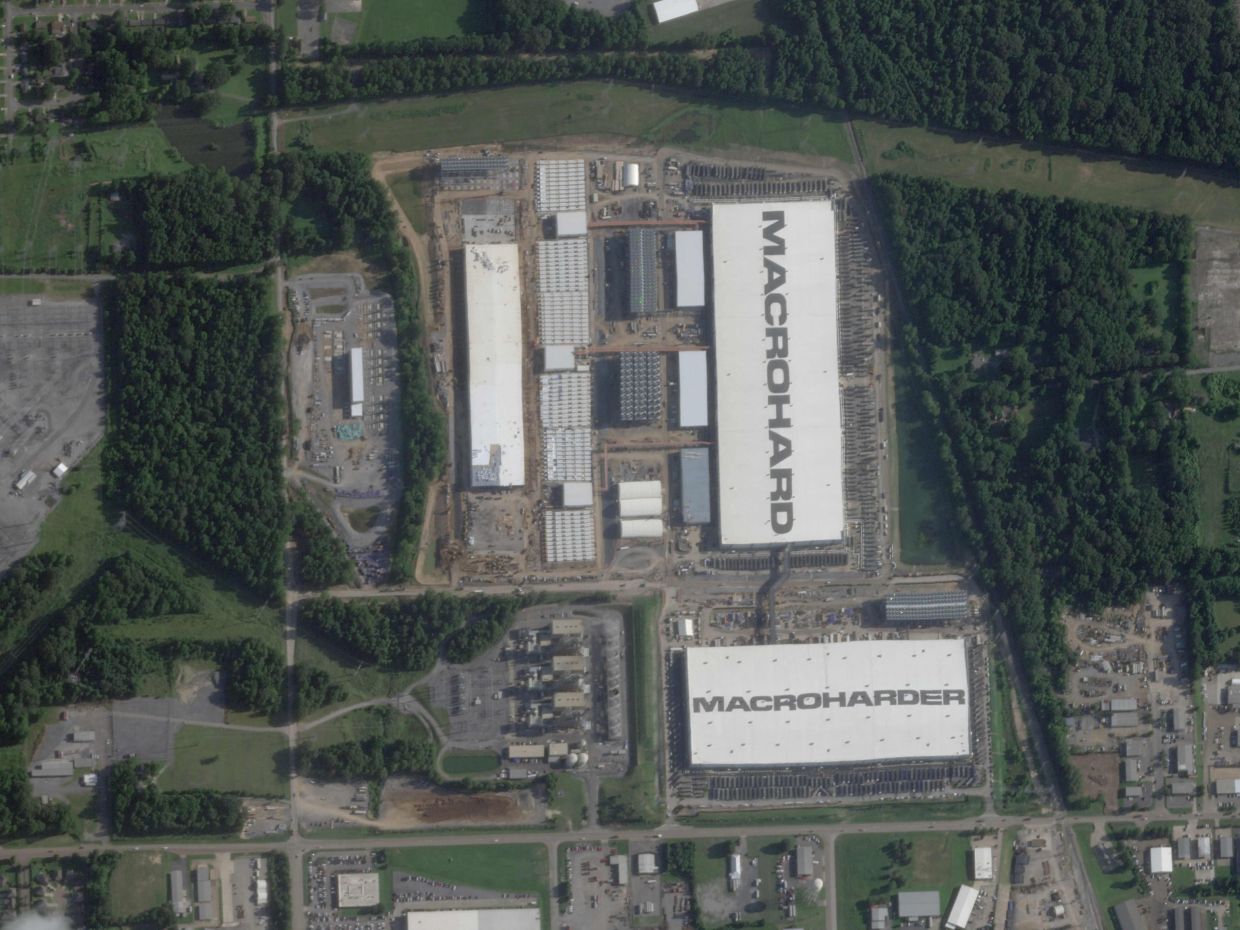
The explosive growth of artificial intelligence infrastructure is colliding with environmental protection in the American South, where mega-scale data centres are operating with minimal public scrutiny in neighbourhoods already burdened by decades of industrial pollution. SpaceXAI's Colossus I facility in Memphis, Tennessee, has become a flashpoint in the broader national debate over who bears the environmental costs of the AI boom. The company's sprawling complex, leased entirely to AI startup Anthropic for a reported US$1 billion-plus monthly fee, exemplifies how profit-driven technological advancement can override community welfare and environmental law, a pattern that should concern policymakers across Southeast Asia as the region pursues its own AI ambitions.
The Memphis site sits adjacent to Boxtown, a historically Black neighbourhood established by formerly enslaved people following the Emancipation Proclamation of 1863. For over a century and a half, residents have endured concentrated industrial pollution from manufacturing facilities, petrochemical plants, and other heavy industries. Today, cancer risk in the area runs four times higher than the national average, a stark testament to cumulative environmental injustice. When SpaceXAI announced plans for Colossus I, residents hoped the project might signal a shift in local development patterns. Instead, they argue, it represents a continuation of the same pattern: wealthy corporations extracting value from Black communities while externalizing environmental costs onto their inhabitants.
Seventeen-year-old Jasmine Bernard, who has spent two years organising resistance to the facility, articulates the deeper historical dimension of this conflict. She emphasises that Boxtown and South Memphis's vulnerability to industrial development stems directly from systemic racism and historical neglect by municipal authorities. The community was specifically chosen for this data centre precisely because it lacks the political power to mount effective resistance and because property values remain depressed—factors rooted in generations of deliberate disinvestment. Bernard's activism demonstrates how younger Americans are connecting environmental protection to racial justice, framing data centre pollution not as an isolated technical problem but as a manifestation of structural inequality.
The immediate environmental impacts are severe and multifaceted. The facility operates approximately ten gas turbines that continuously discharge emissions into the surrounding air, yet SpaceXAI has classified these machines as temporary installations, thereby avoiding standard environmental permitting requirements under the Clean Air Act. This legal manoeuvre allowed the company to commence operations within four months of planning approval, prioritising speed of deployment over regulatory compliance. Laura Thoms, representing the NAACP in litigation against SpaceXAI, explains that federal law explicitly requires pollution control permits to be secured before construction begins, precisely to protect community health. By installing turbines while the permitting process dragged on, SpaceXAI ensured uninterrupted power supply while sidestepping environmental safeguards designed to prevent exactly this scenario.
Water depletion presents an equally troubling dimension of the facility's environmental footprint. Colossus I extracts 1.2 million gallons of groundwater daily from the aquifer that provides drinking water to Memphis residents, using it to cool the supercomputer's processors. SpaceXAI had pledged to construct a water recycling facility that would substantially reduce this consumption, but the company suspended that project indefinitely. For a region increasingly vulnerable to drought and water scarcity amid climate change, the permanent diversion of 438 million gallons annually to cool computers processing AI algorithms represents a profound misallocation of scarce resources. The decision to abandon the water reuse facility suggests that operational convenience outweighs environmental responsibility in the company's internal decision-making hierarchy.
KeShaun Pearson, co-founder of Memphis Community Against Pollution, has travelled nationally to document similar environmental injustices linked to AI infrastructure expansion. He characterises Colossus I as emblematic of how elected officials prioritise abstract promises of economic development over concrete community consultation and protection. Local government accepted the project's promise of tax revenue—US$12 million generated in the first year alone—without establishing meaningful mechanisms to ensure community benefit or environmental mitigation. Memphis Mayor Paul Young subsequently announced plans to redirect US$3.35 million of collected taxes toward affected communities, a belated acknowledgment that unequal burdens require compensatory investment. Yet this approach treats pollution-related harm as something to be purchased with tax revenue rather than prevented through proper regulation in the first instance.
Southaven, Mississippi, approximately 30 miles south, hosts Colossus II, an even larger facility designed to train SpaceXAI's AI assistant Grok. The site operates approximately 69 gas turbines in constant operation, generating a persistent, deafening drone that residents describe as identical to the sound of an aeroplane perpetually in its takeoff sequence. Krystal Polk, whose family has owned property near the facility for generations, reports that the noise-induced vibrations cause physical nausea and prevent normal sleep patterns. Polk's experience illustrates how data centre expansion creates not merely measurable increases in pollution metrics but fundamentally degrades quality of life through acoustic and vibrational pollution that conventional environmental assessments often undervalue.
The regulatory response has been hamstrung by national security concerns. In June, the Justice Department moved to dismiss the NAACP's lawsuit against SpaceXAI, arguing that data centre operations implicate classified national security matters. This invocation of security classification to shield corporate infrastructure from environmental accountability represents a troubling expansion of national security doctrine. Legitimate concerns about AI capacity and computational power do not inherently justify exempting private companies from established environmental laws. The manoeuvre suggests that national security considerations will henceforth override environmental protection whenever they can be remotely connected to technological competition, a precedent with implications far beyond Memphis.
SpaceXAI negotiated a settlement in late July permitting the company to eventually dismantle the temporary turbines and replace them with a permanent power plant meeting federal standards—but not until July 2027, providing a three-year window of continued legal non-compliance. Critics note that this deal was negotiated between SpaceXAI representatives and local officials behind closed doors, with no formal public participation despite the facility's profound effects on adjacent residents. A third data centre has already been constructed near Colossus II, and a fourth facility is under construction, yet residents report receiving no information about how these additional installations will be powered or what environmental safeguards will apply.
For Malaysian and Southeast Asian observers, these American developments carry significant implications. As governments across the region actively court AI infrastructure investment and promote data centre development as engines of economic growth, the Memphis and Southaven cases demonstrate the environmental and social consequences of permitting rapid industrial expansion without adequate regulatory oversight. The pattern—speed of deployment prioritised over environmental compliance, communities bearing concentrated pollution burdens, national security invoked to shield corporate actors from accountability—represents a replicable model that host governments should resist. Southeast Asia's own historical experience with industrial pollution in urban poor and working-class neighbourhoods, from Jakarta to Bangkok to Dhaka, suggests that data centre expansion without strong environmental governance will reproduce these patterns of environmental injustice at regional scale.
The AI revolution's infrastructure demands are inescapable, but the distribution of its costs remains a political choice. Memphis residents have demonstrated that communities can organise effective resistance: in 2021, Boxtown successfully lobbied to cancel a proposed pipeline project. Yet mobilisation after harm has already occurred differs substantially from preventing it through robust initial regulation. The lesson for Southeast Asian policymakers is clear: establish comprehensive environmental impact assessment requirements, mandate genuine community consultation before permitting, and refuse to accept national security arguments as substitutes for environmental accountability. The computational power driving AI advancement must not come at the expense of clean air, safe water, and liveable neighbourhoods for those who have least capacity to refuse its proximity.

