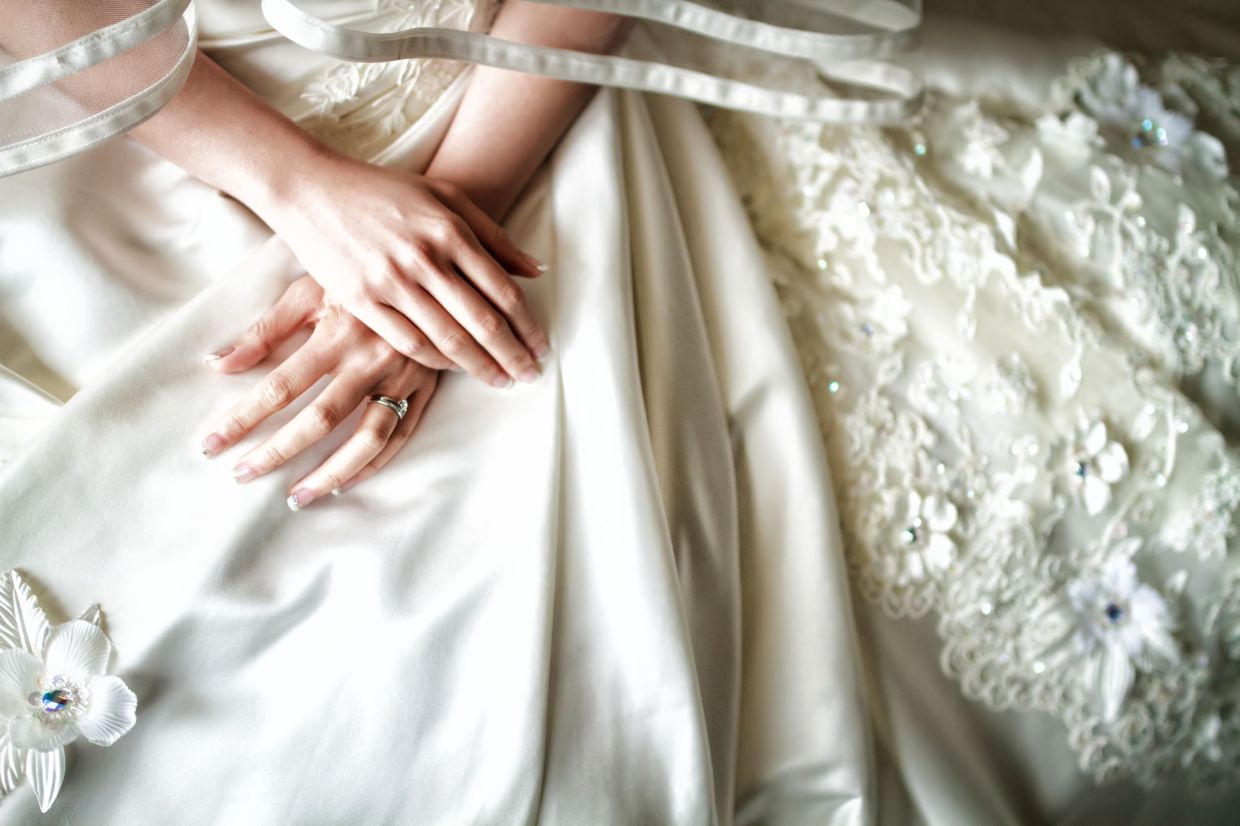
The decision to part with a wedding dress—especially one passed down through generations—ranks among the most emotionally fraught choices in fashion. For many, these garments represent far more than the fabric and stitching that compose them. They embody family legacies, pivotal life moments, and connections to relatives who have worn them before. The struggle to know what to do with these treasured pieces reflects a deeper truth about how clothing functions in human experience: garments serve as tangible links to our past, preserving memories that might otherwise fade entirely.
Clothing acts as what might be called a wormhole to personal history. Unlike photographs, which merely document moments, clothes carry the physical imprint of their wearers—the scent of perfume, the wear patterns that reveal how a person moved through the world, even the alterations made to fit a particular body at a particular time. A mother's wedding dress, in particular, embodies her life story and the historical context of her era. It bridges generations, connecting a daughter or granddaughter to an ancestor through a tangible object. This phenomenon has inspired entire scholarly disciplines devoted to understanding how textiles and fashion capture human experience in ways that few other artifacts can match.
Yet this emotional attachment creates genuine dilemmas. Modern life demands practical solutions: closets have finite space, storage costs money, and the accumulated weight of sentimental possessions can become psychologically burdensome rather than uplifting. The tension between hoarding and heritage preservation is real and complicated. Many people find themselves trapped between reverence for family tradition and the liberating sense of freedom that comes from consciously releasing attachments to the past. This paradox becomes especially acute for those without children or heirs to pass garments to, making the question of a dress's future feel suddenly urgent and personal.
Cameron Silver, a luxury brand consultant and founder of Decades, one of North America's pioneering high-end vintage retailers, frames this process as deeply therapeutic. Silver notes that his work often requires him to function more as a counselor than a fashion expert. His approach centres on helping individuals clarify their own motivations rather than pressuring them toward predetermined outcomes. Silver recommends beginning with three fundamental questions: Does the garment still fit your body and your lifestyle? Will you genuinely wear it again in realistic circumstances? And most revealing of all—how would you feel if this piece were suddenly lost or destroyed? These questions help separate genuine attachment from mere inertia.
For those determining that a dress deserves to remain part of their lives, transformation offers one avenue. Converting a wedding gown into a christening dress, cocktail gown, or even decorative home textile allows the garment to serve new functions while retaining its physical essence. Yet this approach carries risks: altering a family heirloom fundamentally changes its identity and may erase its original significance. Something intangible can be lost when a dress's primary purpose shifts, even if its material substance remains intact. This path works best when done deliberately and documented carefully, so future generations understand what happened and why.
Donation presents another meaningful alternative, one that transforms a personal keepsake into a community resource. Organizations such as Brides Across America distribute wedding gowns to engaged military personnel and emergency medical workers who lack resources to purchase new dresses. This approach infuses a garment with fresh meaning and purpose while honouring its fundamental function. Emily Spivack, who works with wedding dress preservation, suggests an elegant enhancement to this method: writing a note detailing the dress's provenance and attaching it to the garment. This practice ensures that whoever receives the dress inherits not just fabric but story—understanding the hands that wore it before and the occasions it graced. Such narrative continuity transforms donation from simple disposal into a deliberate act of connection across strangers.
Memory preservation without physical retention offers a third pathway. Spivack conducts workshops where participants bring garments of family significance, photograph them, document their histories, and record associated stories. This process allows people to release the physical object while preserving what truly matters: the memory and family narrative. The documentation can be shared among relatives through digital formats or printed records, ensuring that younger generations access these stories regardless of whether the dress itself survives. Many people report feeling psychologically liberated after completing this exercise, having processed their emotional attachment while creating lasting records.
Institutional preservation has emerged as an increasingly viable option. Universities including Smith College, Drexel University, and Ohio State University now actively collect wedding gowns and related garments, valuing them not for their designer pedigree but for their capacity to illuminate ordinary lives. These academic collections differ fundamentally from traditional costume museums focused on design innovation or textile artistry. Instead, they treat clothes as historical documents capable of revealing intimate details about social practices, economic conditions, gender roles, and cultural values. Cornell University's Fashion + Textile Collection, for instance, maintains nearly 350 wedding gowns among its 11,000 objects, each serving as a teaching resource.
One particularly striking example within Cornell's collection illustrates this educational approach: a 1942 wedding gown created by British dressmaker Cylka Berke for her own wartime London wedding. The dress exemplifies design innovation driven by necessity—Berke maximized yardage while minimizing waste in response to material scarcity. Because silk was requisitioned for military purposes including parachutes and escape maps, Berke used rayon instead, a choice that now preserves the dress's remarkable whiteness decades later. Though Berke herself remains relatively unknown outside fashion history circles, her dress communicates powerful truths about rationing, ingenuity, and the persistence of ritual even amid global conflict. A garment that might have seemed disposable to its maker now serves as a historical document connecting students to lived experiences of past generations.
For Malaysian and Southeast Asian readers, these considerations carry particular resonance given regional traditions of family heirlooms and multi-generational households. The decision frameworks discussed here apply equally to traditional wedding garments—kebaya, sarongs, and intricate beadwork that carry cultural and familial significance. The tension between preservation and practicality, between honoring ancestral connections and embracing contemporary life, reflects broader questions about cultural continuity in rapidly modernizing societies. As families become more geographically dispersed and smaller, the challenge of stewarding heirloom garments grows more acute. Understanding these various pathways—transformation, donation, documentation, and institutional preservation—offers concrete strategies for maintaining family connections while acknowledging the realities of modern life. The choice to let go need not mean losing what a garment represents; it can instead mean transferring that meaning into forms that serve present and future generations more actively.

