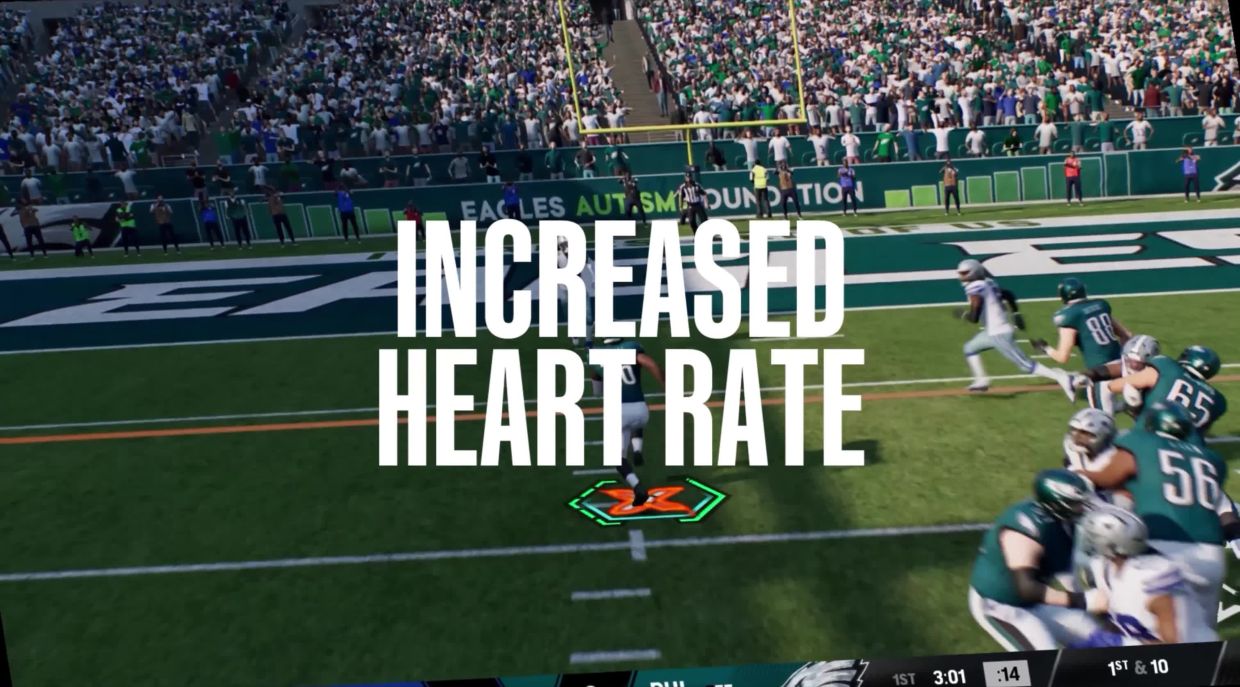
The collision happens in milliseconds. A linebacker drives into running back Cam Skattebo, and his head smashes against the turf. In real National Football League games, such an impact carries genuine risk of brain damage. Yet for decades now, players who boot up the latest Madden title experience something peculiar: every conceivable injury except concussions.
This erasure was not accidental. The deliberate removal of head injuries from Electronic Arts' flagship football simulation reflects a broader tension between realistic sports entertainment and the sport's complicated relationship with player safety. When the NFL faced intense public scrutiny over brain injuries—highlighted by high-profile deaths, multibillion-dollar settlements, and a major motion picture starring Will Smith—the league quietly encouraged the game's developers to downplay this particular threat. By the end of the 2010s, concussions had vanished from the virtual gridiron almost entirely, replaced by a clinical silence that mirrors the sport's own historical denial.
Some members of the gaming community, however, have refused to accept this omission. A group of modders has created an intricate modification adding concussion mechanics back into Madden, complete with a nine-thousand-line code that simulates the genuine symptoms athletes experience after head trauma. When players download this free addon for the computer version of the game, routine tackles trigger something far more unsettling than a player limping back to the sideline. Gamers encounter blurred vision, heightened sensitivity to light, nausea, elevated heart rates, disorienting headaches, laboured breathing, ringing in the ears, and screen distortion accompanied by audio feedback designed to disorient. The modification is modest in reach, but its message cuts through the industry's calculated silence about brain injury risks in professional football.
The broader context makes this standoff particularly significant for regions like Southeast Asia, where American football's popularity continues growing among younger audiences who consume Madden through streaming, imports, and digital platforms. If the game industry normalizes the omission of serious injuries, it shapes cultural expectations about what constitutes acceptable risk in athletic competition. Chris Borland, the linebacker who famously retired from the National Football League after just one season due to concerns about chronic traumatic encephalopathy, acknowledges the mod's noble intentions while questioning whether digital representation truly captures lived experience. "It's realism up to a point," Borland explained, noting that no modification can simulate the psychological deterioration—marital strain, cognitive decline, personality changes—that often accompanies post-concussion existence. The visual and auditory disturbances are theatrics compared to the authentic devastation of long-term brain injury.
Electronic Arts has maintained studied silence on the controversy, declining to comment on its design decisions. However, behind the scenes, the relationship between the publisher and the National Football League's licensing department involves annual reviews where league officials provide guidance on content. During these negotiations, discussions about concussion mechanics have apparently surfaced multiple times. A former league executive recalled that the National Football League's representatives wanted any head injury inclusion to feel authentic rather than arbitrary, since concussions in actual games occur unpredictably—two identical impacts might injure one player while leaving another unscathed. This technical complexity became a justification for eventual removal.
The elimination coincided precisely with the era when mainstream America finally reckoned with football's brain injury crisis. Junior Seau, the Hall of Fame linebacker beloved by fans, died by suicide and was posthumously diagnosed with chronic traumatic encephalopathy, a degenerative brain condition linked to repeated head trauma. The National Football League subsequently paid more than US$1.5 billion in settlements to thousands of former players and their families who had brought legal action alleging the league systematically concealed knowledge of brain injury dangers. These pressures created an environment where appearing to normalize or gamify concussions seemed commercially dangerous. Ben Utecht, a tight end who retired in 2010 specifically because of concussion concerns, articulated the league's underlying motivation: franchises wanted parents and children to remain enthusiastic about football, not frightened by its neurological consequences. Yet Utecht questioned the logic of removing only head injuries while retaining ankle sprains, ligament tears, and other wounds—a selective erasure that treats brain trauma as uniquely embarrassing.
The contradiction becomes even sharper when examining what still appears in contemporary Madden titles. Gamers routinely manage ankle bruises, deciding whether risk further injury by keeping a hobbled player on the field or substitute in fresh legs. They can witness trainers tending wounds, see players writhe in pain, and make strategic decisions around injury management. In earlier versions during the 1990s and early 2000s, concussions received explicit visual representation—ambulances would arrive, and injured players underwent what appeared to be neurological assessment protocols. Those mechanics vanished not because the technology became impossible, but because the league and publisher determined that highlighting head injury risks contradicted their commercial interests in expanding football's audience.
Last season, the National Football League reported 168 diagnosed concussions across its professional ranks, up from 129 the previous year, a rise the league attributed to rules encouraging more kick returns and dynamic play. The league maintains sideline "blue tents" where medical staff evaluate players exhibiting concussion symptoms, part of a formal protocol developed in response to years of criticism. Yet this same league that invested substantially in safety infrastructure simultaneously encouraged its primary entertainment product to erase head injuries from its digital simulation. This inconsistency troubles those advocating for genuine awareness among younger fans.
The fan-created concussion modification exists partly as tribute to Derek Sheely, a fullback at Frostburg State University in Maryland who suffered fatal head injuries during a college football practice in 2011. According to court documents, Sheely complained of a headache after absorbing an initial impact but was verbally berated by coaching staff and returned to a seven-on-seven drill. Following a collision with a defensive back, he collapsed and never regained consciousness. His family eventually settled for US$1.2 million with the NCAA and Frostburg State, which was compelled to retire his number, 40, and display it permanently on campus. When players complete their Madden games using the concussion modification, a banner materializes featuring Sheely's retired jersey—a digital memorial to an athlete whose death exposed the sport's dangerously casual approach to head trauma among younger competitors.
Kristen Thomson Sheely, Derek's mother and executive director of the Derek Sheely Foundation, understood Madden's enormous influence because her son played the game religiously. She recognized that a modification reaching millions of young gamers represented unprecedented opportunity for consciousness-raising among an audience that might never purchase specialized concussion education materials or attend awareness seminars. When a teenager simultaneously experiences authentic concussion symptoms while playing Madden—the disorientation, the sensory overload, the cognitive disruption—it creates visceral understanding that transcends abstract warnings about brain safety. For Southeast Asian parents and educators concerned about American football's expanding popularity among youth, this dynamic becomes particularly relevant, as the region's younger generation increasingly consumes virtual sports entertainment that may either educate or obscure crucial health information.
The broader philosophical question animating this conflict concerns whether entertainment media bears responsibility for depicting serious real-world consequences. The modification's creators invested thousands of lines of code believing that experiential learning—feeling concussion symptoms firsthand rather than reading statistics—would motivate genuine behavioral change and advocacy. This optimism reflects a growing recognition that video games constitute powerful educational and consciousness-raising tools, particularly for younger audiences. Yet the industry's commercial incentives continue pushing in the opposite direction, toward sanitization that protects sport's appeal while downplaying its dangers. Until publishers, leagues, and regulators align their safety messaging across platforms—acknowledging head injuries as seriously in entertainment as in medical protocols—the gap between virtual sport and authentic risk will persist.

