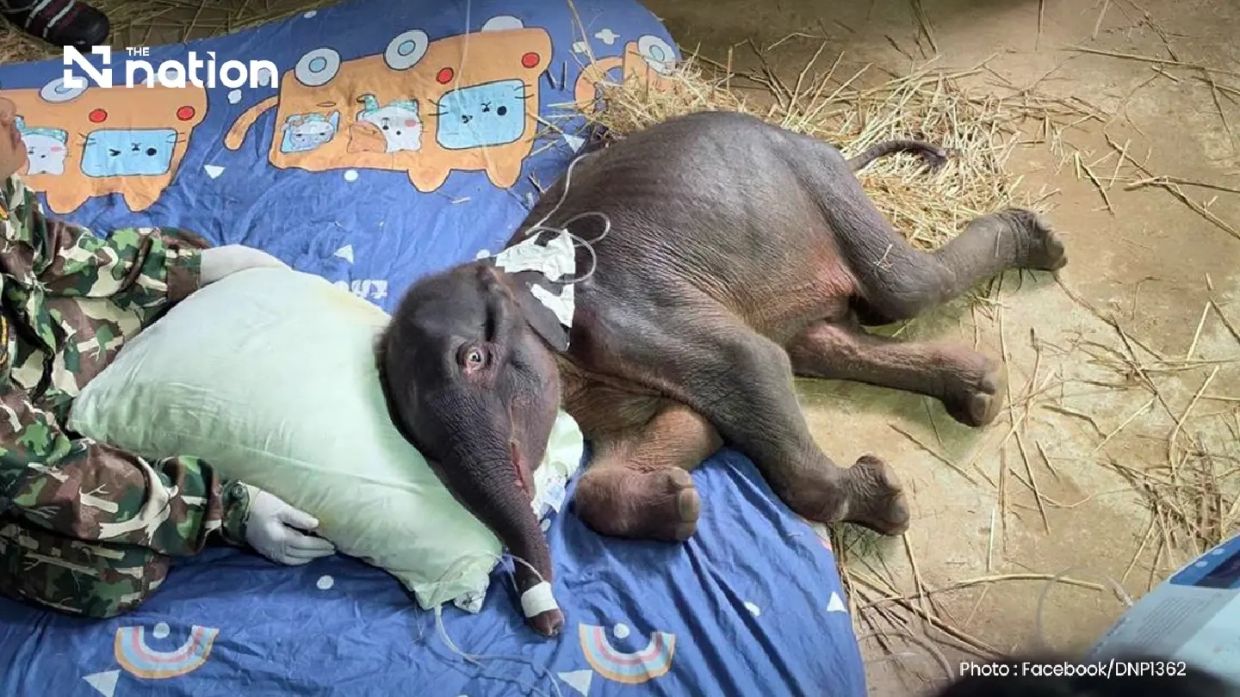
Thailand's Department of National Parks, Wildlife and Plant Conservation mourned the loss of a young wild elephant calf on Tuesday, August 4, after an intensive three-day rescue and rehabilitation effort ended in the animal's death. Jiew Sai Yok, separated from its herd in Kanchanaburi province's Sai Yok National Park, passed away peacefully at approximately 2am following what veterinarians believe was acute kidney failure, though the exact cause remains under investigation.
The calf's ordeal began when villagers spotted the distressed animal near the Huai Mae Nam Noi riverbank on July 30. The remote, difficult-to-access location required a boat journey lasting one to two hours to reach the site, complicated further by heavy rains that swelled water levels and threatened forest runoff. Despite these logistical challenges, rescue teams successfully transported the weak and visibly struggling calf to safety, though no trace of its mother or wider herd could be found in the vicinity. Authorities speculated that the young elephant had been separated from its family for approximately two days, alone and without maternal care or milk.
Upon initial examination, the calf presented a heartbreaking portrait of distress and physical deterioration. The animal bore multiple wounds and sores, including severe oral injuries, abrasions, blisters with necrotic tissue on its trunk, navel damage, and conjunctivitis caused by insect irritation around its eyes. Medical staff documented dehydration so severe that the calf's urine had darkened to a troubling yellow-red hue, while its digestive system showed signs of compromise through loose, foul-smelling stools. Mouth ulcers roughly the size of a 10-baht coin further hindered the calf's ability to feed, though small quantities of canker-like wounds suggested possible infection. Encouragingly, laboratory examinations found no evidence of parasitic infestation or maggot colonisation, sparing the animal from additional suffering.
Recognising the calf's critical condition, park officials made the difficult decision to relocate it to Sai Yok National Park headquarters, where veterinary teams could provide round-the-clock intensive care. This move reflected Thailand's genuine commitment to elephant conservation and animal welfare, priorities increasingly important across Southeast Asia as wildlife populations face mounting pressures from habitat loss and human-animal conflict. The transferred calf received continuous intravenous fluid therapy and oxygen support, addressing severe dehydration and supporting failing organ function. Every two to three hours, staff encouraged the weakened animal to consume 350 to 500 millilitres of milk, monitoring each feeding closely for signs of improvement.
For more than two days, the veterinary team witnessed moments of hope alongside deepening concern. The calf periodically demonstrated resilience, mustering strength to attempt standing and maintaining appetite despite obvious weakness. Yet simultaneously, persistent diarrhoea and the characteristic dark urine suggested underlying systemic failure that medical intervention could not reverse. The young elephant's continued vocalisations—echoing the cries it had made desperately calling for its mother during that first lonely night in the forest—moved those working tirelessly to save its life. Despite exhaustive efforts and expert care, the gap between determination and outcome proved insurmountable.
The calf fell asleep in the early morning hours of August 4, slipping peacefully into death as veterinarians provided continuous support. When the animal failed to awaken, the medical team initiated full resuscitation procedures, but their interventions proved futile against whatever internal damage had already accumulated. Laboratory blood analysis pointed toward acute kidney failure as the primary suspect, though veterinarians also noted the possible presence of congenital abnormalities in internal organ development—conditions that might have sealed the calf's fate regardless of human intervention. These preliminary findings, combined with planned necropsy and additional laboratory testing, will help clarify whether the animal's separation from its herd represented the final stressor on an already compromised constitution.
The incident carries sobering implications for Southeast Asia's wild elephant populations, which face increasing fragmentation as human development expands into traditional habitats. Young elephants separated from their mothers face astronomical survival odds in the wild, lacking both the nutritional support and the protective knowledge that herds provide. Thailand's Sai Yok National Park and similar protected areas represent crucial sanctuaries, yet the resources required for emergency intervention and intensive care remain limited across the region. The case of Jiew Sai Yok, despite the best efforts of dedicated professionals, underscores both the value of conservation infrastructure and the harsh realities that wildlife still confronts.
The Department of National Parks, Wildlife and Plant Conservation publicly commended the veterinary teams and rescue personnel who devoted themselves entirely to the calf's care until the final moment. This gesture of appreciation reflects growing recognition that such efforts, even when ultimately unsuccessful, represent essential work in documenting animal suffering and advancing understanding of wildlife medicine in tropical Asian contexts. The planned necropsy examination may yield insights into kidney function, developmental abnormalities, and the physiological stress that separation and deprivation imposed on the young animal. These findings could inform future rescue protocols and treatment strategies, potentially improving outcomes for other elephants facing similar circumstances.
For Malaysian readers and wider Southeast Asian observers, the Jiew Sai Yok case serves as a poignant reminder of the precarious existence facing wild elephants across the region. Thailand shares significant elephant populations and conservation challenges with Malaysia, where similar incidents involving separated calves have occurred. Both nations struggle to balance human economic expansion with habitat preservation, and both have invested in national parks and veterinary infrastructure aimed at protecting these iconic animals. The loss of this young elephant, despite professional rescue attempts, highlights the limitations of reactive conservation strategies that address symptoms rather than root causes. Moving forward, regional cooperation on habitat connectivity, herd protection, and cross-border wildlife management may prove more effective than individual rescue operations alone.

