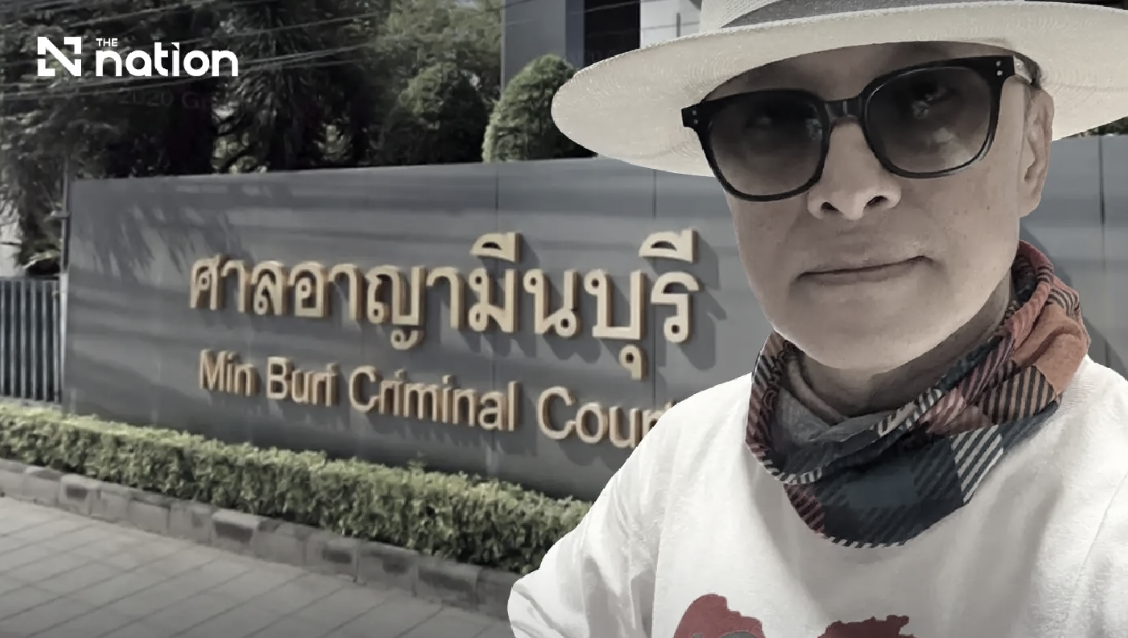
A Thai court has handed down a two-year prison sentence to Manasawin Nantasen, a 64-year-old singer better known by his stage name Tik Shiro, for causing a fatal crash while intoxicated in October 2024. The conviction marks a rare instance of accountability for a high-profile entertainer in Thailand, where concerns about selective justice for the wealthy and well-connected have long festered in public discourse. The sentencing was delivered in Bangkok on Wednesday, June 24, concluding a case that captured national attention and sparked conversations about whether celebrity status insulates individuals from legal consequences in the kingdom.
Tik Shiro ascended to stardom during the late 1980s and 1990s, becoming one of Thailand's most recognizable entertainers through his distinctive fashion sense and performance style. His signature look—combining a fedora hat, leather jackets, and fluid dance choreography—drew inevitable comparisons to Michael Jackson, ultimately resulting in the "Thailand's Michael Jackson" epithet that followed him throughout his career. During the peak of his influence, he maintained substantial visibility in Thai popular culture, commanding the kind of recognition that typically afforded its holders considerable social standing and public goodwill.
The circumstances surrounding the October 2024 incident were straightforward yet tragic. While driving across a Bangkok bridge in an intoxicated state, Tik Shiro's vehicle collided with a stationary motorcycle. The collision claimed the immediate life of a 28-year-old woman positioned on the bike. The impact proved equally catastrophic for her younger brother, aged 21, whom the force dislodged from the motorcycle and sent plummeting from the bridge. Though he initially survived the fall, the 21-year-old succumbed to his injuries while hospitalised, bringing the death toll to two. Police documentation confirmed that alcohol impairment was the determining factor in causing the collision.
What transpired in the immediate aftermath of the crash became as significant as the incident itself, revealing the complex emotional and media dynamics at play. Video footage showing Tik Shiro kneeling in apparent anguish at the accident scene circulated widely across Thai social media platforms and news outlets. The imagery seemed designed to convey remorse and human vulnerability, yet it simultaneously highlighted the wider pattern in which similar accidents involving wealthy or famous individuals often receive differential treatment. For Thai observers accustomed to high-profile cases dissolving without conviction or accountability, the viral spread of these images carried loaded meaning about celebrity status and the judicial process.
The Bangkok criminal court's sentencing reflected acknowledgment of several mitigating factors in fashioning its two-year prison term. Court documentation noted that Tik Shiro had surrendered to authorities voluntarily and offered cooperative testimony that assisted the judicial process. Beyond legal compliance, the defendant had undertaken actions consistent with expressions of remorse—attending the funeral services of the two victims and arranging financial compensation packages for their bereaved families. These demonstrations of contrition, combined with his cooperation with investigators, influenced the court's determination of the appropriate sentence length, though the bench imposed revocation of his driving privileges as an additional sanction.
The Tik Shiro conviction occurred alongside another entertainment industry legal matter that underscored ongoing accountability questions. Rock musician Sek Loso was released from prison on the same Wednesday after completing slightly more than one year of incarceration for drug possession and illegal firearm offences. While Sek Loso's release represented the completion of his sentence rather than early clemency, it nonetheless contributed to a week where the Thai justice system appeared to be processing celebrity cases with some measure of consistency.
Yet the court's handling of Tik Shiro's case must be contextualized within a broader landscape of celebrity legal proceedings that have generated substantial public scepticism. The most prominent example remains the 2012 case of Vorayuth Yoovidhya, heir to the Red Bull beverage fortune, who was accused of driving his Ferrari into a police officer in an affluent Bangkok district with fatal consequences. Despite an investigation initiated into the collision, Vorayuth Yoovidhya was never formally charged, remaining a symbol in Thai popular consciousness of how wealth and family connections can seemingly circumvent the criminal justice system.
Another illustrative case involved the son of Chalerm Yubamrung, a former Pheu Thai party Member of Parliament, who faced allegations of fatally shooting a man in a crowded Bangkok nightclub during 2001 following an interpersonal dispute. Despite the gravity of the accusation and its occurrence in a public venue, the defendant achieved acquittal based on judicial findings regarding insufficient evidentiary support. Such outcomes have cultivated persistent perceptions among Thai citizens that the affluent and politically connected navigate legal systems with significantly greater ease than ordinary citizens.
The distinction between Tik Shiro's conviction and these other high-profile cases raises analytical questions about what factors determine differential outcomes. Unlike Vorayuth Yoovidhya or Chalerm Yubamrung's son, Tik Shiro lacked the insulation of ultra-wealth or direct political family connections that might mobilize powerful networks. Furthermore, the overwhelming public attention generated by viral video evidence and widespread media coverage may have constrained judicial discretion in ways not present in other cases. The immediate nature of the evidence—physical harm occurring on a public bridge—allowed fewer avenues for investigative complications or evidentiary disputes.
From a Malaysian and Southeast Asian perspective, the Tik Shiro case reflects judicial dynamics familiar across the region. Thailand's handling of celebrity cases mirrors patterns observed in neighbouring jurisdictions, where questions persistently arise about whether legal systems operate on genuinely equal footing or whether social status, wealth, and connections meaningfully influence outcomes. The case demonstrates that while justice can occasionally reach prominent figures, the broader pattern suggests that such accountability remains contingent on circumstances rather than guaranteed by the principle of equal treatment under law.
Looking forward, the Tik Shiro conviction may carry implications for how Thai courts approach future cases involving intoxicated driving by public figures. The sentence sends a deterrent message, though whether it will fundamentally alter patterns of selective accountability remains uncertain. Public perception in Thailand reflects hard-earned skepticism about whether high-profile convictions represent genuine systemic change or merely exceptional cases that emerge when overwhelming evidence and media attention leave judges insufficient latitude for discretionary leniency.

