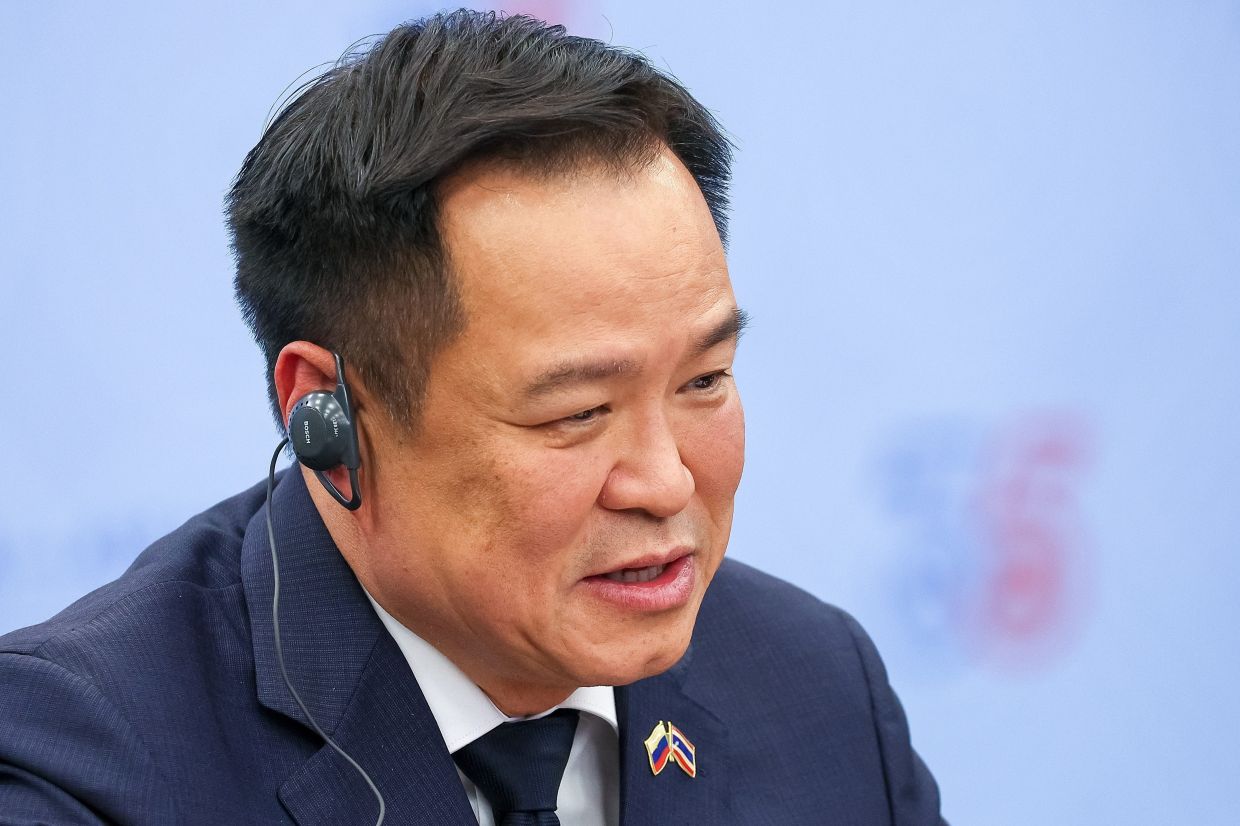
Prime Minister Anutin Charnvirakul's first 100 days in office since his swearing-in on March 20 have established him as a capable crisis manager, yet they also reveal a government content with short-term firefighting rather than confronting Thailand's entrenched economic malaise. The centrist leader's tenure, which began nine months after inheriting the premiership from Paetongtarn Shinawatra before consolidating power through February's general election, demonstrates a strategic prioritisation of immediate political survival over the transformative agenda many Thais have called for.
Thailand's vulnerability to external shocks materialised quickly when the February 28 US-Israel military operations against Iran disrupted global energy supplies. The resulting spike in crude oil prices and shipping disruptions through the Strait of Hormuz exposed how a country in Southeast Asia, despite geographic distance from Middle Eastern conflicts, remains dangerously exposed to maritime crises beyond its control. Fuel panic buying paralysed petrol stations, while oil prices climbed above US$100 a barrel for extended periods, threatening to undermine industrial competitiveness and household purchasing power at a critical moment.
Anutin's government responded swiftly by deploying the national Oil Fuel Fund to subsidise petrol and diesel, simultaneously reducing borrowing costs for farmers and industrial operators. Domestically, the administration ramped up coal-fired power plants to maximum capacity and diversified import sources, drawing additional supplies from Malaysia, Brunei, and the United States. These measures prevented the energy crisis from spiralling into broader social discontent. Mathis Lohatepanont, a political science researcher at the University of Michigan, observed that the government "weathered the initial storm" and "managed to avoid further instability" despite early supply disruptions and sharp price spikes. Tellingly, no mass protests erupted as they might have in previous administrations, suggesting Anutin successfully defused what could have become a destabilising flashpoint.
Beyond energy management, Anutin delivered early political dividends by adopting an assertive stance on the Cambodia border dispute. His Bhumjaithai Party had campaigned on nationalist grounds and secured the most seats in February's election partly through this appeal. Following through on campaign rhetoric, Anutin maintained military-led border security operations and unilaterally terminated the 2001 bilateral maritime boundary agreement with Cambodia, escalating the matter to United Nations arbitration. This hardline approach satisfied his core constituency and demonstrated policy continuity between campaign pledges and governing action, a rarity in Thai politics.
In domestic affairs, Anutin fulfilled another campaign commitment through the "Thais Help Thais Plus" subsidy scheme, launched June 1 and designed to provide immediate relief to households struggling with inflation. The programme permits approximately 30 million eligible citizens aged 18 and above to purchase selected goods from participating retailers at 40 per cent of the listed price, with government covering the remainder through a 176 billion baht (US$5.27 billion) allocation. The initiative proved politically popular and demonstrated the government's willingness to channel resources toward consumption support, addressing voter grievances about cost-of-living pressures.
However, academic observers recognise that subsidy schemes, while electorally attractive, function as temporary palliatives. Puangthong Pawakapan from Chulalongkorn University's political science faculty noted that many Thais understand these programmes provide only fleeting relief without addressing "the underlying economic crisis" gripping the nation. Mathis similarly cautioned that "it is too early to assess the Anutin government's success on longer-term structural policies," implying that verdicts must await evidence of substantive economic reform.
Thailand's structural economic challenges have festered due to decades of political instability, with military coups and short-lived governments preventing the policy continuity necessary for long-term planning. The country struggles with anaemic growth, an ageing population straining social services, and elevated household debt constraining consumer spending. Over the past five years, Thailand's economy has repeatedly failed to exceed three per cent annual growth, a concerning trajectory for a middle-income economy facing competition from regional peers. The International Monetary Fund projects mere 1.5 per cent expansion for the current year, making Thailand the slowest-growing major economy in Southeast Asia. By contrast, Vietnam is forecast to expand 7.1 per cent, Cambodia 4 per cent, and even Myanmar 3 per cent despite ongoing civil conflict, highlighting how political turmoil and structural rigidity have eroded Thailand's regional economic position.
Anutin has articulated ambitions to develop new economic drivers centred on digital technology, artificial intelligence, and renewable energy, yet analysts have detected no coherent roadmap translating these rhetorical commitments into implementable policy. Stithorn Thananithichot of Chulalongkorn University's Political Science Faculty observed that "energies have gone into routine administration and day-to-day management rather than into any initiative aimed at meaningful economic or political change." This characterisation suggests that government priorities remain narrowly focused on avoiding immediate crises rather than architecting the transformative governance that Thailand's stagnating economy demands.
Constitutional reform exemplifies this apparent reluctance to pursue structural change. Nearly 60 per cent of voters—approximately 20 million citizens—endorsed constitutional amendments in a February referendum, reflecting widespread dissatisfaction with the 2017 charter drafted under former coup leader Prayut Chan-o-cha. The document remains widely regarded as fundamentally undemocratic, yet Anutin's government has allocated minimal political capital toward constitutional revision. Stithorn argued that "a government that intended to reform would have signalled at least one substantive structural commitment at the outset; this one did not, and that absence is by design rather than a matter of time."
This apparent aversion to meaningful reform becomes particularly significant when contextualised against Thailand's position within Southeast Asia's competitive landscape. Regional neighbours are advancing technological modernisation, educational reform, and infrastructure development while Thailand appears trapped in reactive governance. Anutin's 100-day mark thus serves less as a platform for announcing transformative initiatives than as a waypoint demonstrating incremental consolidation of political control. The government has stabilised immediate threats—energy supply disruptions, border tensions, household inflation—sufficient to maintain public acquiescence. Yet this success masks a deeper question confronting Thailand's medium and long-term prospects: whether political stability without structural economic reform constitutes governance or merely sophisticated stagnation. For Malaysian policymakers and regional observers, Thailand's trajectory offers cautionary lessons about the limits of crisis management divorced from sustained economic transformation.

