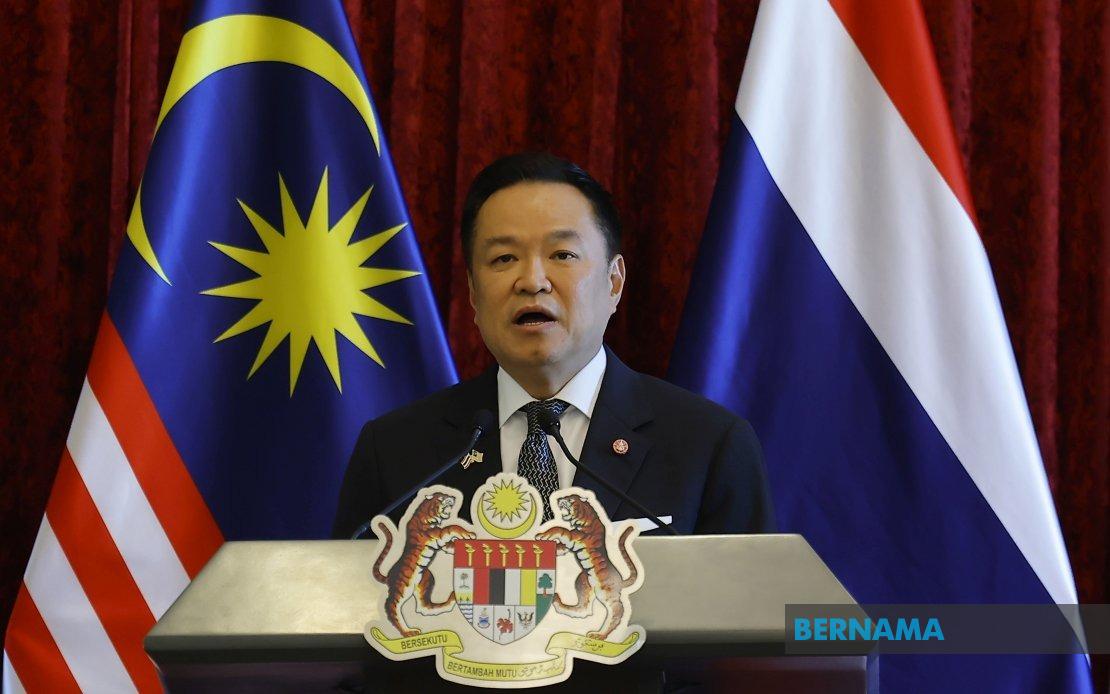
Thailand's Prime Minister Anutin Charnvirakul has publicly backed Malaysian Prime Minister Datuk Seri Anwar Ibrahim in the forthcoming Johor state election, offering encouragement as the region's political landscape continues to shift. At a joint press conference held in Putrajaya during his official two-day visit to Malaysia, Anutin expressed his hopes for a successful outcome for Anwar's coalition, marking a symbolic gesture of regional solidarity at a critical moment for Malaysia's political establishment.
The timing of Anutin's visit is particularly significant, arriving just days before Saturday's state election in Johor, one of Malaysia's largest and most politically consequential states. The Johor poll represents a crucial test for Anwar's Pakatan Harapan coalition, which has consolidated its presence across the peninsula since the 2022 general election. With 172 candidates competing for 56 state assembly seats, the contest has drawn considerable national attention as a barometer of public sentiment towards the current federal administration.
Packatan Harapan's campaign strategy reflects a measured approach, fielding representation across all 56 constituencies through a carefully balanced slate combining established political figures with fresh faces drawn from its three component parties—PKR, DAP, and Amanah. This composition suggests a deliberate effort to maintain organisational momentum whilst introducing new voices to the electorate. The breadth of the coalition's candidate roster signals confidence in its ability to compete effectively across diverse demographic and geographical constituencies within the state.
Anwar's characterisation of his meeting with Anutin as warm and productive underscores the personal rapport between the two leaders, which has developed significantly since Anutin's reappointment as Thailand's Prime Minister in March 2026. The Malaysian premier's informal language—describing the encounter as reminiscent of friends gathering—reflects the informal yet substantive nature of contemporary bilateral diplomacy in Southeast Asia, where personal relationships often facilitate deeper institutional cooperation. Anwar's explicit invitation for Anutin to return soon suggests Malaysia's interest in cementing these connections through regular high-level engagement.
Thailand's investment in strengthening ties with Malaysia reflects broader strategic calculations within Southeast Asia. The two nations share extensive border regions, significant trade relationships, and overlapping security concerns ranging from transnational crime to regional stability. For Thailand, maintaining robust relations with Malaysia's federal government provides stability along its eastern frontier and ensures cooperation on pressing transnational issues. Conversely, Malaysia benefits from stable relations with its northern neighbour, particularly given shared challenges related to cross-border trafficking, labour migration, and environmental management.
Anutin's visit programme included discussions aimed at deepening cooperation across multiple sectors, though specific details of the bilateral agenda remain limited in public statements. Typically, such high-level visits address trade expansion, tourism promotion, labour agreements, security cooperation, and cultural exchanges. For a Thai leader, Malaysia represents a crucial partner in advancing Thailand's broader Southeast Asian diplomacy and regional influence. The official nature of the visit, coupled with Anwar's prominent public reception, suggests both nations view this relationship as foundational to their respective regional strategies.
The electoral context adds another dimension to Anutin's visit. While foreign leaders traditionally avoid direct intervention in domestic electoral contests, public expressions of goodwill carry subtle political weight. Anutin's wishes for Anwar's success, delivered at an official press conference, effectively signal international confidence in the current Malaysian administration. This endorsement may carry particular resonance in Johor, where perceptions of political stability and effective governance influence voter calculations. For constituencies concerned about Malaysia's international standing and regional relationships, evidence of strong ties with neighbouring nations can reinforce support for incumbent federal leadership.
Johor's electoral significance extends beyond state-level implications. As Malaysia's third-most populous state and a crucial economic hub, Johor's political composition influences the balance of power within the federal parliament and national policymaking. A strong Pakatan Harapan showing in Saturday's poll would provide Anwar's coalition with additional momentum heading into subsequent electoral contests, whilst strengthening his negotiating position within the government's existing coalition structure. Conversely, a mixed result could complicate internal coalition dynamics and provide opposition coalitions with strategic opportunities.
The broader context of Malaysia-Thailand relations remains important for regional observers. Both nations navigate complex balancing acts between major powers whilst maintaining ASEAN consensus and driving subregional integration initiatives. Recent years have witnessed increased economic interdependence, with Thai investment flowing into Malaysian manufacturing and services sectors, whilst Malaysian businesses expand operations across Thailand. Educational exchanges, tourism flows, and labour migration create extensive people-to-people connections that supplement official diplomatic channels.
Anutin's tenure as Thailand's Prime Minister has emphasised pragmatic engagement with neighbouring states, often prioritising economic cooperation over ideological posturing. His visit to Malaysia during the Johor election campaign reflects this orientation, reinforcing Thailand's interest in stability and predictability from its southern neighbour. For Anwar, hosting a high-profile regional leader days before a crucial electoral test provides tangible evidence of Malaysia's diplomatic relevance and his government's international standing—factors that resonate beyond political elites to influence broader public perceptions of national leadership.
The electoral outcome in Johor will likely shape Malaysia's regional diplomacy in subsequent months. A decisive victory for Pakatan Harapan would validate Anwar's leadership trajectory and strengthen his position in negotiating with coalition partners and opposition figures alike. The state's result may also influence neighbouring Singaporean and Thai perspectives on Malaysia's political stability and economic policy direction. Regional investors and traders monitor such electoral outcomes closely as indicators of governance continuity and policy consistency, making Johor's Saturday poll relevant to business confidence across Southeast Asia.

