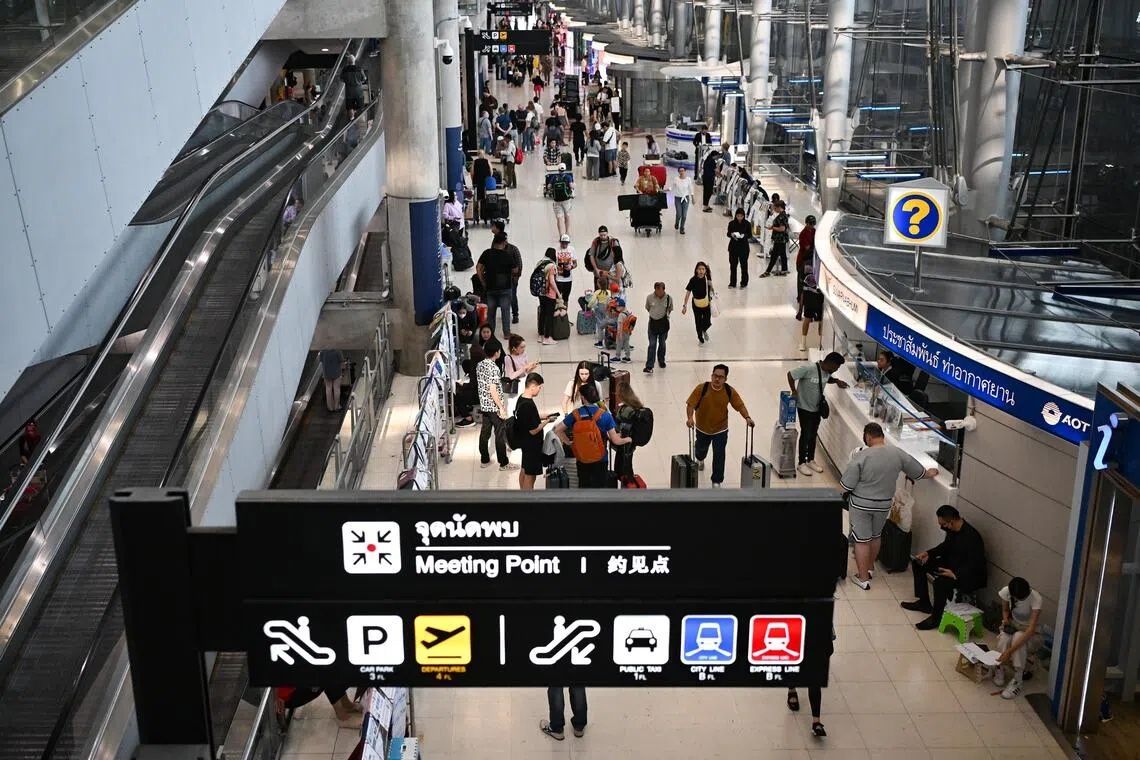
Thailand's government is moving to significantly upgrade border procedures at its busiest international gateway through an expansion of automated passport control technology. The plan involves opening the automated immigration gates at Suvarnabhumi Airport to citizens of 31 additional nationalities by the conclusion of August, a measure designed to substantially reduce processing times for the airport's ever-increasing passenger volumes. Deputy Government Spokesperson Lalida Persvivatana confirmed that the Immigration Bureau has agreed to the initiative in principle, though formal documentation remains pending completion.
The expansion reflects the scale of operational pressures facing Bangkok's primary international airport. The facility processes approximately 190,000 travellers on a daily basis during high tourism seasons, with international arrivals accounting for roughly 70,000 passengers per day. Peak congestion occurs during afternoon hours, particularly between 1pm and 5pm, when the airport's immigration facilities handle between 5,000 and 6,000 passengers hourly. These bottlenecks have become increasingly problematic as Thailand's appeal as a regional tourism destination continues to strengthen.
The practical impact of the initiative would be substantial. Once fully implemented, the automated systems are expected to extend eligibility to approximately 6.5 million additional annual passengers, combined with roughly 900,000 holders of specific long-term visa categories. Collectively, these figures suggest that just over half of all arriving international passengers—approximately 53 per cent—would qualify for the streamlined automated processing when the system reaches full operational capacity. This represents a meaningful shift in how Thailand manages its immigration workflows.
Implementation will proceed methodically to ensure security and operational reliability. The rollout schedule will be adjusted according to equipment availability, security protocols, and the completion of biometric data systems across participating nationalities. Visitors using the automated gates for the first time will still require standard biometric registration to establish their digital profiles within Thailand's immigration database. Officials emphasise that this staged approach balances speed with the security protocols necessary to protect national borders.
The initiative aligns with broader efforts to enhance Thailand's standing as a premier tourism destination in Southeast Asia. Deputy Prime Minister Suphajee Suthumpun and Tourism and Sports Minister Surasak Phancharoenworakul, alongside Deputy Transport Ministers including Siriphong Angkasakulkiat, visited Suvarnabhumi Airport to evaluate comprehensive immigration modernisation and passenger experience improvements. The discussions extended beyond queue reduction to encompass facility enhancements, including expanded waiting areas and dedicated transit zones designed to accommodate rising visitor numbers.
The strategic importance of these improvements reflects Thailand's competitive position within Southeast Asia's tourism marketplace. As Malaysia, Singapore, Vietnam, and Indonesia similarly invest in airport infrastructure and immigration efficiency, Thailand recognises that traveller experience at arrival is fundamental to maintaining market share. The automated gate expansion directly addresses one of the most visible friction points in the international arrival process—the immigration queue itself.
For Malaysian travellers specifically, the expansion carries direct relevance. Malaysia maintains strong tourism and business ties with Thailand, with substantial daily passenger flows between the two countries. Expanded automated processing would benefit the significant Malaysian business community in Bangkok, regular leisure travellers, and conference attendees who frequently traverse the border. Enhanced processing efficiency at Suvarnabhumi has cascading benefits for regional connectivity more broadly.
Lalida emphasised that convenience and speed represent only part of the objective. The broader vision encompasses creating an integrated arrival experience that conveys professionalism and ease from the moment travellers exit aircraft. By reducing friction at immigration, Thailand aims to establish a positive first impression that shapes visitors' entire tourism experience. This philosophy acknowledges that border procedures form part of the destination experience itself, influencing repeat visitation rates and tourist satisfaction metrics.
The timing of the initiative reflects Thailand's recovery trajectory following pandemic-related disruptions to international travel. From January 1 through July 18 of the current year, Thailand has already welcomed approximately 17.36 million foreign visitors, demonstrating robust demand recovery. Continued capacity constraints at immigration, however, threaten to undermine this positive momentum. The automated gate expansion directly addresses this constraint by deploying technology to expand processing capacity without requiring proportional increases in immigration staffing.
Longer-term infrastructure planning featured prominently in the discussions conducted at the airport. Officials identified that sustained tourism growth necessitates not merely incremental improvements but comprehensive facility development. This encompasses not only immigration modernisation but also terminal expansion, transit zone redesign, and capacity augmentation across ground transportation interfaces. Thailand's tourism authorities appear to be adopting a multi-year strategy rather than responding reactively to congestion crises.
The expansion programme demonstrates how technology can serve practical border management objectives while simultaneously enhancing destination competitiveness. By reducing the time required to process arrivals, Thailand simultaneously improves passenger satisfaction, increases terminal capacity during peak periods, and signals commitment to efficient administration. These factors collectively contribute to Thailand's broader positioning as a travel destination that values visitor time and respects the modern traveller's expectations regarding operational efficiency.
Regional observers will monitor the implementation closely, as successful automation at Suvarnabhumi could establish a template for similar initiatives across Southeast Asia. Malaysia's Kuala Lumpur International Airport, Singapore's Changi, and other major regional hubs face analogous capacity and processing challenges. Thailand's experience with scaled automated immigration could provide valuable lessons regarding technology deployment, security integration, and staff retraining in a regional context. The August deadline represents a meaningful policy implementation target that will test Thailand's capacity to execute integrated technology projects across multiple agencies.

