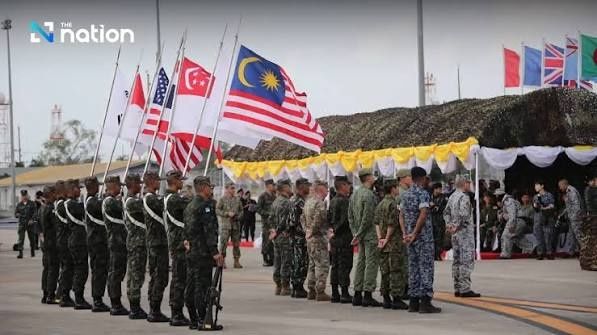
Thailand is readying a bold negotiating strategy in its upcoming trade talks with the Trump administration: linking military cooperation to tariff relief. According to officials familiar with Bangkok's negotiating position, the Thai government plans to warn that steep American tariffs could compel it to reconsider participation in joint defence exercises, including the annual Cobra Gold drills that represent one of the United States' most significant security commitments in mainland Asia. This represents a rare and calculated move to invoke the nation's longstanding strategic partnership with Washington as leverage in what are otherwise purely commercial negotiations.
The warning comes as Thailand grapples with the economic fallout from the Trump administration's sweeping tariff regime. The US has imposed a 12.5 per cent levy on most Thai exports under Section 301, a provision of American trade law designed to address what Washington deems unfair commercial practices. Thailand, which posted a trade surplus of US$51.4 billion with the United States in the previous year, now finds itself among dozens of nations scrambling to secure more favourable terms. The tariff hit carries real weight for an economy heavily dependent on exports, and Bangkok is pulling multiple levers simultaneously to mitigate the damage.
On the trade front, Thailand has already made significant concessions aimed at placating American concerns. Commerce officials have pledged to dismantle tariff barriers on American imports and align domestic product standards with US specifications for beef, lamb, and alcoholic beverages. These moves reflect genuine commitment to the bilateral relationship, though they also underscore Bangkok's vulnerability to American economic pressure. The Thai government is simultaneously accelerating legislation to ban imports of goods manufactured through forced labour, directly addressing a longstanding US concern about supply chain practices in the region.
What distinguishes Thailand's approach, however, is its calculated deployment of the security dimension. By linking military cooperation to trade outcomes, Bangkok is reminding Washington that the relationship between the two nations extends far beyond tariffs and trade balances. Commerce Minister Suphajee Suthumpun has argued that Thailand deserves preferential treatment precisely because of the countries' strategic alliance and the Treaty of Amity that binds them together, as well as Thai investment in American enterprises. The government is framing these negotiations as a comprehensive, whole-of-government endeavour involving the foreign and defence ministries alongside business groups and trade negotiators.
Thailand's leverage here rests on the outsized importance of the bilateral security partnership to American strategic interests in Asia. The Thai-US alliance represents one of Washington's oldest security commitments in the region, providing the Pentagon with critical military infrastructure and a strategic presence in mainland Southeast Asia precisely at a moment when China continues to expand its regional influence. Thailand and the United States co-host Cobra Gold, which the Pentagon describes as the largest annual multinational military exercise in mainland Asia. The last iteration drew approximately 8,000 personnel from 30 nations, demonstrating the exercise's scale and the breadth of international buy-in to the US-led security architecture in the region.
Thailand's potential leverage extends beyond simply threatening to withdraw from these exercises. The two countries' military relationship encompasses defence procurement, intelligence sharing, training programmes, and joint planning activities that have become foundational to American forward-deployed operations in Southeast Asia. Washington has demonstrated in the past that it will adjust military engagement in response to political developments—the 2014 Thai coup prompted the Pentagon to scale back Cobra Gold and suspend multiple defence initiatives, only gradually rebuilding ties as Thai political circumstances stabilised. This history illustrates both the flexibility and the vulnerability embedded in the security relationship.
Yet Bangkok's negotiating position carries inherent risks. Defence Ministry spokesman Surasant Kongsiri appeared to distance the government from the most inflammatory interpretation of the proposal, insisting that negotiations would more likely focus on deepening cooperation rather than conditioning it. The careful language here reflects an uncomfortable political reality: publicly threatening to downgrade military ties with the United States carries diplomatic costs and could alienate elements within Thailand's own security establishment. The Thai armed forces, a powerful institutional actor in Thai politics, have historically valued the American connection as a source of prestige, capability enhancement, and strategic validation.
The Pentagon has publicly reaffirmed the strength of the relationship even as these negotiations proceed. During a recent visit to Bangkok, Undersecretary of Defense Elbridge Colby met with Thai Permanent Secretary for Defence General Tharapong Malakam and publicly reaffirmed what he called the renewed strength of the US-Thai alliance. This messaging suggests that Washington is not inclined to allow tariff disputes to unravel a relationship it considers fundamental to its Indo-Pacific strategy. At the same time, the Pentagon's public reinforcement of the alliance's importance may itself reflect awareness of Bangkok's concerns about the economic consequences of American tariff policy.
For Malaysia and other Southeast Asian observers, Thailand's negotiating approach offers insights into the region's growing assertiveness in managing great-power competition. Bangkok's willingness to invoke security concerns in trade negotiations reflects a pragmatic understanding that countries sitting at the intersection of American and Chinese interests must maximise their bargaining power across all available dimensions. Thailand's strategy differs markedly from the approach of some neighbours, who have sought to compartmentalise security and economic relationships. Yet it also mirrors regional anxieties about dependence on any single power, whether Washington or Beijing.
The outcome of these negotiations will carry implications extending well beyond Thailand itself. If Bangkok successfully uses security considerations to secure tariff relief, other American allies in the region—including the Philippines, which alongside Thailand comprises the only two formal US treaty allies in Southeast Asia—may feel emboldened to adopt similar strategies. Conversely, if Washington rebuffs such linkage and proceeds with high tariffs regardless, it would signal that the Trump administration prioritises its tariff agenda over alliance maintenance, potentially prompting regional governments to reassess the value they place on security partnerships with the United States.
Thailand is seeking to maintain the tariff rate at no higher than 19 per cent, the figure discussed under an earlier negotiating framework. This target reflects Bangkok's assessment of what level of tariffs it can absorb without catastrophic economic damage. The success or failure of these trade discussions will likely determine whether Thailand's security card—one of the most potent assets it possesses in dealings with Washington—translates into tangible economic concessions or whether it remains merely a rhetorical flourish in an otherwise one-sided commercial negotiation. As the talks resume later this month, all eyes will be on whether Washington treats the security dimension as a serious consideration or brackets it aside in pursuit of unilateral trade advantage.

