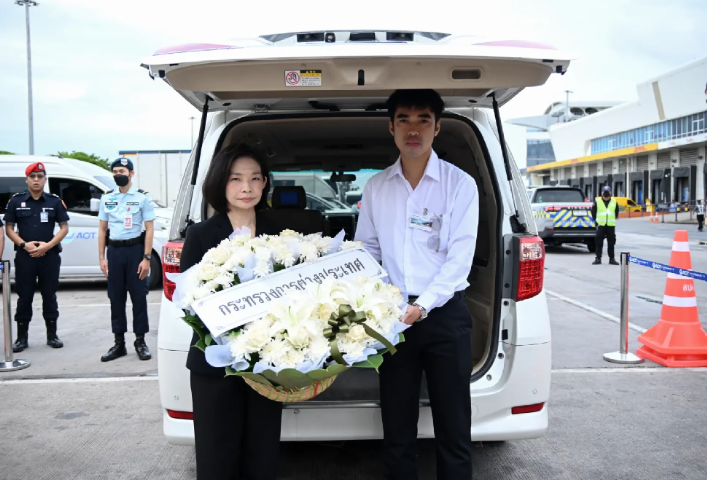
Thailand's Ministry of Foreign Affairs has completed the repatriation of travel YouTuber Bavorntat Pengsuk, popularly known as "Hlun Solo", whose death in Tbilisi, Georgia on 14 July 2026 shocked the digital content creation community and his millions of followers across Southeast Asia. The 27-year-old influencer's body has been returned to Thailand following coordinated diplomatic efforts between Bangkok and Tbilisi, marking the culmination of an intensive governmental response to secure his remains and bring closure to his grieving family.
Jaithai Upakarnitikaset, the director-general of the Department of Information and official spokesperson for the Foreign Affairs Ministry, announced the successful repatriation on Thursday (Aug 6). He disclosed that Deputy Prime Minister and Foreign Minister Sihasak Phuangketkeow had assigned Prathuangtip Sirivithes, the acting director-general of the Department of Consular Affairs, with the responsibility of ensuring the dignified reception and proper handling of Bavorntat's remains upon arrival in Thailand. This appointment underscores the significance accorded to the case by senior government officials and the priority placed on assisting the family during this difficult period.
The Royal Thai Embassy in Ankara, which holds consular jurisdiction over Georgia, has maintained continuous engagement with multiple stakeholders since initially receiving notification of Bavorntat's passing. Maintaining open lines of communication with the deceased's family members, Georgian authorities, and other relevant diplomatic and administrative officials, the embassy coordinated the complex logistical and legal requirements inherent in international repatriation cases. This sustained diplomatic presence proved essential in navigating the bureaucratic processes required by Georgian authorities and ensuring that all formalities were expedited appropriately.
Recognising the urgency of the matter, embassy personnel were dispatched directly to Tbilisi immediately following notification of the incident. These officials undertook multiple concurrent responsibilities: conducting preliminary investigations into the circumstances surrounding Bavorntat's death, liaising with local authorities to facilitate repatriation procedures, and advocating firmly with Georgian officials to resolve administrative delays that had initially impeded the process. Such direct intervention by Thai diplomatic staff reflects standard practice when Thai nationals die abroad under circumstances requiring official investigation and international coordination.
Bavorntat had cultivated a substantial following as a content creator specialising in travel documentation, building an engaged audience interested in his explorations and cultural observations. His sudden death in a foreign city during what would have been part of his creative pursuits generated considerable concern among his online community and the broader Thai digital media landscape. Travel vloggers occupy a distinctive role in contemporary Southeast Asian culture, often serving as informal ambassadors who shape perceptions of different destinations and foster cross-cultural understanding through their documentaries and personal narratives.
Following the remains' arrival in Thailand, Bavorntat's family made the decision to commission a comprehensive forensic examination conducted within Thai medical facilities. This additional investigation will complement any preliminary assessments undertaken by Georgian authorities and provide the family with complete transparency regarding the cause and circumstances of death. For families navigating international deaths, comprehensive post-mortem examination represents an important step in achieving closure and understanding, particularly when the death occurs unexpectedly abroad.
Once all necessary medical and legal procedures conclude, Bavorntat's body will be transported to his hometown located in Somdet district, Kalasin province in northeastern Thailand. There, his family will conduct traditional Buddhist funeral rites consistent with Thai cultural and religious customs. These ceremonies serve not merely as farewell rituals but as important communal and spiritual occasions for family, friends, and members of the wider community to pay respects and honour the deceased's memory through collective observance.
The repatriation process, while successful, highlights the vulnerabilities faced by Thai nationals—particularly young people engaged in independent travel, remote work, and digital content creation—when unforeseen emergencies occur abroad. Travel vloggers and digital nomads represent a significant and growing segment of Thai society, individuals who pursue professional ambitions through international mobility yet remain vulnerable to the same health and safety risks as any traveller. Bavorntat's case underscores the ongoing need for robust consular support systems and diplomatic readiness to assist citizens in foreign jurisdictions.
The Foreign Ministry's coordinated response also reflects Thailand's commitment to strengthening bilateral relations with Georgia and maintaining effective diplomatic channels for addressing matters affecting Thai nationals. Such cooperation demonstrates that despite geographical distance and limited direct interaction in ordinary circumstances, Thai embassies maintain functional relationships with host governments that enable effective problem-solving during emergencies. For families in similar situations, these institutional mechanisms provide essential protection and advocacy when Thai citizens encounter tragedy abroad.

