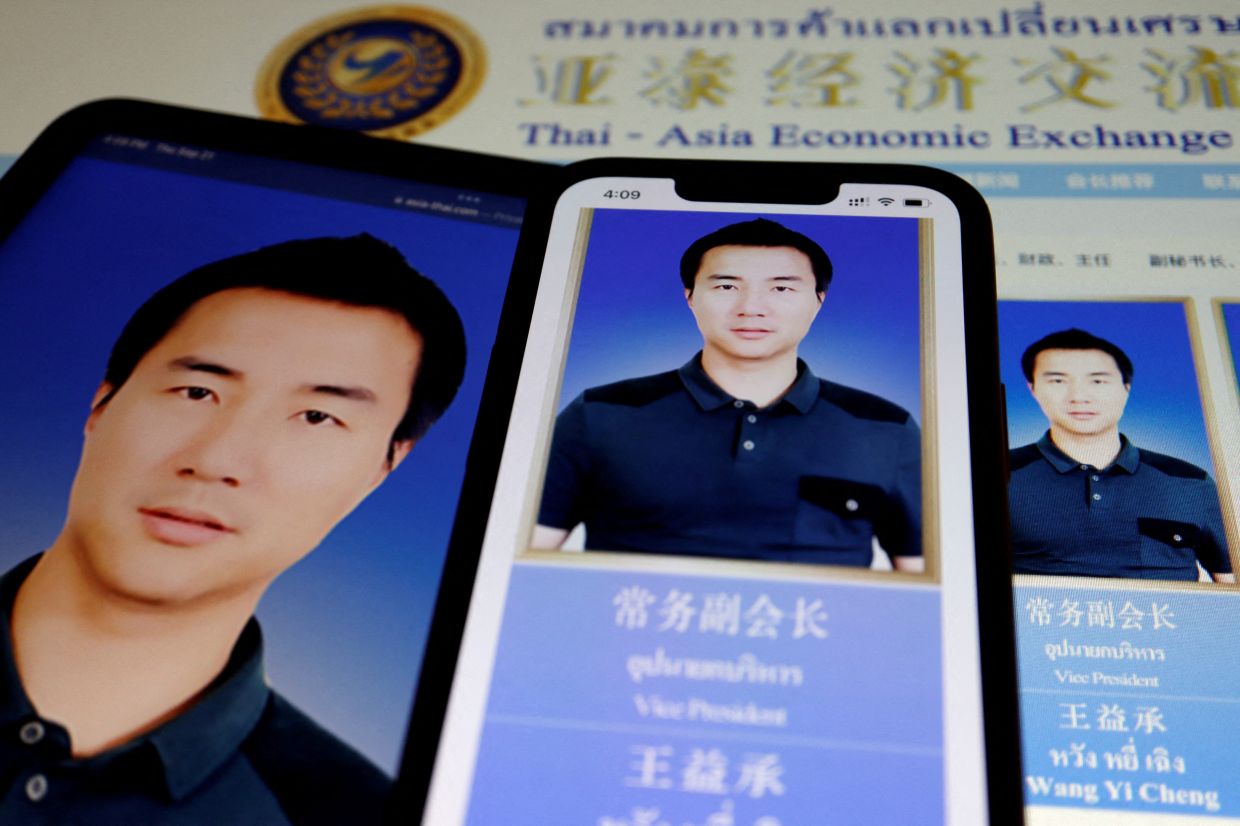
Thailand's Department of Special Investigation has moved to apprehend a prominent Chinese businessman accused of orchestrating a vast transnational money-laundering operation disguised as cryptocurrency mining. Wang Yicheng, who cultivated relationships with Thai political and law enforcement figures, faces charges of theft and violations of the Computer Crimes Act after authorities uncovered his alleged role in a criminal network that processed illicit proceeds from scams and online gambling operations across Southeast Asia.
The investigation into Wang's activities stems partly from a Reuters investigation published in 2023 that tracked suspicious cryptocurrency flows into accounts bearing his name. According to blockchain analysis firms TRM Labs and others, a digital wallet linked to Wang received at least US$9.1 million between 2021 and 2022 from accounts associated with "pig-butchering" scams—a particularly cruel fraud scheme in which victims are deceived into making fraudulent cryptocurrency investments by perpetrators posing as romantic interests online. One documented case involved a 71-year-old California resident who lost his entire US$2.7 million life savings to such a scheme.
Major Woranan Srilam, a spokesman for Thailand's Department of Special Investigation, confirmed on June 23 that Wang was formally charged in November with theft as well as computer-related offences. The suspect is believed to have departed Thailand, prompting Thai authorities to coordinate with international law enforcement agencies to locate him. China's Foreign Ministry stated it had no knowledge of the situation when contacted by international media, while Wang himself declined to respond to inquiries about the allegations.
The scope of the operation uncovered by the DSI is substantial. Authorities identified a network comprising four unnamed Chinese nationals and four Myanmar nationals, all subject to arrest warrants. During their investigations into illegal cryptocurrency mining operations, the DSI discovered that the network had illicitly consumed approximately US$28 million worth of electricity—a figure that underscores the scale of their mining infrastructure and ranks among the largest such cases documented in recent years across the region.
Wang's position as a former leader of the Thai-Chinese trade association positioned him to facilitate international business connections that may have served as cover for illicit activities. When he held the role of vice president at the Thai-Asia Economic Exchange Trade Association, an organization promoting bilateral business relationships between Thailand and China, his profile provided legitimacy and access to high-level government and police officials. The association's leaders had cultivated relationships with authorities in both nations, creating a network that could potentially shield illicit operations from scrutiny.
The involvement of cryptocurrency mining in this criminal enterprise reflects a broader trend among transnational organised crime groups. Illegal crypto mining serves multiple purposes for criminal networks: it generates income through electricity theft and computational theft, provides a mechanism to launder illicit funds by converting cash into digital assets and vice versa, and facilitates technology-focused crime networks that span multiple countries. The decentralized and pseudonymous nature of cryptocurrency transactions makes it particularly attractive for laundering schemes that must move vast sums across borders while obscuring their criminal origins.
Thailand and its Southeast Asian neighbours have significantly intensified their law enforcement operations targeting scam syndicates in recent months, particularly those operating under Chinese management or control. These criminal enterprises typically operate from fortified industrial compounds, often staffed with trafficking victims coerced into participating in the fraud schemes. According to United Nations estimates, these operations generate billions of dollars annually, making them among the most profitable transnational crimes in the region. The criminal networks exploit vulnerable individuals both as victims of the scams and as forced labour within their operational infrastructure.
US law enforcement authorities have also identified Wang as a suspect in a separate digital-asset fraud investigation. In June 2023, the United States seized approximately US$500,000 in cryptocurrency from an account registered in Wang's name, which contained funds allegedly stolen from a Massachusetts victim. The Department of Justice declined to provide additional commentary on the Thai arrest warrant or its own investigation, maintaining standard protocols regarding ongoing international cases.
Bitmain, a major global bitcoin mining equipment manufacturer, revealed in 2023 that Wang was a close business partner and customer, claiming that equipment supplied to him was provided through legitimate commercial channels. However, Bitmain has not responded to subsequent requests for comment regarding the Thai warrant. Similarly, the Thai-Chinese trade association stated after the initial Reuters report that Wang had departed its board of directors. The organization claimed that background checks had revealed no criminal record and suggested that his personal matters were entirely separate from the association's operations and membership.
The trade group subsequently clarified its relationship with Thai officials who had served as advisers and consultants, stating that while these officials maintained friendly relationships with the organization, no formal business or financial interests existed between them and the association or its members. This clarification appeared designed to distance Thai government figures from any potential accusations of complicity or negligence in oversight. Thailand's Royal Thai Police has not responded to inquiries regarding the nature and extent of relationships between senior officials and Wang or whether any institutional oversight mechanisms failed to detect the suspected illicit activities.
For Malaysia and other Southeast Asian nations, the Wang Yicheng case illustrates the sophisticated methods through which transnational criminal networks exploit the region's cryptocurrency infrastructure and business environments. The sophistication of such operations—combining legitimate-appearing business ventures, high-level government connections, and complex financial technologies—poses significant challenges for regional law enforcement agencies. The case demonstrates that scam networks are not merely grassroots criminal enterprises but are often managed by individuals capable of cultivating elite political connections and establishing legitimate commercial facades.
The implications for the region extend beyond individual prosecutions. The case highlights vulnerabilities in cross-border cryptocurrency oversight, the potential for regulatory capture when criminal actors build relationships with government officials, and the need for enhanced information-sharing between Southeast Asian law enforcement agencies. As crypto mining and blockchain technologies become increasingly prevalent throughout the region, the methodologies deployed by Wang's network may serve as a template for other criminal enterprises seeking to launder proceeds from scams, human trafficking, and gambling operations through ostensibly legitimate technological ventures.
The ongoing international hunt for Wang underscores the critical importance of coordinated regional and global law enforcement responses to transnational cybercrime. Success in locating and prosecuting individuals like Wang requires sustained commitment to bilateral information-sharing, asset tracing across cryptocurrency networks, and willingness by governments to investigate and potentially prosecute officials who facilitate such networks through negligence or corruption.

