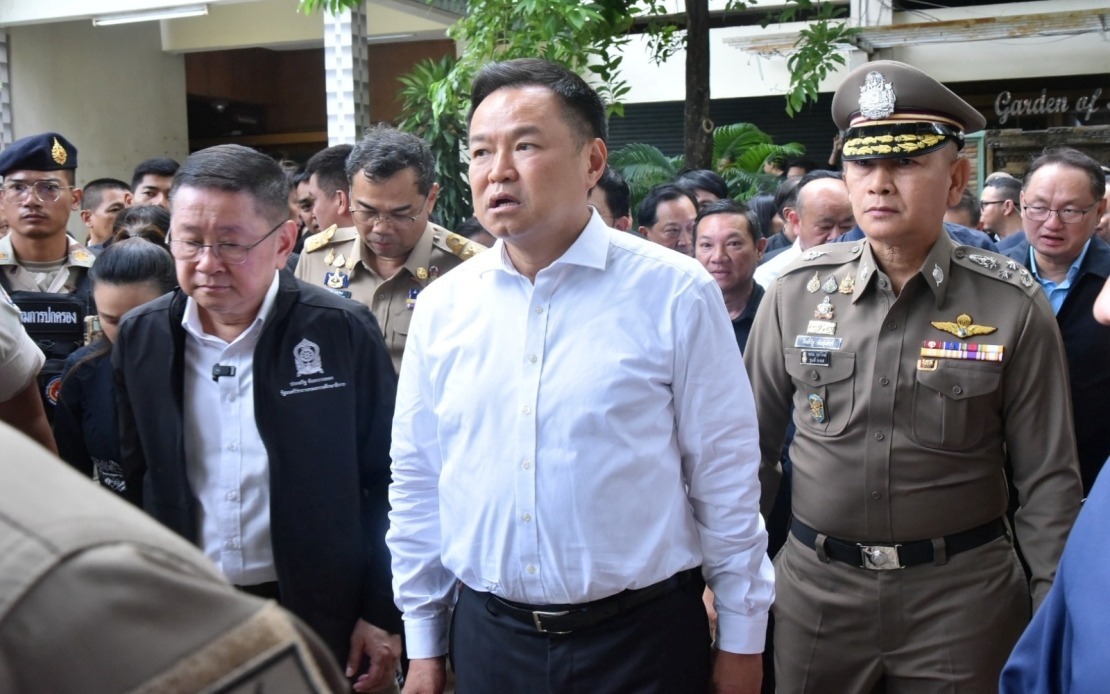
Thai Prime Minister Anutin Charnvirakul has announced plans to introduce significantly stricter firearm regulations following a tragic shooting at Debsirin Nonthaburi School on Friday that resulted in seven deaths. The incident, which unfolded around 10 am, has prompted the government to reassess its approach to civilian gun ownership and police enforcement mechanisms, marking a rare moment of policy urgency in Thailand's ongoing struggle with gun violence.
As both prime minister and interior minister, Anutin indicated that the new legislative framework would fundamentally restrict civilians' ability to possess firearms outside their residences or in public settings. The cornerstone of the proposed approach centres on limiting firearm carrying privileges exclusively to government personnel engaged in official duties, a departure from current regulations that allow certain categories of civilians to retain weapons beyond their homes. While Anutin emphasised that existing legislation already prohibits ordinary citizens from bearing arms in public, he acknowledged that enforcement gaps and a lack of comprehensive legislative clarity necessitate more robust legal instruments.
The prime minister met with police leadership at the school site following the shooting and committed to collaborating with the national police commissioner to develop specific legislative proposals. However, he has not yet detailed whether the new measures would impose stricter requirements for initial firearm acquisition, instead focusing first on enforcement procedures. The government plans to mandate that police checkpoints systematically screen for illegal weapons, with violators facing formal criminal prosecution—a procedural enhancement designed to increase detection rates and deterrence.
The shooting itself involved a 14-year-old student who opened fire and killed three educators and three fellow students before being discovered dead at the school premises. The incident left twenty-one other individuals wounded, with eight sustaining injuries serious enough to require critical care hospitalisation. The scale of casualties underscores the vulnerability of educational institutions and raises uncomfortable questions about how a teenager accessed firearms and entered a school with lethal capability.
Anutin's response reflects broader regional concerns about school safety, though his comments suggest a measured approach to institutional security. When questioned about implementing airport-style screening systems for students, the prime minister expressed scepticism about such measures, noting that comprehensive X-ray screening at school entrances would represent an extraordinary and unsustainable approach to campus security. This stance reveals the Thai government's preference for addressing root causes—particularly civilian firearm access—rather than creating fortress-like educational environments.
The Education Ministry has been tasked with developing reassurance mechanisms for parents, though specific initiatives remain undefined. School safety in Southeast Asia has become increasingly prominent following several high-profile incidents across the region, and Thai authorities face mounting pressure to demonstrate concrete protective measures. The challenge lies in balancing genuine security enhancements with avoiding institutional approaches that might traumatise students or transform schools into quasi-militarised spaces.
For Malaysian observers, Thailand's experience offers important lessons regarding civilian gun ownership frameworks and enforcement rigour. Malaysia maintains comparatively restrictive firearms legislation, yet incidents involving legally registered weapons occasionally occur, prompting similar policy reviews. The Thai situation demonstrates how even existing restrictions can prove ineffective without adequate enforcement mechanisms and consistent checkpoint operations. The announcement of systematic weapons screening at police checkpoints represents an administrative enforcement enhancement that does not require legislative overhaul—a potentially replicable approach.
The incident also reflects broader Southeast Asian patterns of youth violence and access to firearms. While school shootings remain statistically rare in the region compared to certain Western countries, each occurrence generates significant media attention and policy responses. Thailand's relatively liberal civilian firearm licensing compared to some neighbours may contribute to accessibility concerns, though complete causation remains debated among policymakers.
Anutin's preliminary remarks suggest the government will prioritise enforcement and procedural controls over prohibition-based approaches, at least initially. This incremental strategy may face criticism from advocates demanding more fundamental restrictions on civilian firearm ownership, particularly regarding categories of weapons available to civilians. The tension between security enhancement and personal liberty remains a recurring theme in Thai policy discussions, similar to debates across democratic Southeast Asian nations.
The timing of announcements matters significantly; governments often face pressure to respond rapidly to dramatic incidents, sometimes implementing hastily conceived policies that prove ineffective or counterproductive. Anutin's commitment to consulting with police leadership before finalising legislative language suggests a more deliberative approach, though critics may argue that the pace remains insufficient given the severity of the incident. Regional analysts will monitor whether these proposed measures progress to formal legislative proposals or remain unfulfilled commitments.
Beyond immediate policy responses, the incident highlights the importance of mental health resources, threat assessment mechanisms within schools, and community-based violence prevention initiatives—areas that receiving less political attention than firearm regulation but potentially addressing underlying causes. Several Southeast Asian nations have increased focus on school-based mental health services and threat assessment training for educators, recognising that comprehensive safety requires multifaceted approaches extending beyond hardware-based solutions.
The broader implications for Thailand's security environment remain uncertain. While Anutin's announcement indicates governmental acknowledgment of the problem, translation into functional legislation and sustained enforcement represents a separate challenge. Regional neighbours monitoring Thai developments will assess whether these measures prove effective, potentially influencing their own policy deliberations regarding civilian access to weapons and institutional safety protocols.

