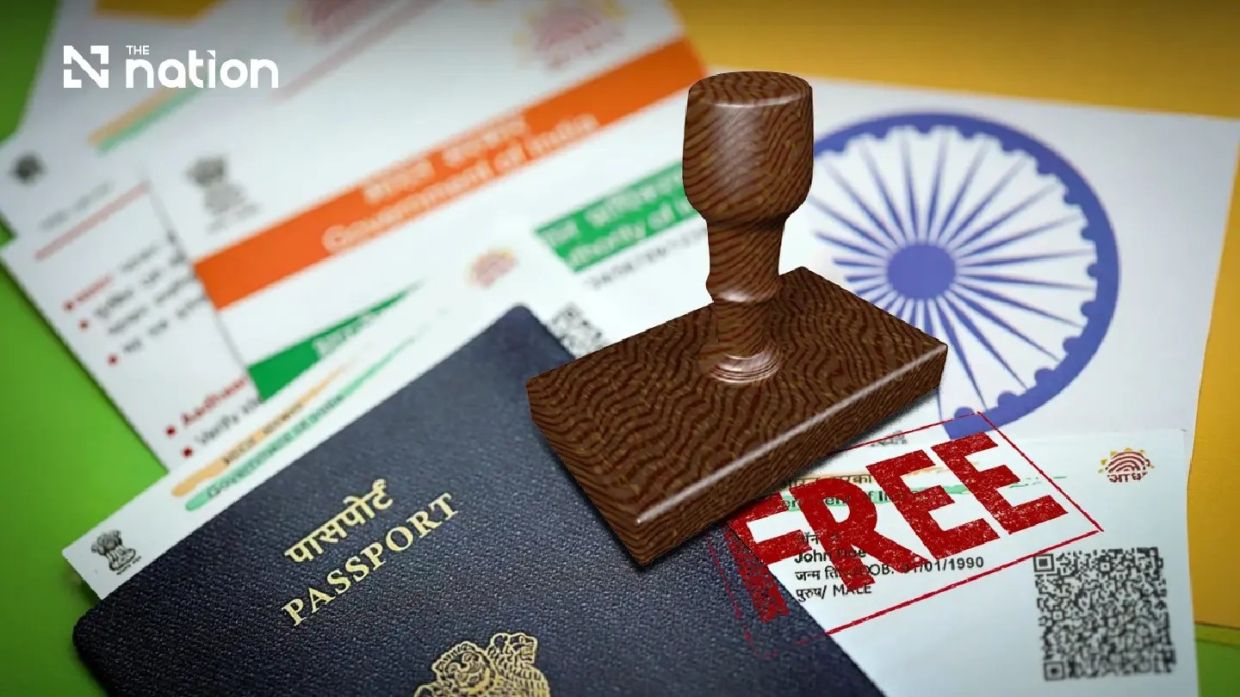
Thailand's Tourism and Sports Minister Surasak Phancharoenworakul has affirmed that a 30-day visa-free entitlement for Indian citizens is critical to the kingdom's ambitions of welcoming 2.7 million visitors from India by 2027. The extended duration, approved by cabinet on July 14, represents a victory for tourism operators who had worried that a more restrictive 15-day limit would damage Thailand's competitiveness in one of its most valuable source markets.
The decision to resist a shorter visa exemption reflects the distinctive travel patterns of high-spending Indian tourists, particularly those organising destination weddings and elaborate celebration events that unfold over multiple weeks. Minister Surasak's insistence on matching the 30-day entitlement offered to other visa-exempt nationalities also sends a strategic message: India merits equivalent treatment to major tourism markets, reinforcing confidence among travel agents and tour operators who market Thailand to Indian consumers. Parity in visa privileges translates directly into consumer perception of Thailand's welcoming stance, influencing purchasing decisions across India's fragmented but growing travel market.
India's trajectory as a tourism source has become increasingly impressive. The country delivered 2.48 million visitors in 2025, representing a robust 16.82 percent surge from the prior year and generating 90.425 billion baht in tourism revenue. Momentum has sustained into 2026, with arrivals climbing another 3.06 percent during the first half of the year. By mid-July 2026, India ranked as Thailand's third-largest source market, accounting for approximately 1.3 million arrivals. The Tourism Authority of Thailand projects this upward trajectory will continue, forecasting 2.55 million arrivals in 2026 before reaching the landmark 2.7 million figure in 2027, a 5.8 percent annual increase that underscores India's growing importance to Thailand's tourism economy.
The visa framework revision emerged from a broader cabinet recalibration that terminated Thailand's temporary 60-day visa-exemption programme covering 93 countries and territories. Rather than relegating Indian visitors to the less convenient Visa on Arrival category, the government strategically assigned India to a new standard 30-day visa-exemption tier encompassing 59 nations and territories. This classification reflects the government's principle of assigning each country to a single entry category, simplifying administration while strengthening immigration screening procedures. Tourism operators, initially concerned that the withdrawal of the 60-day option would force Indian visitors back into the cumbersome Visa on Arrival pathway, found relief in this middle-ground solution that maintains Thailand's competitive positioning without sacrificing security protocols.
The 30-day allocation also aligns with empirical evidence about Indian travel behaviour. Immigration officials analysed data showing that Indian visitors remain in Thailand for an average of 7.17 days per trip, suggesting that a 30-day ceiling accommodates both standard leisure itineraries and extended stays for weddings, family reunions, and cultural celebrations without creating administrative burdens on border authorities. All Indian visitors must still complete Thailand's Digital Arrival Card system, which can be submitted within three days before arrival, maintaining security oversight while eliminating friction from the visa application process.
Thailand faces intensifying competition from regional rivals pursuing the same high-value Indian market. Vietnam has aggressively positioned itself through competitive pricing and targeted incentives, while Malaysia actively promotes its own visa-free access programmes to capture India's growing middle class. Singapore has carved out a distinct position in the family travel segment, leveraging its reputation for world-class facilities and experiences tailored to multi-generational groups. Within this competitive landscape, Thailand's advantage rests partly on its established appeal—the kingdom ranked as the third-most popular overseas destination among Indian travellers in 2026, behind the United Arab Emirates and Saudi Arabia—but maintaining that position requires continuous investment in visa accessibility and marketing initiatives.
The economic profile of Indian visitors explains their strategic importance to Thailand's tourism economy. Average daily expenditure stands at 6,203 baht per person, translating to approximately 36,354 baht per trip, positioning Indian tourists firmly in the higher-value category that Thailand increasingly targets. These visitors prioritise authentic experiences, with Thai cuisine emerging as the primary attraction, followed by beach destinations and wellness experiences including spas and rejuvenation therapies. The market composition reveals important segmentation: 68.63 percent travel as independent visitors while 31.37 percent participate in organised tour groups, and nearly 60 percent are first-time visitors, indicating significant potential for repeat visitation if experiences exceed expectations. The TAT has identified particularly strong demand among Indian families and larger group bookings, with typical stays ranging from seven to fifteen days, suggesting that the 30-day visa entitlement provides psychological reassurance rather than encouraging substantially longer stays.
Air connectivity forms the foundation of Thailand's Indian tourism strategy. From markets served by TAT's New Delhi office, nine Indian cities connect directly to Bangkok, Krabi and Phuket via 144 flights weekly, offering more than 32,000 seats. The Mumbai office region operates approximately 160 weekly flights providing around 33,000 additional seats. Combined weekly capacity across Thailand-India routes exceeds 66,000 seats, a substantial infrastructure that some international carriers temporarily disrupted due to Middle East instability and elevated fuel surcharges. However, the TAT anticipates recovery in high-season capacity, while Indian carriers expand services from secondary cities into Thailand, broadening geographic reach beyond the traditional metropolitan hubs.
Thailand's marketing strategy has begun penetrating beyond India's established metropolitan centres. While continuing campaigns in economic powerhouses such as New Delhi, Kolkata and Mumbai, the TAT now targets fast-growing Tier 2 and Tier 3 cities including Lucknow, Chandigarh, Guwahati, Ahmedabad, Surat and Pune. Surat's globally significant diamond industry creates a prosperous consumer base with elevated disposable income, while Pune's automotive and advanced manufacturing sectors provide access to affluent professionals. This geographic diversification acknowledges that India's travel market is decentralising, with wealth and travel propensity increasingly distributed across secondary centres rather than concentrated in the traditional metropolitan triangle. The TAT simultaneously targets neighbouring economies including Bhutan, Nepal and Bangladesh, recognising that regional cooperation and cross-border travel patterns offer additional volume.
Indian tourism demand has evolved beyond conventional itineraries centred on photography and standard sightseeing. Contemporary Indian travellers increasingly seek immersive, experience-driven journeys emphasising culinary discovery, cultural authenticity, engagement with local communities, and understanding everyday lifestyles. This shift in consumer preferences plays directly to Thailand's strengths: the kingdom possesses profound culinary traditions, vibrant local cultures, accessible communities, and distinctive ways of life that satisfy this appetite for meaningful engagement. Thailand's promotional emphasis on food experiences, wellness practices, community-based tourism and cultural immersion directly responds to this market evolution, differentiating the kingdom from competitors offering similar beach and heritage attractions. The convergence of Thailand's improved visa accessibility, established tourism infrastructure, authentic experiential offerings and targeted marketing initiatives creates a compelling value proposition for the Indian traveller seeking substantive engagement rather than superficial consumption.

