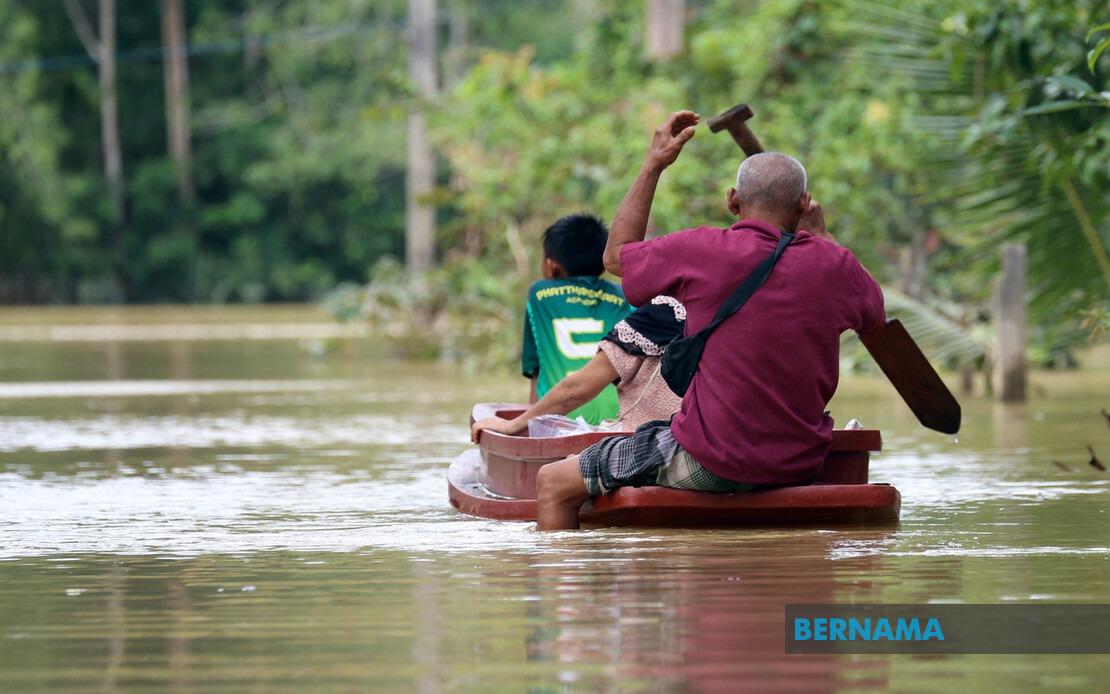
Thailand's government has taken decisive action to bolster its capacity to respond to natural disasters, implementing structural reforms designed to accelerate response times and improve coordination across multiple agencies. The initiative reflects mounting concern about converging environmental threats—both the immediate risk of severe flooding across multiple regions and the longer-term prospect of sustained drought conditions that could damage agricultural productivity throughout the nation.
The revised disaster management architecture centres on four regionally-based committees tasked with overseeing both immediate emergency response and longer-term recovery operations. Deputy government spokeswoman Capt Patdarasm Thongsaluaykorn outlined the strategic rationale behind the reorganisation, emphasising that the decentralised structure would enable faster decision-making and more efficient delivery of assistance to communities facing inundation or water scarcity. By distributing authority to regional bodies rather than concentrating it at the national level, Thailand aims to reduce bureaucratic delays that have historically hampered relief efforts during crisis situations.
The scale of the challenge is substantial. Thailand's authorities are currently tracking 1,363 locations identified as vulnerable to flooding, alongside 444 areas where prolonged drought conditions pose significant economic and humanitarian risks. These numbers underscore the geographic breadth of Thailand's disaster exposure—a vulnerability that reflects both its monsoon-dependent climate and its complex hydrological systems spanning mountains, plateaus, and lowland plains. The monitoring effort itself represents a significant institutional undertaking, requiring continuous assessment of weather patterns, water flow dynamics, and soil moisture conditions across diverse terrain.
Under the new framework, each regional committee holds responsibility for several interconnected functions that extend beyond simple emergency response. These bodies must maintain continuous surveillance of meteorological and hydrological conditions, coordinate the activation and deployment of emergency services, oversee the distribution of relief materials and compensation payments to affected populations, and direct the multi-phase recovery process once immediate dangers subside. Additionally, the committees possess authority to direct government agencies operating within their respective regions, enabling them to mobilise resources across traditional bureaucratic boundaries when circumstances demand swift, unified action.
The timing of these structural changes reflects immediate weather concerns. Thailand's Meteorological Department has issued warnings of heavy precipitation, flash flooding, and water overflow affecting northern, northeastern, and eastern regions during the assessment period. Maritime authorities have consequently restricted small vessel operations in the upper Andaman Sea from August 4 to 9 and in the upper Gulf from August 6 to 9, reflecting dangerous wave conditions and visibility hazards accompanying the forecast rainfall.
Deputy Prime Minister Yodchanan Wongsawat has assumed leadership of the northern regional committee, underscoring the political priority assigned to disaster management at the highest governmental levels. The committee convened its inaugural meeting at the Department of Disaster Prevention and Mitigation headquarters, establishing operational protocols and assigning specific responsibilities to participating agencies. This hierarchical positioning suggests that senior political figures will maintain direct engagement with disaster response operations rather than delegating these matters to lower-level bureaucrats.
Beyond the immediate hydrological threats confronting the nation, Thailand faces a more complex and protracted climatic challenge. The Bangkok Post reported analysis indicating that a Super El Niño phenomenon expected to commence in October and persist through early 2027 could suppress rainfall across affected regions by at least 10 per cent below historical norms. For an agricultural economy heavily dependent on seasonal precipitation patterns, such a reduction carries substantial economic implications. Rice cultivation, which remains central to Thailand's agricultural sector and food security, would face moisture stress during critical growth phases. Urban water supply systems may also experience pressure if reservoir levels decline more steeply than anticipated.
The agricultural ramifications of prolonged drought extend throughout supply chains affecting not only Thailand but neighbouring countries dependent on Thai rice exports and agricultural inputs. In a Southeast Asian context where food security concerns transcend national borders, disruption to Thai agricultural output creates ripple effects across the region. Myanmar, Laos, Cambodia, and Vietnam—all nations with significant rice-consuming populations—could experience price pressures or availability concerns should Thai harvests contract substantially.
Thailand's enhanced disaster management apparatus must therefore operate simultaneously across multiple temporal horizons. In the immediate term, flooding represents the dominant threat requiring rapid mobilisation of rescue personnel, evacuation capacity, and emergency sheltering resources. Over intermediate timeframes, drought preparedness demands strategic water management—decisions about reservoir releases, irrigation priorities, and agricultural water allocation that can determine whether communities and agricultural regions experience manageable stress or catastrophic scarcity. Over longer periods, the El Niño scenario requires anticipatory planning regarding crop selection, water infrastructure investment, and potentially even population relocation in severely affected areas.
The regional committee structure acknowledges that effective disaster response cannot be centrally planned and remotely executed. Geography matters profoundly in Thailand's disaster context. Northern provinces, dominated by mountainous terrain with rapid water runoff, experience flooding dynamics utterly different from the Mekong Delta's flat, slowly-draining topography or the peninsular regions' coastal flood interactions. Drought impacts similarly vary—affecting rain-fed agricultural areas with different severity than irrigated zones, and creating water access problems in upland communities that differ fundamentally from lowland urban water shortage scenarios. By vesting authority in regionally-constituted committees, Thailand enables decision-makers with intimate knowledge of local geography and infrastructure to exercise judgment appropriate to their specific contexts.
For Malaysian observers, Thailand's institutional recalibration carries instructive implications. Malaysia faces analogous climate risks, with monsoon-dependent precipitation patterns creating seasonal flooding in certain regions and periodic drought stresses in others. The Thai experience of integrating flood and drought response into unified management frameworks, rather than treating them as separate problems, suggests value in cross-sectoral coordination approaches. Additionally, Thailand's emphasis on regional rather than purely centralised decision-making reflects lessons learned from previous disaster responses and aligns with emerging international best practices in humanitarian affairs and disaster risk reduction.

