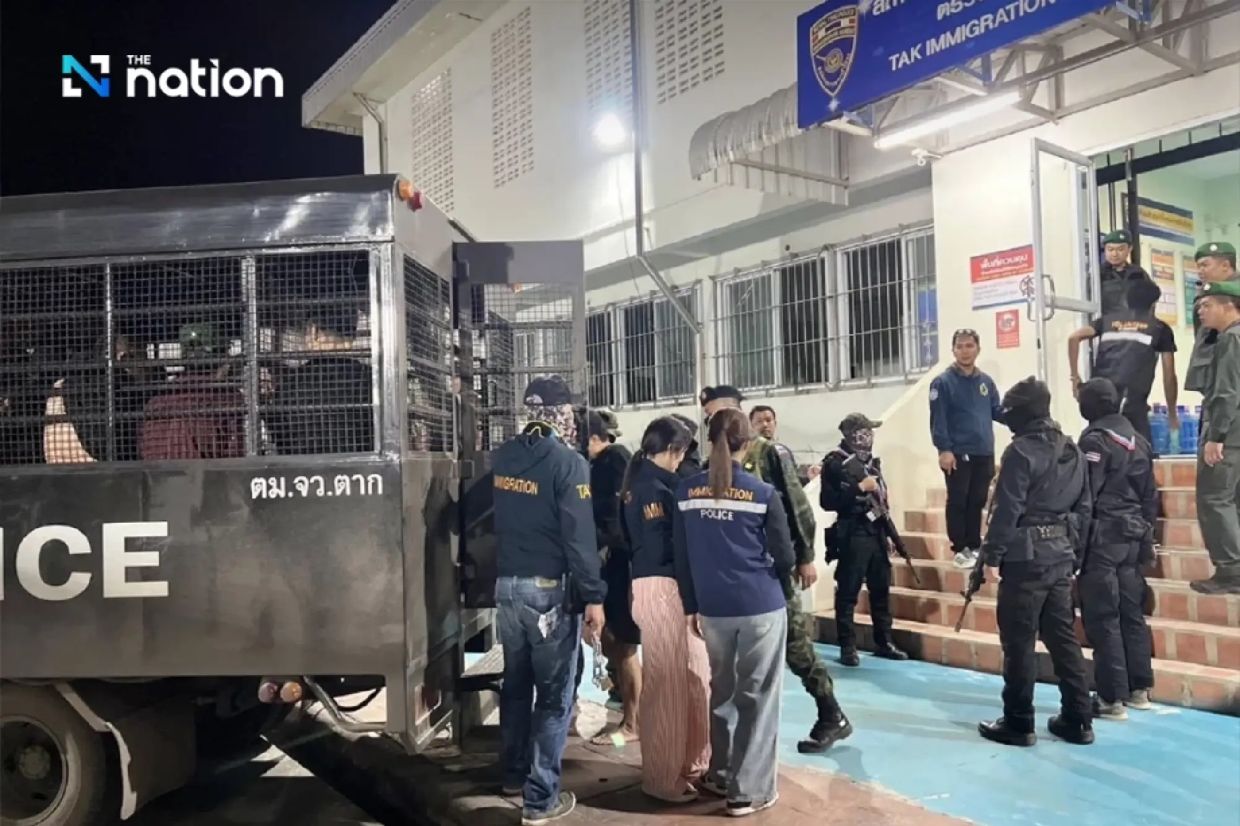
Thailand is moving to overhaul sections of its immigration legislation to streamline the deportation process for foreign nationals convicted of crimes, signalling a hardened stance against transnational criminal organisations exploiting the kingdom as an operational hub. The initiative reflects mounting frustration within Thai law enforcement and the Cabinet over the slowness of existing removal procedures, which have left detention facilities crowded with foreign offenders awaiting repatriation while their cases wind through protracted appeals and administrative coordination with overseas embassies.
The crackdown has intensified following the introduction of a 60-day visa exemption in July 2024 that initially permitted visitors from 93 countries and territories to enter Thailand without advance visa applications. Immigration officials contend that the scheme created security blind spots, as Thai embassies were unable to conduct pre-arrival checks on criminal records or financial backgrounds. More problematically, visitors subsequently exploited the arrangement by making repeated border runs to reset their permitted stay periods, effectively circumventing standard residency controls and enabling some to establish semi-permanent presences in Thailand without proper authorisation.
Investigations by Thai authorities have uncovered that foreign nationals utilising these gaps have engaged in a broad spectrum of illegal activities concentrated in major tourist zones such as Pai, Pattaya, Koh Phangan and Bangkok. Beyond standard criminal offences, officials specifically cite involvement in unlicensed employment that undercuts Thai workers in hospitality, entertainment and service sectors, acquisition of property through nominee arrangements that breach Thai ownership laws, and participation in organised call-centre fraud operations and money laundering schemes channelling illicit capital through the Thai financial system. This constellation of offences has prompted the government to classify the situation as a national security concern requiring urgent legislative action.
Prime Minister Anutin Charnvirakul has tasked Deputy Prime Minister Pakorn Nilprapunt, who supervises legal affairs, with spearheading a comprehensive review of Thailand's immigration framework in coordination with the Royal Thai Police, the Immigration Bureau and the Interior Ministry. The initiative primarily targets Sections 54 and 55 of the Immigration Act of 1979, the statutory provisions governing removal of foreign nationals, with the objective of introducing mechanisms that accelerate deportation while preserving compliance with international human rights obligations and due process standards.
Current immigration law permits foreign nationals to lodge appeals within 48 hours of receiving deportation orders, during which period removal is typically stayed pending consideration of their evidence and arguments. Additionally, detainees may petition the Immigration Commission for stays on humanitarian or legal grounds, further extending timelines. Thai authorities have identified these safeguards as sources of systematic delay, particularly when combined with complications arising from international extradition protocols, financial constraints preventing timely travel coordination, and embassy communication delays. In certain cases, individuals facing removal have reportedly managed to resume ordinary life activities during extended adjudication periods, creating opportunities for reiterated offending.
The complications are compounded by Thailand's international legal commitments. As a United Nations Human Rights Council member and signatory to eight major international human rights treaties covering civil and political rights, women's rights, children's rights, racial discrimination, torture prevention, disability rights and protection from enforced disappearance, Thailand's immigration system must navigate multilayered procedural requirements. Where extradition treaties exist with destination countries, the attorney-general must evaluate cases before court consideration; where they do not, the Foreign Ministry initiates a separate request pathway to the attorney-general and ultimately the courts. Each layer introduces potential delays whilst safeguarding fundamental protections.
Royal Thai Police spokesman Pol Lt Gen Trairong Phiwpan has acknowledged that the current architecture, while legally sound, creates unintended bottlenecks that frustrate swift removal. He emphasised that no standardised timeframe can uniformly apply across all deportation cases, given the variable complexity of individual circumstances and the legitimate rights that detainees possess to challenge proceedings through established legal channels. However, Trairong indicated that administrative review could identify opportunities to compress unnecessary procedural steps and reduce non-substantive delays without compromising the substantive fairness of determinations.
The government's shift reflects broader policy recalibration following the May 2026 Cabinet decision to cancel the 60-day visa exemption for all 93 participating nations, reverting Thailand to country-by-country visa arrangements with most visitors receiving maximum stays of 30 days. Officials argue that the extended exemption scheme failed to demonstrably increase tourist arrivals or visitor spending while exposing the country to proportionately greater security risks. Four proactive measures have already been implemented, including enhanced screening of travellers exhibiting unusual entry and exit patterns without clear justification, elevated scrutiny of arrivals from designated high-risk jurisdictions, closer integration of international criminal record databases with Interpol and Thai security agencies, and measures designed to eliminate overlapping visa privileges that permit extended unauthorised residency.
Joint military, police and administrative operations have yielded visible results in recent months, with intensified inspections of foreign nationals in illegal residence across the kingdom resulting in ongoing arrests and proceedings against foreign offenders. Yet the persistence of the backlog has prompted the government to recognise that enhanced enforcement capacity alone cannot solve the systemic problem; legislative modernisation is essential to ensure that apprehended foreign criminals do not languish in detention for extended periods awaiting repatriation.
Autin has articulated the government's position as one that welcomes foreign visitors and investors engaged in legitimate activities whilst maintaining an uncompromising approach toward those who violate Thai law. The policy balances Thailand's interest in tourism and international commerce with security imperatives, attempting to preserve the kingdom's attractiveness to law-abiding foreigners whilst demonstrating resolve against criminal exploitation. Regional observers note that Thailand's experience mirrors challenges faced by other Southeast Asian nations grappling with transnational organised crime and the tension between open travel policies and security enforcement.
The legislative reform process is anticipated to proceed methodically through consultation with relevant agencies to assess broader impacts across all dimensions of immigration administration. Authorities must reconcile the desire for faster deportations with judicial independence, the rule of law, and Thailand's standing as a signatory to international human rights instruments. The outcome will substantially influence how Thailand manages the inherent tension between facilitating legitimate international mobility and securing borders against criminal actors, a balance increasingly critical for the region as cross-border criminal networks adapt their operational methods.