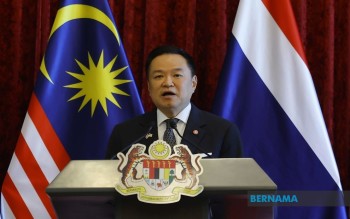
Thailand's Prime Minister Anutin Charnvirakul has expressed strong confidence that the two countries will achieve a bilateral trade target of US$30 billion by 2027, signalling robust momentum in economic ties between Southeast Asia's second and third largest economies. During an official visit to Malaysia this week, Anutin noted that existing trade volumes have already reached approximately US$28 billion, placing Malaysia firmly as Thailand's largest trading partner within the ten-nation ASEAN bloc. The proximity of current figures to the target suggests the milestone is well within reach, provided both governments maintain the policy coordination and business environment reforms necessary to unlock remaining growth potential.
The statement carries significant implications for the broader Southeast Asian economic landscape, where deepening Malaysia-Thailand commercial integration reflects the region's shifting dynamics post-pandemic. As supply chains across Asia undergo reconfiguration and companies seek alternatives to concentration risks in traditional manufacturing hubs, the complementary economic structures of Malaysia and Thailand position both nations as beneficiaries. Malaysia's established petrochemical, electronics, and financial services sectors dovetail with Thailand's agricultural output, automotive manufacturing, and increasingly competitive digital economy, creating natural synergies that bilateral trade agreements seek to formalize and expand.
Anutin's visit to Kuala Lumpur—his first since returning as prime minister in March 2026—took place at the invitation of Malaysian Prime Minister Datuk Seri Anwar Ibrahim, underscoring the personal relationship driving high-level economic coordination. The two leaders convened at the Perdana Putra Complex in Putrajaya to oversee the exchange of a memorandum of understanding and to review bilateral progress across multiple sectors. This diplomatic engagement reflects a deliberate strategy by both governments to place economic cooperation at the foundation of their relationship, recognizing that sustained trade growth generates political stability and public support for regional integration efforts.
During their joint press conference, Anutin articulated Thailand's strategic priorities for deepening the partnership beyond baseline trade figures. He emphasized that both nations would concentrate efforts on three interconnected domains: food security, energy security, and the digital economy including advanced technology sectors. This triangular focus addresses genuine regional vulnerabilities and growth opportunities. Food security concerns remain acute across Southeast Asia given climate variability, population growth, and dependence on global commodity markets—areas where Thailand's agricultural expertise and Malaysia's distribution networks create mutual advantage. Similarly, as traditional energy sources face transition pressures and renewable capacity requirements expand, the two countries' combined technical capacity and resource endowments offer scope for joint infrastructure development and technology sharing.
The digital economy emphasis reflects recognition that manufacturing-led growth models face structural limits in mature Southeast Asian economies. Both Thailand and Malaysia have invested substantially in telecommunications infrastructure, digital payments ecosystems, and technology incubation centres, yet neither has yet achieved the market concentration of Singapore's financial technology sector or Indonesia's e-commerce scale. Collaborative initiatives in artificial intelligence, cybersecurity, and digital manufacturing could help both nations establish regional technological leadership while creating high-value employment aligned with workforce education trends. Anutin's mention of high-tech industries signals that Thai-Malaysian cooperation extends beyond traditional sectors into knowledge-intensive domains where competitive advantage derives from innovation rather than cost arbitrage alone.
Anutin explicitly committed Thailand to supporting efforts aimed at strengthening regional value and supply chains by leveraging the complementary capacities each economy brings to manufacturing and commerce. This pledge carries practical weight, as Thailand hosts significant Japanese and German automotive manufacturing operations, while Malaysia anchors semiconductor assembly and petrochemical refining capacity. Coordinated policies on tariffs, customs procedures, technical standards, and logistics infrastructure can substantially reduce transaction costs for companies operating across both jurisdictions. When bilateral trade relationships achieve such functional integration, they become resistant to political disruption and generate constituency support among business communities that reinforces diplomatic ties during periods of tension or negotiating disagreement.
Malaysian Prime Minister Anwar Ibrahim reciprocated the optimism while anchoring Thailand's ambitions within Malaysia's institutional framework. He indicated that the Ministry of Foreign Affairs and the Ministry of Investment, Trade and Industry would champion the initiative to achieve the US$30 billion target, signalling whole-of-government commitment rather than ad-hoc commercial activity. Anwar's emphasis on beginning with economic and trade fundamentals reflects a pragmatic understanding that prosperity-driven cooperation builds deeper political friendship than aspirational rhetoric alone. His mention of tourism as an additional collaboration domain acknowledges that Malaysia and Thailand compete as regional tourist destinations while simultaneously serving as sources of visitors for one another—suggesting complementarity rather than zero-sum competition in travel and hospitality sectors.
The bilateral meeting between Anutin and Anwar reviewed progress across the full spectrum of Malaysia-Thailand relations and identified opportunities for expanded cooperation in fields extending beyond immediate commercial metrics. While the press conference emphasized economic matters, such high-level engagements typically address security cooperation, educational exchanges, cultural initiatives, and other dimensions of statecraft that strengthen institutional relationships between neighbouring democracies. Thailand and Malaysia share maritime boundaries, overlapping interests in regional security arrangements, and people-to-people connections spanning business communities, academic institutions, and diaspora networks. When senior leaders meet to discuss bilateral affairs, they reinforce signals that these relationships receive sustained attention from the highest echelons of government.
Anutin's two-day visit provides opportunity for engagement with Malaysian business and government constituencies beyond Anwar's direct circle. Such visits typically include meetings with chambers of commerce, sector-specific industry associations, and relevant ministry officials responsible for implementing bilateral commitments. These lower-level interactions often prove decisive in determining whether high-level agreements translate into operational reality. Bureaucratic coordination, technical standard harmonization, and dispute resolution mechanisms require continuous attention from officials who may lack the diplomatic flexibility of their political superiors but possess detailed knowledge of implementation challenges and legal constraints.
The US$30 billion target itself merits analytical consideration as a policy instrument rather than merely a descriptive objective. By establishing a specific numerical goal, both governments create measurable accountability and provide private sector actors with confidence that bilateral trade expansion enjoys sustained official support. Companies making long-term investment decisions regarding facility location, supply chain configuration, and market entry strategies respond positively to signals of government commitment, as such commitments typically correlate with policy stability and reduced regulatory uncertainty. The target's achievement would position Malaysia-Thailand trade among the most significant bilateral relationships within ASEAN, comparable to Malaysia-Singapore or Thailand-Vietnam trade volumes in some years.
The trajectory from approximately US$28 billion current trade to the US$30 billion target reflects modest incremental growth—roughly 7 percent expansion over three years—rather than transformative acceleration. This realistic ambition suggests serious intention rather than hollow aspiration, as it acknowledges that substantial growth in bilateral trade requires time for regulatory alignment, infrastructure investment, and the natural pace of corporate decision-making. The planned joint trade committee meeting to establish more ambitious targets following achievement of the current milestone indicates that both governments view US$30 billion as a waypoint rather than a terminus, suggesting a long-term trajectory toward deeper economic integration. For Malaysian policymakers and business leaders, this signals an extended period during which Malaysia-Thailand commercial ties will warrant strategic attention and resource allocation.

