Thailand is preparing to reshape its tourism economics through two complementary initiatives designed to balance revenue generation with domestic spending encouragement. The government intends to launch its Thai Travel Thai Plus domestic subsidy programme in September while simultaneously proposing a levy on international visitors, creating a two-pronged strategy that reflects broader aspirations to deepen tourism's economic benefits across society.
The domestic subsidy scheme represents a significant shift in how Thailand approaches visitor spending incentives. Managed through Krungthai Bank's Pao Tang mobile application, the four-month pilot programme carries a preliminary budget of 1.75 billion baht and will distribute 500,000 entitlements to Thai nationals. Under the scheme's core mechanics, the government will cover half of eligible expenses, with a maximum subsidy of 3,000 baht per entitlement and participants able to claim up to five separate entitlements. This structure potentially puts direct tourism spending support into the hands of half a million Thais, representing a substantial stimulus during what officials designate as the Green Season.
Tourism and Sports Minister Surasak Phancharoenworakul unveiled the proposals at an August 10 meeting of the government's Subcommittee on the Development of Trade, Tourism and the Community Economy, signalling high-level political backing for the initiatives. The subcommittee, chaired by Deputy Prime Minister and Commerce Minister Suphajee Suthumpun, included Culture Minister Sabeeda Thaised and senior tourism officials, indicating coordination across multiple government portfolios. This institutional arrangement underscores how tourism development has become integrated into Thailand's broader economic policy framework rather than remaining siloed within a single ministry.
A critical innovation in the Thai Travel Thai Plus design involves dramatically expanding what subsidies can purchase. Rather than concentrating benefits on accommodation and dining—a limitation of previous programmes—the revised framework permits vouchers to cover meals, attraction admission fees, tourism products, community handicrafts, guided tours, and vehicle rental services. Each entitlement will include a 1,000 baht voucher, increased from the originally proposed 500 baht, deliberately engineered to channel visitor spending toward smaller operators and community enterprises beyond major tourism conglomerates. Ministry officials explicitly aim to ensure that economic benefits reach provincial and secondary-tier tourism businesses rather than concentrating wealth in major urban centres.
The government estimates the programme could generate over 26 billion baht in economic circulation across the Thai economy. This projection depends partly on multiplier effects—money spent on tourism services generating additional rounds of spending as service providers purchase supplies and pay wages. Officials anticipate clearer programme details within a week of the August 10 meeting, with September launch preparations moving forward in parallel with ongoing discussions between the Tourism and Sports Ministry and the Finance Ministry regarding funding mechanisms and operator participation criteria. The preliminary 1.75 billion baht budget is expected to come from government borrowing rather than existing allocations, reflecting a decision to treat tourism stimulus as counter-cyclical economic policy warranting new debt.
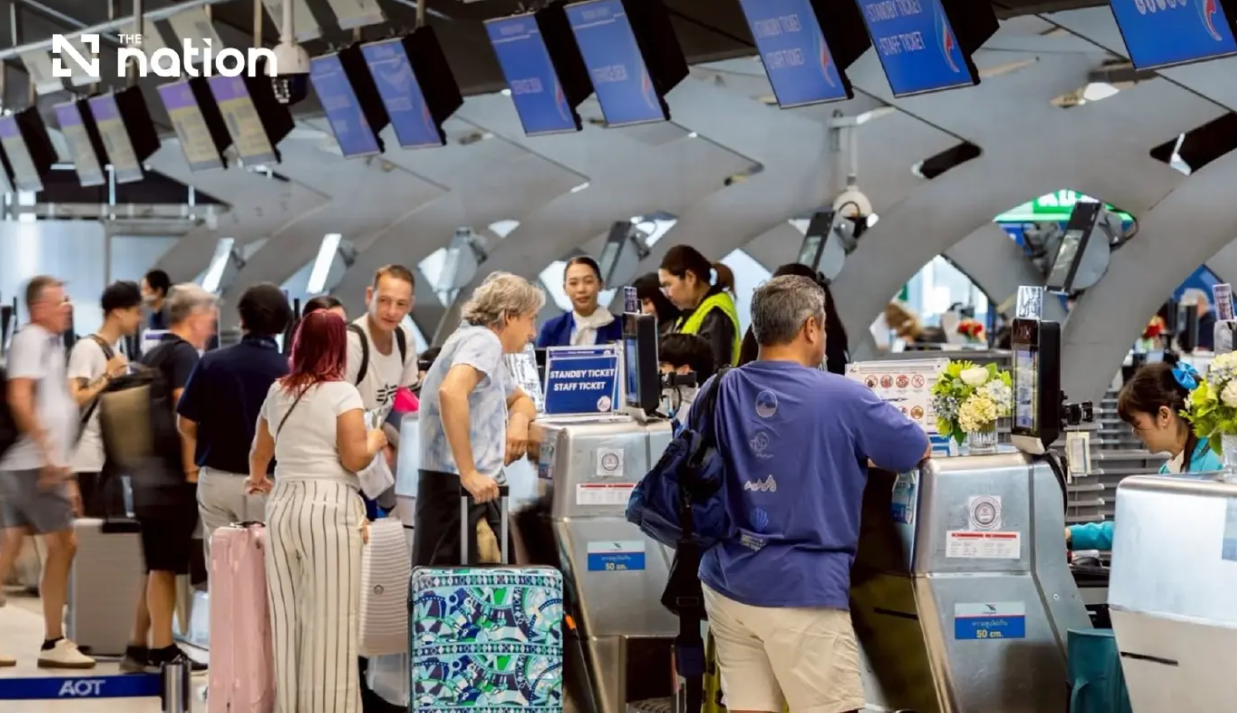
The complementary foreign visitor fee proposal operates on entirely different principles, shifting the revenue burden toward international travellers rather than domestic taxpayers. Money collected would flow into the Thailand Tourism Promotion Fund, designated for three specific purposes: developing existing attractions and constructing purpose-built facilities, particularly in secondary cities currently lacking major destinations; financing visitor insurance and safety infrastructure; and rehabilitating natural environments degraded by tourism activity. This structure essentially makes foreign visitors financial stakeholders in tourism's sustainability, creating revenue streams hypothetically dedicated to mitigating negative externalities that mass tourism generates. However, the proposal remains in nascent stages, with no announced fee level, collection methodology, or implementation timeline, leaving many critical details unresolved.
For Malaysia and other Southeast Asian nations, Thailand's approach offers instructive lessons about balancing tourism growth with equitable development. Malaysia has experimented with various tourism subsidy and incentive schemes but has faced persistent criticism about benefit concentration in major destinations like Kuala Lumpur and Penang. Thailand's explicit attempt to redistribute subsidy benefits toward community enterprises and secondary cities suggests a policy learning process that Malaysian authorities monitoring tourism outcomes might observe carefully. The emphasis on expanding eligible spending categories rather than channelling all support through major hospitality chains reflects sophisticated understanding that tourism's economic potential extends well beyond international hotel chains and established attractions.
The foreign visitor fee component raises more complex regional implications. Several Southeast Asian nations, including Indonesia and the Philippines, already levy arrival fees or environmental charges on international visitors, yet revenue collection remains inconsistent and hypothetical dedication to stated purposes often proves illusory. Thailand's proposal to formally establish the Thailand Tourism Promotion Fund suggests intent toward transparency and ring-fenced accounting, though implementation success depends entirely on institutional commitment and political continuity. Regional governments sometimes propose such dedicated funds only to subsequently redirect revenues toward general budgets when fiscal pressures emerge elsewhere.
The programme's phased implementation strategy—launching with a four-month initial period and potentially extending through subsequent phases—indicates cautious optimism rather than overconfident long-term commitment. Officials acknowledge uncertainty about response rates and private sector participation, particularly regarding how smaller tourism operators will integrate into the subsidy infrastructure. The requirement for further discussions among government agencies and tourism industry representatives reflects genuine complexity in coordinating across fragmented service sectors, from individual restaurant operators to tour guide networks to community craft producers.
Government involvement of the Creative Economy and Visitor Economy working group, chaired by Weerasak Kowsurat, broadens the initiative beyond tourism ministry technocrats into broader creative industries policy. The working group's mandate to achieve "quick win" results within six months to one year, using regulatory improvements rather than legislative amendments, suggests political desire for rapid visible progress. This timeline pressure could incentivize administrative shortcuts or incomplete implementation if unforeseen obstacles emerge during programme rollout.
The initiatives also reflect post-pandemic recalibration of Thailand's tourism strategy. International arrivals have recovered substantially but remain below pre-2020 levels for some source markets. Simultaneously, domestic tourism developed during border closures, creating new constituencies for travel support. By combining domestic stimulus with a new revenue stream from foreign visitors, the Thai government attempts to satisfy multiple political constituencies—domestic consumers gaining immediate subsidy benefits, local tourism operators gaining expanded markets, international visitors accepting modest fees if services visibly improve, and environment advocates securing hypothetical restoration funding.
Sustained success requires resolving numerous implementation details currently deferred. How will operator participation be verified and incentivized? What collection mechanisms will the foreign visitor fee employ—airport levies, advance online payments, or hotel-based charges? How will the Thailand Tourism Promotion Fund operate to ensure revenues genuinely fund stated purposes rather than supporting tourism ministry operations or being redirected toward other government priorities? Which secondary cities receive "Must-Visit" designation and attraction development investment, and how will those determinations be made? These operational questions will ultimately determine whether the proposals deliver transformative tourism economics or become another well-intentioned government programme that fragments during implementation.

