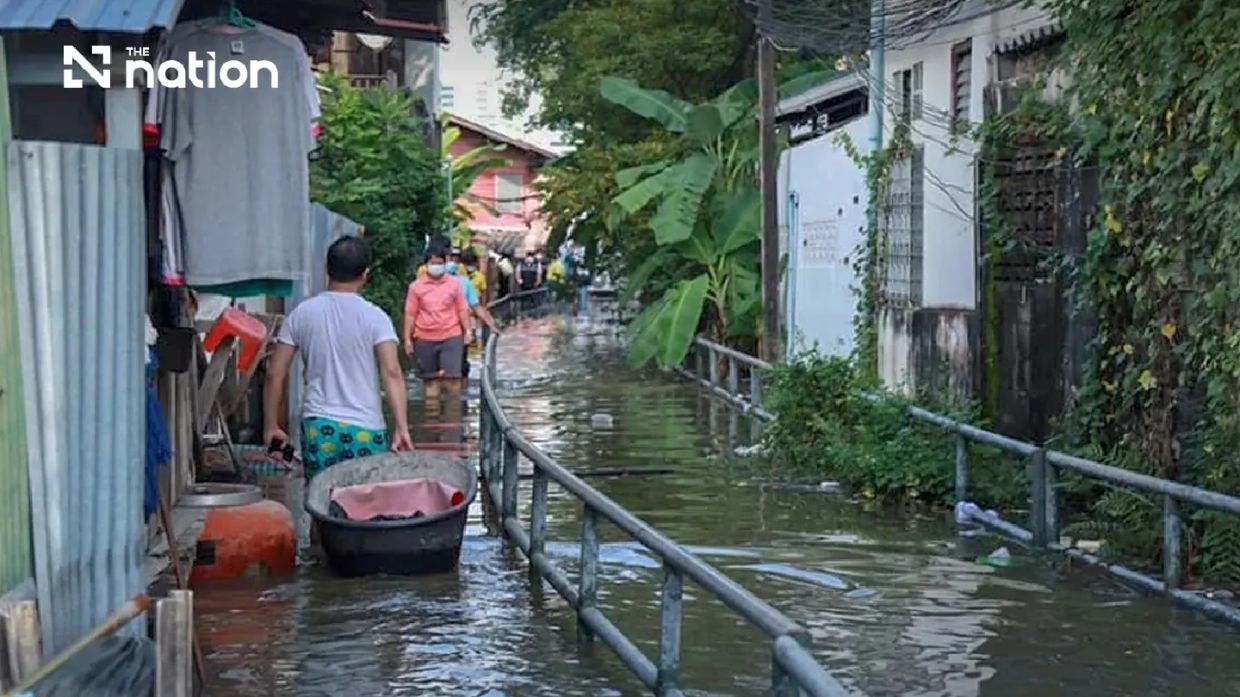
Thailand's Department of Disaster Prevention and Mitigation has placed seven jurisdictions—six central provinces plus Bangkok—on notice for unusually high tides expected to occur over the coming week. The alert, issued on Saturday, warns that residents and business operators in affected areas should prepare for potential flooding as sea levels rise dramatically each evening from Monday through the following Sunday.
Theerapat Kachamat, who heads the disaster prevention agency, announced the precautionary measure at midday on Saturday based on forecasting data supplied by the Royal Thai Navy's Hydrographic Department. According to maritime specialists, water levels in the Chao Phraya River and surrounding waterways are projected to peak between 6 pm and 10 pm during the seven-day window, creating conditions where riverbanks may be breached and canal systems could overflow their normal limits.
The provinces named in the alert—Pathum Thani, Nonthaburi, Nakhon Pathom, Samut Sakhon, Samut Songkhram, and Samut Prakan—form a crucial agricultural and industrial zone around the Thai capital. These areas rely heavily on river and canal infrastructure for commerce, transportation, and drainage. The configuration of these provinces, which funnel water from the interior toward the Gulf of Thailand, makes them particularly susceptible to tidal surge effects combined with seasonal rainfall patterns.
Specific districts within each province have been identified as facing heightened risk. In Pathum Thani, authorities are monitoring Mueang Pathum Thani and Sam Khok; in Nonthaburi, the watch extends to Mueang Nonthaburi, Pak Kret and Bang Kruai. Nakhon Pathom's vulnerable areas include Bang Len, Nakhon Chai Si and Sam Phran districts. Samut Songkhram, the smallest province in Thailand, faces threats across all its districts, while Samut Prakan's riverside communities in Mueang Samut Prakan, Phra Samut Chedi, Phra Pradaeng and Bang Bo have been flagged for potential inundation.
The practical concern centres on low-lying residential areas situated outside formal flood barriers and communities lacking permanent structural defences against water incursion. These zones, often inhabited by lower-income residents and characterised by informal settlements, remain vulnerable despite Thailand's substantial investments in flood infrastructure over the past decade. The alert specifically targets riverside neighbourhoods where families and small businesses have minimal protection against sudden rises in water levels.
Provincial governors and local administrators have received instructions to broadcast warnings through multiple channels and reach out directly to vulnerable populations. Business operators running floating restaurants, boat services, and other water-based enterprises must take precautions to secure vessels and equipment. Construction companies engaged in riverbank reinforcement projects require updated guidance on safety protocols during the high-tide period. Agricultural operations in low-lying areas may also experience disruptions if inundation occurs.
For Malaysian readers, the situation in central Thailand highlights how rapid urbanisation around major river systems throughout Southeast Asia creates compounding flood risks. The Thai experience mirrors challenges faced in Peninsular Malaysia, where the Klang River and other waterways in the Selangor region present similar vulnerabilities. Coordinated early warning systems, as demonstrated by Thailand's approach, represent best practice for densely populated delta regions sharing common hydrological pressures.
The Central Disaster Prevention and Mitigation Command has activated information sharing protocols to ensure consistency across all affected areas. Provincial authorities must communicate tide timing to the public and coordinate with relevant agencies to maintain emergency preparedness. The emphasis on private-sector coordination—particularly with restaurant operators and transport businesses dependent on waterways—reflects the economic integration of commerce with natural systems in these zones.
Public access to real-time information has been enhanced through the THAI DISASTER ALERT mobile application, which citizens can download to receive location-specific warnings. This technological infrastructure allows residents to cross-reference their addresses against risk zones and understand when peak tide conditions will occur in their vicinity. Complementing the app, a 24-hour hotline numbered 1784 has been activated to receive incident reports, and residents can also contact authorities via the LINE messaging platform using the handle @1784DDPM for immediate assistance coordination.
The precautionary stance adopted by Thai authorities reflects lessons learned from previous flooding events that caused significant economic disruption and loss of life in 2011 and subsequent years. Rather than awaiting confirmation of flooding before mobilising response efforts, agencies now issue early alerts to allow communities time to implement protective measures, relocate vulnerable individuals, and secure valuable assets. This approach reduces both human suffering and economic losses when weather patterns or tidal cycles create hazardous conditions.
Looking ahead, the alert period ending on Sunday represents a critical monitoring window. If the projected high tides materialise as forecast, management agencies will gain valuable data about the effectiveness of existing flood defences and the reach of overflow impacts. Such information informs future infrastructure investment decisions and helps refine early warning thresholds. For residents in these provinces, the coming week demands heightened vigilance and readiness to respond quickly if water levels rise unexpectedly or barriers prove inadequate to contain surging waters.

