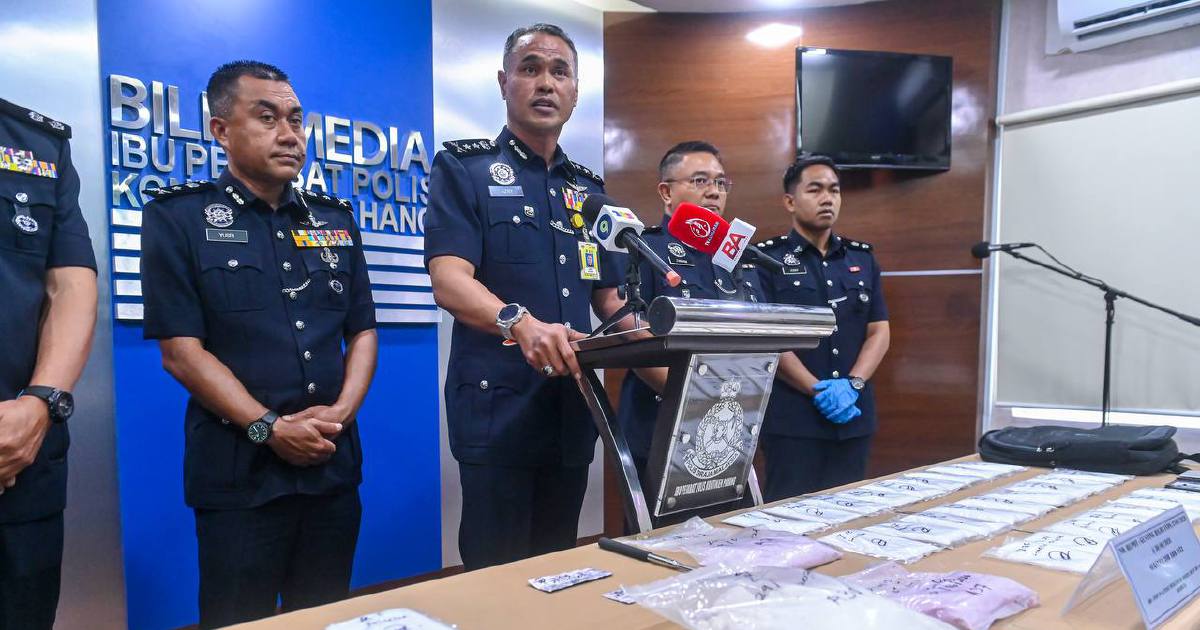
A significant narcotics operation has been disrupted in Pahang following the arrest of a Thai woman and her Malaysian partner in the Bentong area, with authorities recovering drugs valued at approximately RM728,000. The pair, detained in the Genting Permai district, were suspected of functioning as drug couriers for an organised trafficking network that had been operating across the state for at least three months. The seizure represents a substantial blow to the supply chain serving consumers in the east coast region and underscores ongoing enforcement efforts by Malaysian law enforcement against cross-border drug trafficking networks.
The arrests in Bentong, a district spanning both Pahang and Selangor state borders, reflect the strategic positioning of major trafficking routes through the Klang Valley hinterland and the surrounding highlands. This corridor has long been identified by authorities as a critical transit point for narcotics destined for both domestic consumption and regional distribution. The involvement of a foreign national aligns with intelligence suggesting increased involvement of Southeast Asian nationals in Malaysia's drug distribution apparatus, often recruited to manage routes and act as intermediaries between production zones and street-level dealers.
According to operational reports, the suspected couriers had been transporting controlled substances for their syndicate employers on a regular basis, collecting orders and managing logistics for a geographically dispersed customer network. This modus operandi is characteristic of mid-tier trafficking organisations that avoid centralised stockpiling by employing mobile distribution teams. The three-month operational window suggests the pair had successfully evaded detection through multiple delivery cycles before triggering investigative interest through either intelligence gathering or routine law enforcement surveillance.
The RM728,000 drug valuation indicates a significant quantity of narcotics, likely consisting of multiple substance types commonly trafficked in Malaysia including methamphetamine, heroin, and synthetic drugs. The street value estimation allows authorities to quantify the operation's economic impact and scale their enforcement response proportionally. For context, seizures of this magnitude typically represent several weeks of supply for a substantial distributor network serving multiple states, though street-level retail operations might derive months of inventory from a single interdiction.
Bentong's geographic characteristics make it a natural focal point for drug enforcement operations. The district's position straddling state boundaries complicates jurisdiction and coordination, creating enforcement complexities that traffickers often exploit. The prevalence of hill resorts, agricultural areas, and secondary roads through forested terrain provides natural concealment for stash houses and transshipment points. Recent years have seen intensified cross-agency cooperation between Pahang and Selangor enforcement units to address these vulnerabilities.
The participation of a Thai national in courier operations reflects broader regional trafficking patterns. Thailand remains both a significant drug production hub and a transit country for narcotics flowing toward Malaysia and Singapore. Thai criminal organisations, though less dominant than they were historically, continue to maintain distribution networks penetrating Malaysian markets. The arrest of Thai nationals in Malaysia has gradually increased, suggesting either expanded enforcement focus or actual increases in involvement—likely both factors contribute.
The apprehension of both individuals simultaneously suggests coordinated police action based on substantial prior intelligence. Such arrests typically follow weeks or months of surveillance, communications monitoring, and informant development. The timing and location point to a planned interception rather than a routine traffic stop, indicating Bentong authorities had established sufficient evidence for confident intervention. This layered approach improves prosecution prospects by establishing patterns of conduct rather than relying solely on possession-at-arrest charges.
For Malaysian observers, the seizure reinforces that drug trafficking remains an acute challenge despite substantial enforcement investment. The Bentong operation represents one successful interdiction among countless transactions occurring across the country daily. The individuals apprehended join thousands annually processed through Malaysia's drug courts and incarceration systems, yet enforcement remains consistently outpaced by supply dynamics. The sustainability of trafficking networks depends fundamentally on their ability to absorb occasional losses without operational disruption—a reality suggesting that while individual seizures matter, systemic supply reduction requires addressing root causes upstream.
The case also highlights the diversification of trafficking participants across nationality and demographic lines. No longer confined to organised crime figures, courier roles increasingly attract economic migrants and individuals experiencing financial pressure. The Thai woman's participation suggests either deliberate recruitment or increasingly blurred lines between smuggling and trafficking roles in Southeast Asia's informal economy. Such trends complicate prevention strategies that traditionally focused on identifying professional criminals.
This enforcement action occurs against a backdrop of Malaysia's ongoing struggle with drug demand and supply. The National Anti-Drugs Agency and police narcotics divisions have intensified operations particularly in transit corridors and urban distribution hubs. Yet despite chronic underfunding relative to the scale of the problem, periodic successes like the Bentong seizure provide measurable indicators of continued effort. Authorities will likely leverage this case for intelligence regarding broader syndicate structures, supplier relationships, and downstream distribution networks, potentially catalysing additional follow-up operations across connected locations.

