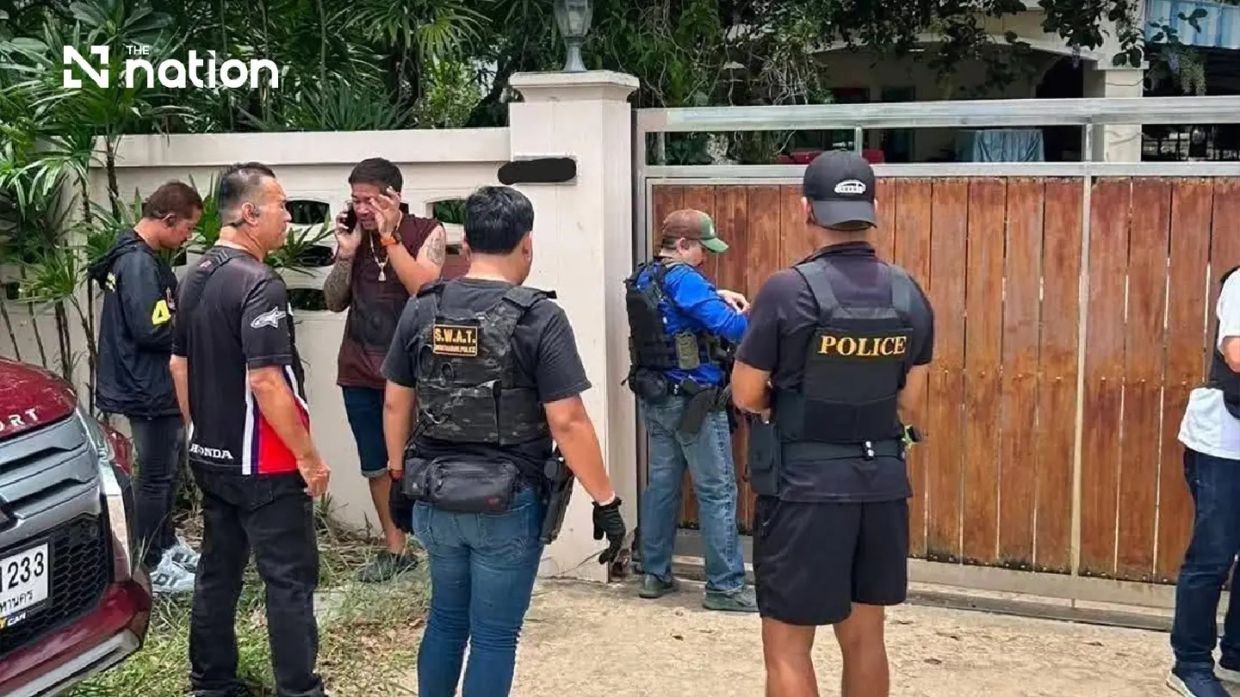
A secondary school student in Thailand's Nonthaburi province fatally shot his grandparents before launching an attack at Debsirin Nonthaburi School on Friday morning, leaving at least seven people dead and 15 others wounded in what authorities are treating as one of the country's most serious school shooting incidents in recent years. Police investigators have established that the Mathayom 2 student—whose identity has been withheld due to his age—lived with his paternal grandparents in a residential neighbourhood in Bang Bua Thong district before carrying out the dual attack that shocked the nation.
When officers responded to the domestic scene at the family residence on Soi Wat Lat Pla Duk, they discovered the grandparents had died earlier that morning. Authorities believe both were killed using the same 9mm firearm that the suspect subsequently took to the school. The weapon was registered to the grandfather's name, though investigators are now focused on understanding how the teenager accessed the gun and ammunition despite living under adult supervision. This critical gap in security represents a major investigative priority as police work to prevent similar incidents.
The sequence of events unfolded rapidly on Friday morning when the suspect appeared at the school and opened fire in what witnesses described as a calculated and deliberate attack. Seven individuals perished at the scene, including the suspected attacker himself, while emergency responders treated 15 injured persons. The swift intervention by security forces and emergency personnel prevented further casualties, though the psychological toll on the school community and broader society remains immeasurable. All victims were evacuated from the school grounds as authorities secured the site for forensic examination.
Pol Lt Gen Trairong Phiwphan, spokesman for the Royal Thai Police, confirmed that officers had successfully contained and terminated the violence within the school compound. However, he emphasised that establishing a clear motive for the attack remains challenging at this preliminary stage of the investigation. Investigators have begun preliminary interviews with the suspect's guardians and neighbours to construct a profile of the teenager's behaviour, social interactions, and any warning signs that might have preceded the violence. These inquiries will take considerable time to complete given the complexity of determining psychological and environmental factors that may have contributed to the incident.
A primary investigative focus centres on the weapon itself and how a secondary school student gained access to a registered firearm kept in a family home. Police have confirmed that the CZ 9mm handgun was lawfully registered to the grandfather, but questions remain about storage procedures, accessibility, and how the teenager obtained ammunition. Understanding whether adequate firearm safety measures were in place—including secure storage, ammunition separation, and restricted access protocols—will inform recommendations to strengthen household weapons security across Thailand. Investigators must now trace the complete chain of custody from the time the weapon was stored at home through to its use in both locations.
For Southeast Asian observers, the incident raises broader concerns about youth violence, access to firearms in civilian populations, and the capacity of existing safeguards to prevent tragedy. Thailand's approach to civilian firearm registration is relatively permissive compared to some regional neighbours, and this case will likely prompt policy discussions about storage requirements, licensing procedures, and the psychological screening of household members with access to weapons. The incident also highlights gaps in early intervention systems that might identify troubled young people before they reach a crisis point capable of generating mass casualties.
The trauma extending from the school itself reaches deeply into family networks and educational institutions across Nonthaburi. National Police Chief Pol Gen Kitrat Phanphet has ordered comprehensive psychological support for affected teachers, students, and community members. Mental health specialists and psychologists from Police General Hospital have been deployed to provide counselling aimed at addressing acute trauma responses and mitigating long-term psychological consequences. This recognition of mental health needs reflects international best practice in responding to mass casualty incidents involving schools, where secondary trauma can persist for years without proper intervention.
The investigation will necessarily examine the teenager's academic record, disciplinary history, social relationships, and any communications—digital or otherwise—that might indicate planning or escalating distress. Thai investigators will also look into whether the student had previously expressed concerning thoughts or whether educators or peers had noticed behavioural changes. Understanding the pathway to violence in this case could yield insights applicable to school safety protocols and threat assessment procedures throughout Thailand and the broader region, where similar incidents have occurred with increasing frequency.
For Malaysian readers following this tragedy, the incident serves as a cautionary case study in how critical vulnerabilities—both in firearm security and youth mental health systems—can combine catastrophically. Malaysian schools have implemented security measures in response to regional violence, yet this Thai case demonstrates that hardened facilities alone cannot address root causes rooted in family dysfunction or untreated psychological distress. The incident underscores the necessity for integrated approaches combining firearm regulation, mental health screening, school-based threat assessment, and community awareness programs designed to identify vulnerable youth before desperation translates into lethal action.
Authorities in Nonthaburi are continuing to collect forensic evidence from both the family home and the school premises while simultaneously conducting witness interviews and building a comprehensive timeline of events. The investigation will take weeks or months to complete fully, requiring coordination between forensic teams, homicide specialists, and psychological experts. As the inquiry progresses, Thai officials will likely share findings with regional partners through ASEAN law enforcement channels, contributing to collective understanding of school violence prevention across Southeast Asia and informing policy discussions at both national and regional levels.

