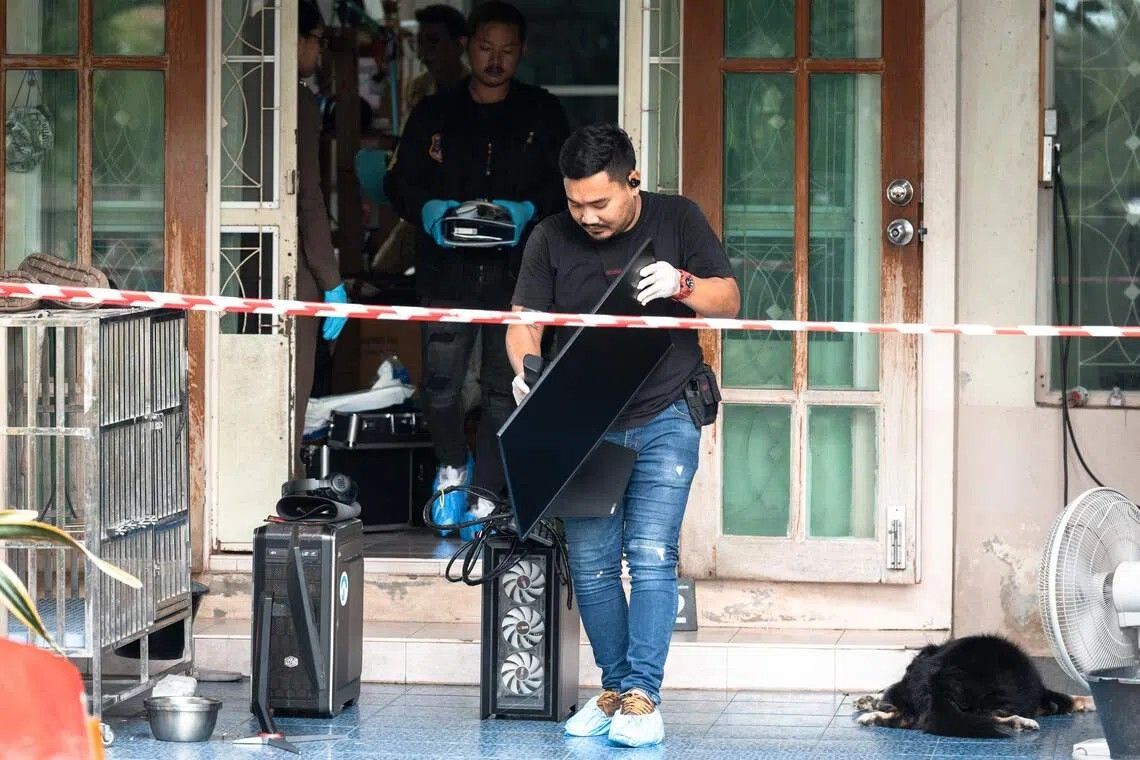
Thai law enforcement officials are scrutinising the digital footprint of a 14-year-old suspect in connection with a deadly shooting at Debsirin Nonthaburi School on August 7, following preliminary findings that the teenager had conducted internet searches related to school shootings in the United States and spent considerable time engrossed in violent video games. Investigators from Provincial Police Region 1, led by Commissioner Wattana Yichin, are treating these online activities as potential factors while attempting to piece together the sequence of events that culminated in the tragic incident, though authorities have emphasised that no causal link has yet been established between the digital behaviour and the attacks.
Emerging details from the investigation suggest a deeply troubling timeline in which the teenager is believed to have first killed his grandparents at their residence in Bang Khu Rat subdistrict, Bang Bua Thong district, before making his way to the school premises where the shooting subsequently took place. The discovery of the grandparents' bodies came after police and forensic teams obtained access to the locked property, with the front door found secured from the outside, corroborating officers' theory that the suspect had departed the home following the killings. This sequence of events underscores the methodical nature of what authorities are investigating as a multi-site tragedy rather than a single impulsive act.
The preliminary examination of the teenager's computer and online search history has revealed a pattern of interest in violent gaming content and documented searches for information concerning American school shootings dating back to approximately July 30. While police have documented these findings, they have taken pains to note that establishing a causal relationship between such online behaviour and violent actions remains speculative without further investigation. The inquiry is therefore expanding to encompass various potential contributing factors, including whether the suspect experienced difficulties within the school environment or faced interpersonal challenges that might have precipitated his actions.
Accounts from the teenager's immediate family paint a portrait of a socially isolated adolescent whose life revolved around his grandparents and digital entertainment. According to information provided to investigators by the boy's uncle, the teenager had been raised by his grandparents since early childhood following his parents' separation, and had spent a substantial portion of his time engaged with video games whilst maintaining a withdrawn demeanour in his broader social interactions. The relative reported observing no apparent history of conflict within the household or visible indicators of psychological distress that might have served as warning signs prior to the incident.
The weapon employed in the shooting was legally registered to the teenager's grandfather, a detail that raises questions about firearm security and supervision within the household. This revelation complicates the narrative of a troubled youth accessing weapons, suggesting instead a scenario in which an adolescent gained access to a legally owned firearm under circumstances that law enforcement is still working to clarify. The provenance of the weapon adds another dimension to the investigation as authorities examine not only the teenager's motivations but also the circumstances that permitted him to obtain and use the registered firearm.
Family members have provided additional context regarding the household dynamics and the boy's character, painting a picture that contrasts starkly with the violence that erupted. Thananyaporn, 60, the younger sister of the deceased grandfather, described her nephew as a quiet and polite young man who rarely ventured outside the family home and relied on his grandfather for transportation to and from school. She emphasised that the boy lacked the typical peer networks and social engagements characteristic of most adolescents, instead remaining within the domestic sphere where he pursued his gaming interests.
According to family accounts, the teenager's grandparents were deeply invested in his wellbeing and provided him with a stable, affectionate home environment. His grandmother worked as an educator, while his grandfather, a retired bank manager, was remembered by family members as a gentle and caring figure who consistently demonstrated paternal concern for his grandson. These characterisations of the family unit stand in sharp contrast to scenarios involving household dysfunction or neglect, leaving investigators with the challenging task of explaining how apparent familial stability could coexist with such devastating violence.
The family's assessment suggests no underlying marital or parental tensions existed within the household, with relatives asserting that the three family members maintained particularly close bonds. Thananyaporn explicitly stated her conviction that family dysfunction played no role in the tragedy, attributing her confidence partly to the grandmother's professional background as an educator and the grandfather's patient, gentle approach to parenting. This testimony, while potentially providing reassurance about the household environment, simultaneously deepens the mystery surrounding the teenager's motivations and the genesis of the violent impulses he acted upon.
Thailand's experience with school violence reflects broader regional and global concerns about adolescent aggression and the factors that precipitate such tragedies. Unlike some comparable incidents internationally, this case presents the peculiar profile of a teenager with apparent family stability and care, which complicates simple narratives about violence stemming exclusively from domestic dysfunction or parental abandonment. The focus on the teenager's online activities invites scrutiny about the role of digital media consumption in shaping behaviour, a topic of ongoing debate among researchers and policymakers throughout Southeast Asia.
Investigators remain committed to establishing the precise sequence of events and identifying contributory factors, whether psychological, social, environmental, or technological in nature. Police have cautioned against premature conclusions about causation, acknowledging that the relationship between video game engagement, internet searches, and violent action remains complex and contested. The investigation continues to expand in scope as authorities interview additional witnesses and examine the full scope of the suspect's digital and physical activities in the weeks and months preceding the attack, seeking to construct a comprehensive understanding of the circumstances that led to the tragedy at Debsirin Nonthaburi School.

