Thai authorities have widened their crackdown on an alleged transnational narcotics ring, moving beyond the arrest of a Thai Airways flight attendant in Australia to detain a married couple in the northeastern province of Loei. The expanded operation reflects how drug trafficking networks operate across borders and through multiple intermediaries, a pattern that has become increasingly prevalent in Southeast Asia.
The initial catalyst came when Thai Airways flight attendant Mina was apprehended by Australian Federal Police at Melbourne Airport. Officers alleged that approximately one kilogram of heroin had been concealed within her luggage. Rather than treating this as an isolated incident, Thai law enforcement authorities recognised it as part of a broader supply chain and began tracing the source of the narcotics shipment back to Thailand.
The investigation led authorities to Athit, aged 43, and Thatsaphon, aged 42, both residing in Chiang Khan district of Loei province. Police first attempted to locate them at their registered address in That subdistrict on 2 July, only to discover they were not present. This initial setback prompted officers to expand their search, eventually tracking Athit to Wat Tham Pha Mak Ho in Wang Saphung district, where he was reportedly engaged in repair work on a temple roof. His apprehension marked a turning point in the investigation.
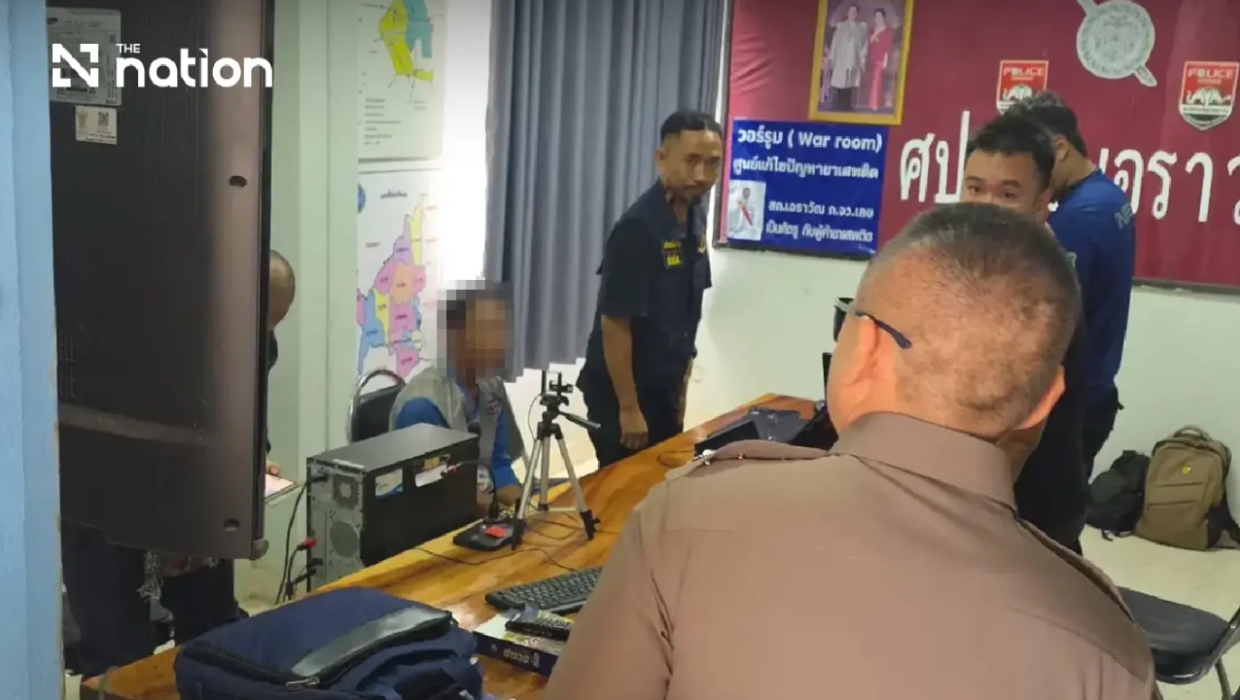
During initial questioning at Erawan Police Station, Athit made admissions that proved critical to the case. He disclosed that he had been compensated on six separate occasions to dispatch parcels destined for Bangkok. According to police records, three packages had been sent through a local parcel service in Chiang Khan, with two originating from Ban That and one from Erawan district. The financial arrangement was straightforward: he received 8,000 baht, equivalent to approximately US$240, for each delivery completed. The most recent transaction had occurred on 28 June, suggesting the operation was actively ongoing at the time of the arrests.
Thatsaphon, his wife and a Lao national, was apprehended shortly after her husband. Authorities located her following the discovery of a black Mitsubishi Triton pickup bearing Loei registration plates, parked in a rubber plantation in the Pha Nang-Pha Koeng locality of Erawan district. When brought in for questioning, she denied any knowledge of or involvement in the alleged smuggling activities. Her status within the operation, if any, remained unclear at the preliminary inquiry stage, though police suspected she may have provided logistical support.
The arrests underscore a concerning trend in drug trafficking methodology: criminal networks deliberately fragment their operations across multiple countries and employ individuals at various levels of the supply chain, creating layers of insulation for kingpins. This structural approach complicates law enforcement efforts, as lower-level operatives often possess limited knowledge of the broader network. The decision to use a flight attendant as a courier, combined with recruitment of local residents to handle parcel forwarding, demonstrates the sophistication of modern transnational drug operations.
The Office of the Narcotics Control Board has indicated that the investigation remains fluid and will continue to pursue those responsible at every level. Officials are particularly interested in identifying who ordered the shipments, which individuals or entities financed the operation, and how the drugs were sourced. The involvement of Lao nationals in what appears to be the financing and orchestration suggests potential links to criminal networks operating across Thailand's northern border, a region known for significant drug production and trafficking activity.
Both suspects have been transferred to the ONCB's custody for more intensive questioning. Investigators are methodically attempting to unravel the broader structure of the operation, seeking to establish connections that might lead to higher-level participants. Intelligence sharing between Thai agencies and the ONCB represents an important development, particularly given the traditional compartmentalisation of police investigations in Thailand.
From an international law enforcement perspective, the case exemplifies the necessity of cooperation between nations. The ONCB has acknowledged that close coordination with Australian authorities proved instrumental in enabling Thai investigators to trace potential links back to domestic actors. Such transnational collaboration remains essential, as drug smuggling operations increasingly exploit gaps between different national jurisdictions and law enforcement systems.
The broader policy implications are significant for the region. Thailand's government has prioritised drug suppression as a major policy initiative, and this case demonstrates both the challenges and the potential for meaningful results when resources are deployed effectively. However, the continued discovery of such networks suggests that supply remains robust despite enforcement efforts. The ONCB has committed to intensifying investigations, strengthening border cooperation, disrupting transport routes, and attempting to interrupt the financial mechanisms that sustain these criminal enterprises.
For Malaysia and other Southeast Asian nations, the case serves as a reminder that drug trafficking networks operate with regional reach and sophistication. The use of postal services, local intermediaries, and transport workers indicates that traffickers are actively seeking to exploit the region's developing logistics infrastructure and porous borders. Malaysian authorities may find the operational patterns identified in this investigation relevant to their own ongoing enforcement efforts against heroin trafficking, which remains a significant challenge across the region.

