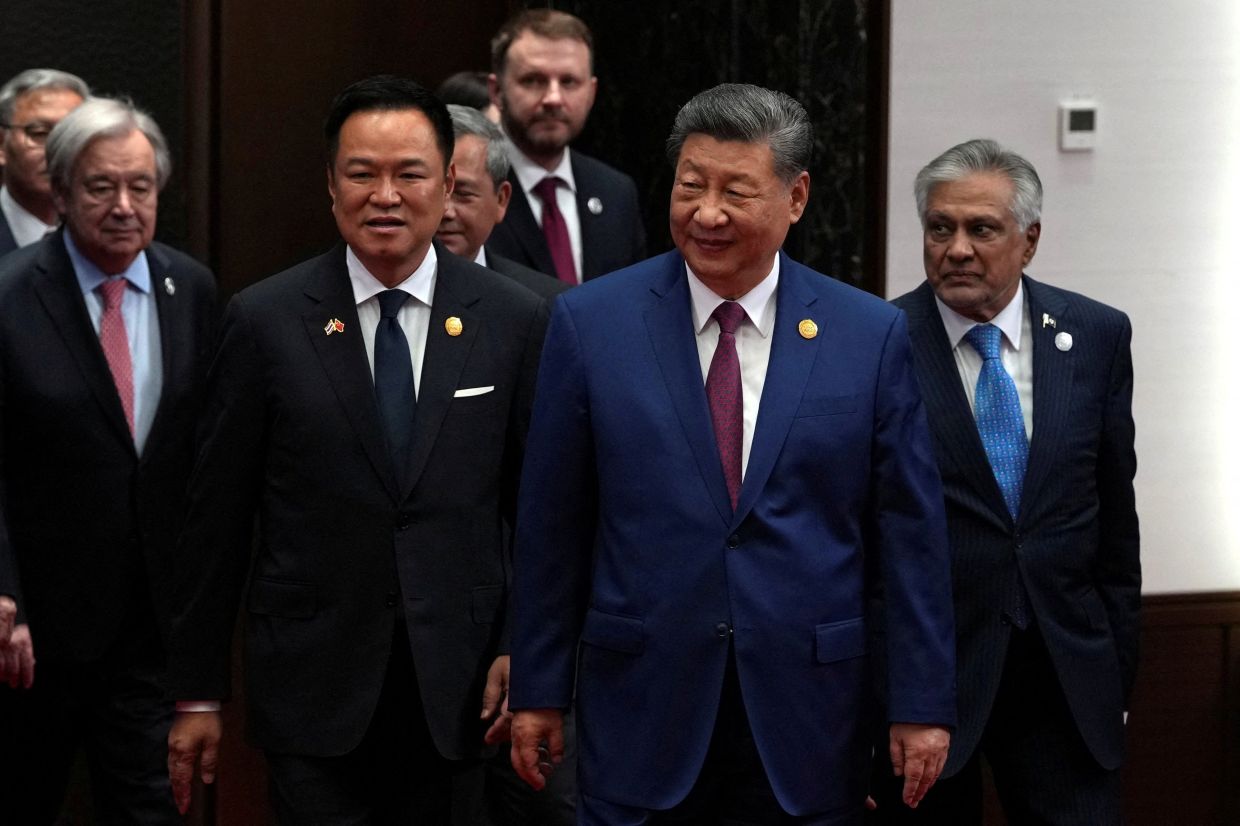
Thai Prime Minister Anutin Charnvirakul surprised guests at an official lunch in Beijing on Monday by breaking into song alongside Chinese Premier Li Qiang, performing a Teresa Teng classic as part of what has become his signature style of diplomatic engagement. The impromptu serenade, captured in footage released by the Prime Minister's office, showed Anutin holding a microphone while seated next to Li at a formal gathering decorated with Thai and Chinese national flags, with piano accompaniment filling the room as fellow dignitaries applauded.
This performance represents just the latest chapter in what observers have begun calling Anutin's musical diplomacy strategy, an unconventional approach that has seen him use personal musical talent as a bridge-building tool across Southeast Asian capitals. The Thai leader appears intent on using melody and performance to humanise formal state relations, a tactic that stands in marked contrast to the typically rigid protocols of high-level governmental meetings. By stepping outside traditional diplomatic frameworks and injecting moments of genuine cultural exchange, Anutin has begun to carve out a distinctive political persona that extends beyond conventional statecraft.
Just weeks earlier, Anutin demonstrated this same approach during an official engagement with Malaysian Prime Minister Anwar Ibrahim, where the two leaders performed a duet of "My Way", the Frank Sinatra standard. In that performance, Anutin took up the saxophone while Anwar sang, showcasing his instrumental versatility and willingness to collaborate musically with regional counterparts. The moment illustrated how music can serve as a common language transcending political differences and national boundaries, creating informal channels of goodwill that might complement more formal diplomatic discussions.
His musical outreach extended further afield when he visited Hanoi last month, where Anutin participated in a performance alongside Vietnamese musicians, playing traditional Vietnamese instruments in front of Prime Minister Le Minh Hung. These successive performances across different countries suggest a deliberate strategy to establish personal connections with regional leaders and their populations, leveraging cultural expression as a soft power tool. In an era when diplomatic relations often feel transactional and impersonal, Anutin's approach introduces an element of spontaneity and shared human experience that can subtly reshape how nations relate to one another.
Anutin's background provides context for this unconventional diplomatic style. The son of a construction dynasty magnate, he assumed office in September 2025 and subsequently secured electoral validation through February's general elections, consolidating his political position. Despite his wealthy pedigree, Anutin has worked to project an image of accessibility and connection to ordinary Thais, a narrative that his public musical performances help reinforce. By appearing on television and at state events as a musician rather than solely as a technocratic administrator, he presents a more dimensional public personality than many regional leaders.
Beyond his diplomatic performances, Anutin's musical interests reflect a genuinely diverse set of skills that extend his public profile. An accomplished pianist and player of the traditional Thai flute, he also maintains a passion for aviation, holding a pilot's license for jet aircraft. These pursuits paint a picture of a leader who cultivates diverse personal interests and maintains a somewhat cosmopolitan lifestyle, characteristics that resonate particularly with Thailand's younger, more urbanised demographic. The combination suggests someone comfortable moving across different social and cultural contexts.
Crucially, Anutin has positioned himself as a guardian of Thailand's traditional social structures and established order, a stance that continues to command support among the country's more conservative segments. This ideological positioning, which might seem at odds with his avant-garde diplomatic style, actually reflects Thailand's complex political landscape where respect for institutions and tradition coexists with growing appetite for personalised, charismatic leadership. His musical performances thus serve a dual purpose: they demonstrate accessibility and modernity while his broader governance approach reassures traditionalist constituencies that he respects the nation's established hierarchies.
Recent months have seen Anutin expand his musical repertoire to include collaboration with a young Thai musician who achieved international recognition through a viral performance on the television programme America's Got Talent. By aligning himself with this emerging talent and performing alongside the teenager, Anutin further demonstrates his willingness to bridge generational and cultural divides through music. These performances suggest that musical expression has become a core element of his public political strategy, not merely occasional diversions from serious governance.
For Malaysian readers and Southeast Asian observers, Anutin's approach represents an intriguing experiment in soft diplomacy at a time when regional relations increasingly depend on building personal rapport among leaders. Thailand's strategic location and economic importance in the region give particular significance to how its leadership projects itself internationally. By emphasising cultural connection and personal warmth through musical performance, Anutin is attempting to reframe Thailand's diplomatic profile from one based primarily on economic and security interests toward one that emphasises shared cultural values and human connection.
The broader implications of this musical diplomacy merit attention as region-building efforts accelerate across Southeast Asia. Traditional diplomatic protocols have sometimes created distance between nations and leaders, leading to transactions rather than genuine partnerships. Anutin's integration of music into high-level state engagements, while unconventional, potentially demonstrates how cultural expression can serve legitimate diplomatic functions. Whether other regional leaders will adopt similar approaches or whether this remains a distinctly Anutin innovation remains unclear, but his performances have certainly generated attention and created memorable moments in otherwise formulaic official visits.

