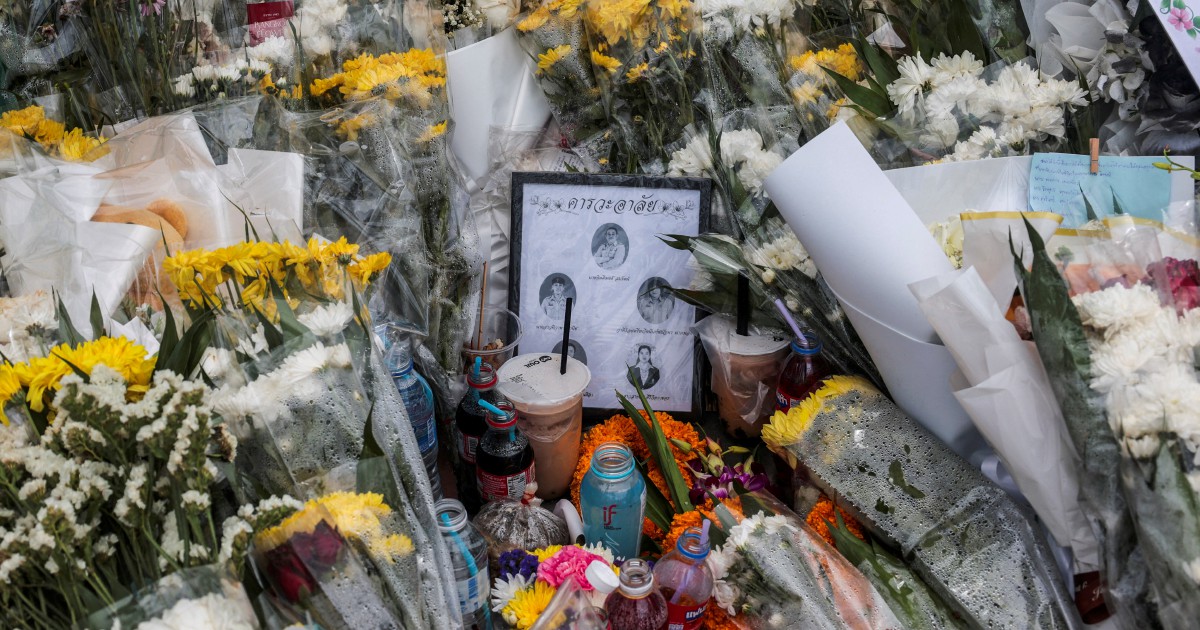
Thailand's government has moved to tighten control over civilian firearms following the tragic school shooting that claimed four lives last week, with Prime Minister announcing a suspension of gun licences in the aftermath of the incident. The decision comes as the nation grapples with the consequences of the violence, which claimed the lives of innocent bystanders and the teenage assailant himself. The suspension marks a significant policy response to public concern over gun ownership and security in the Southeast Asian nation, a country that has historically permitted civilian firearm ownership under strict regulations.
The timing of the licence suspension coincided with cremation ceremonies held this week for the three victims most closely tied to the perpetrator: the teenage shooter and his two grandparents, whom he fatally shot before carrying out the broader attack. The simultaneous handling of these funerals underscores the personal tragedy embedded within the larger public security crisis, as family members were among those killed by the young man during his rampage. The ceremonies drew attention to the complex circumstances surrounding the incident, which has prompted national reflection on youth violence, access to weapons, and preventative measures within Thai society.
The suspension of firearms licences represents an extraordinary step in Thailand's approach to gun regulation and reflects the gravity with which authorities are treating the incident. While Thailand maintains relatively strict licensing procedures for civilian gun ownership compared to some neighbouring countries, the recent shooting has prompted policymakers to reconsider whether existing protections are sufficient. The prime minister's intervention suggests that the government views the incident as a watershed moment requiring immediate administrative action, even though the specifics of how the suspension will be implemented and what measures might follow remain to be clarified in the coming days.
The school shooting has sparked wider discussions across Southeast Asia about youth violence and the dangers posed by inadequately regulated weapon access. For Malaysian readers, the situation in neighbouring Thailand serves as a cautionary example of how violence can penetrate even societies with established licensing frameworks. Malaysia has its own robust gun licensing system, yet incidents in the region highlight the importance of continuous evaluation of security protocols and the psychological factors driving young people towards violence. The Thai incident provides valuable perspective on how communities grapple with the aftermath of such tragedies and the policy responses that emerge from them.
Thailand's school security environment has come under scrutiny in the wake of the shooting, prompting authorities and educators to examine protocols for student safety and emergency response. The incident raises questions about how educational institutions can better identify and support students experiencing psychological distress or crisis, particularly those with access to weapons through family members. School administrators across the region are likely reviewing their own security measures and counselling services in response to the Thai shooting, understanding that such incidents demand comprehensive prevention strategies rather than reactive measures alone.
The broader implications for civil liberties and gun ownership in Thailand remain unclear as the government navigates between public safety concerns and citizens' constitutional rights. While the suspension of licences is a dramatic step, longer-term policy discussions will determine whether the measure becomes permanent, how licences might be reissued with stricter criteria, and what additional regulations might be imposed. Regional observers note that Thailand's response could influence firearms policy discussions across Southeast Asia, particularly in countries evaluating how to balance individual freedoms with collective security.
For families affected by the shooting, the cremation ceremonies represent a moment of closure despite the profound loss. The handling of the deceased, particularly the teenage assailant, reflects Thailand's cultural and religious practices while acknowledging the complexity of honouring victims while confronting the perpetrator. This compassionate approach, even in tragedy, demonstrates how Thai society attempts to process violence while maintaining social cohesion and respect for human dignity across all victims.
The incident has reinvigorated discussions among Thai policymakers about mental health services, youth support systems, and the warning signs that may precede violent acts. Experts have highlighted the need for earlier intervention strategies, including school-based counselling, community awareness programmes, and family support services that might identify and assist troubled individuals before they reach a crisis point. These broader social interventions are viewed as complementary to the regulatory response already being implemented through the licence suspension.
Thailand's commitment to addressing the incident comprehensively suggests that firearms regulation alone will not be the only policy response. The government appears poised to examine education systems, social services, and community safety initiatives as interconnected elements of a strategy to prevent future tragedies. For Malaysia and other Southeast Asian nations, Thailand's multifaceted approach offers lessons in how societies can respond meaningfully to violence while addressing its root causes.

