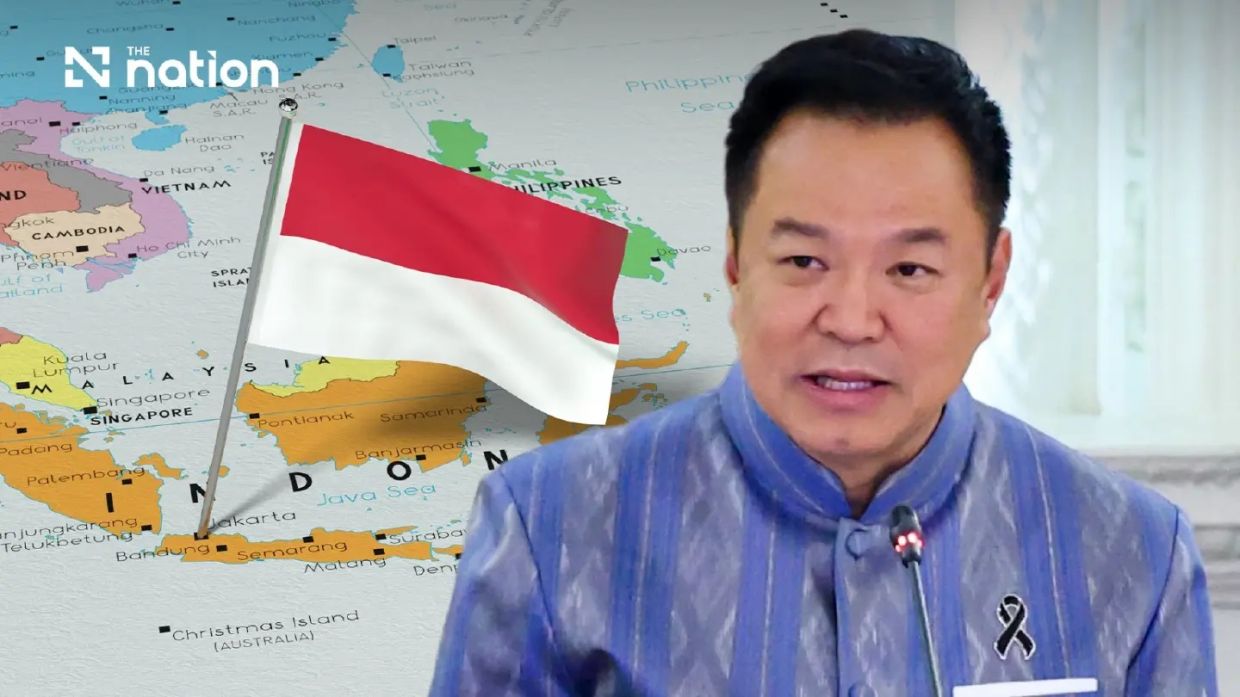
Prime Minister Anutin Charnvirakul is embarking on an official visit to Indonesia from August 3 to 4, marking the first such high-level journey by a Thai premier in 15 years and signalling a renewed commitment to strengthening ties between two of Southeast Asia's most influential economies. The trip will see Anutin engage directly with Indonesian President Prabowo Subianto on matters ranging from bilateral commerce to regional leadership responsibilities, as Thailand positions itself for its upcoming role as Asean chair in 2028.
The substantive agenda reflects Bangkok's determination to leverage closer Indonesia relations for tangible economic gains. Trade and investment rank prominently, alongside discussions on tourism flows, security arrangements, food security initiatives, energy cooperation, educational exchange and business partnerships. By aligning these multiple dimensions of engagement, Thailand hopes to move beyond ceremonial diplomacy into practical collaboration that generates real returns for both governments and their private sectors.
Acknowledging Indonesia's outsized importance within the regional bloc, government officials have framed the nation as a gateway for Thai enterprises. With roughly 280 million people and the region's largest economy, Indonesia represents an unmatched market opportunity for Thai goods, services and investors seeking expansion into untapped segments. The strategic value of this access cannot be overstated in an era when major regional economies are competing intensely for market share and supply-chain positioning within Southeast Asia.
Government Spokesperson Rachada Dhnadirek has articulated a vision extending well beyond conventional state-to-state formalities, emphasising how deepened relations can unlock supply-chain efficiencies and catalyse two-way investment flows. Large Thai corporations and smaller enterprises alike stand to benefit from stronger institutional frameworks and reduced trade barriers. The government sees particular potential for agricultural and food product exporters, who have long viewed Indonesia's vast consumer base as critical to growth strategies.
Tourists and employment generation feature prominently in Bangkok's calculus. Enhanced connectivity and promotional efforts between the two countries could increase bilateral visitor numbers, generating income for tourism-dependent communities whilst creating jobs across hospitality and transport sectors. Additionally, knowledge and technology transfers in complementary sectors—areas where one nation possesses expertise the other seeks—could accelerate industrial development and competitiveness in both economies.
This instrumental approach to foreign policy reflects a broader philosophy articulated by senior officials: that diplomatic engagement should directly serve citizens through tangible improvements in living standards and economic opportunity. Rather than treating international relations as an end unto themselves, the Thai government is explicitly linking strategic partnerships to employment creation, income growth and sectoral development, framing foreign policy as a tool for domestic prosperity.
On the regional stage, the visit provides an opportunity for both leaders to address Asean's fundamental challenges and evolving role. As founding members of the Association, Thailand and Indonesia carry particular responsibility for maintaining bloc cohesion amid geopolitical realignments and economic volatility. The discussions will likely touch on how Asean can preserve its strategic autonomy, respond collectively to transnational crime and irregular migration, and navigate the complicated terrain of great-power competition without fracturing along ideological or economic lines.
Anutin's planned address at the Asean Secretariat carries symbolic weight, offering Thailand an early platform to articulate its vision for the bloc's future before formally assuming the chair. Themes of economic resilience, people-centred development and balanced growth indicate Bangkok's desire to position itself as a stabilising, inclusive voice within an organisation sometimes divided between larger and smaller economies. This messaging serves both to build consensus within Asean and to signal Thailand's international orientation during a period of heightened strategic competition.
The carefully structured programme demonstrates how modern summitry balances state ceremony with commercial opportunity. Beyond formal talks at the presidential palace, Anutin will participate in a business forum organised jointly by Indonesia's Chamber of Commerce and Industry and the Thai Chamber of Commerce in Indonesia. This formal bridge between private sectors creates space for executives to identify concrete partnership opportunities, turning diplomatic goodwill into commercial contracts and joint ventures.
Thailand's emphasis on economic negotiating power within global competition provides crucial context for understanding this engagement. As traditional growth drivers face headwinds and regional economies compete for investment and market access, bilateral relationships become mechanisms for securing preferential treatment, improving terms of trade and jointly developing resilient supply chains. Indonesia's scale and resources make it an indispensable partner in any Thai strategy for sustained prosperity.
The 15-year gap since the last prime ministerial visit underscores how dramatically bilateral relations can cool without consistent high-level engagement, even among nations with strong historical and cultural ties. This visit represents a deliberate reset, acknowledging that maintaining influence in Asean and accessing Indonesia's economic opportunities requires sustained political commitment and regular top-level contact. For Malaysian observers, the resumption of this crucial relationship carries implications for regional integration and the overall health of Asean cooperation.
Looking forward, this visit establishes a foundation for intensified engagement that could reshape economic relationships across Southeast Asia. If successful in generating concrete agreements on trade facilitation, investment protection and sector-specific cooperation, the August visit could catalyse a broader deepening of Thailand-Indonesia ties that reverberates throughout the region and strengthens Asean's collective economic position against external pressures.

