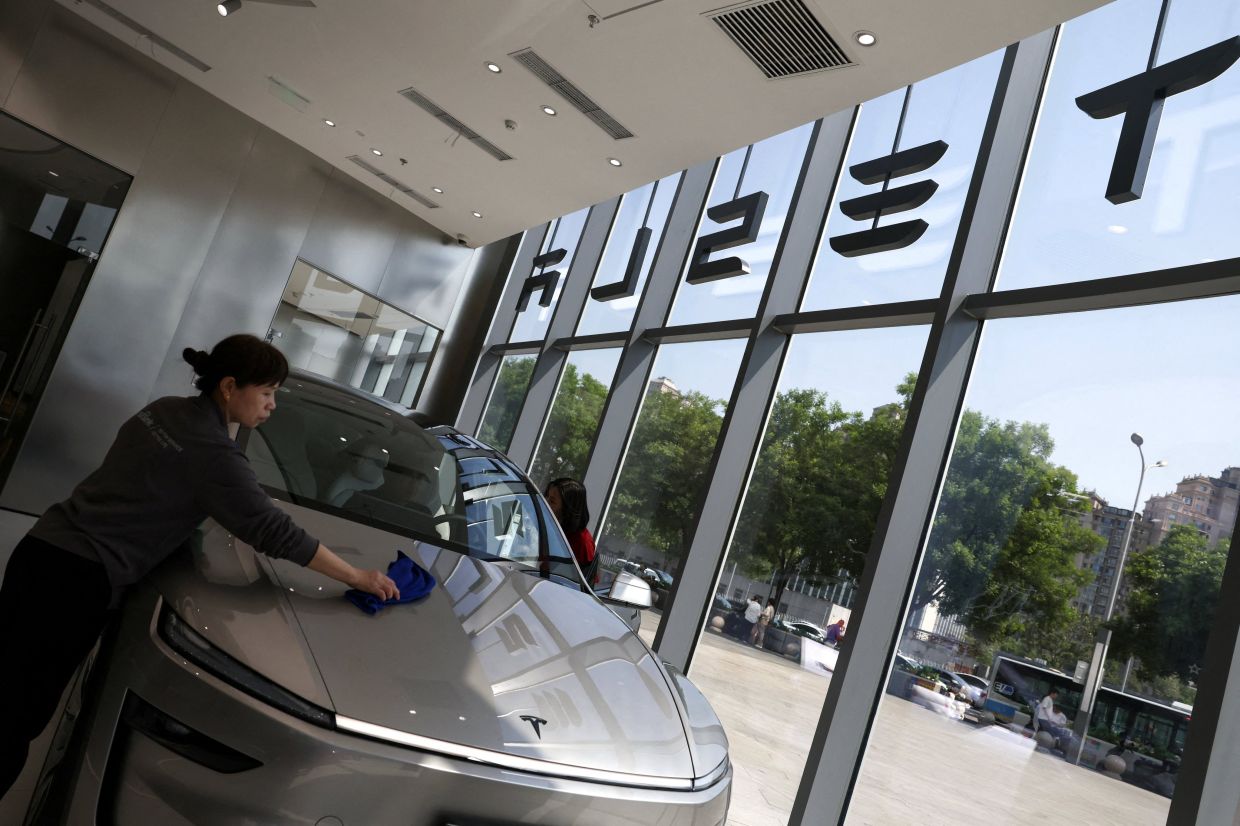
Tesla has initiated the most substantial vehicle recall in mainland China's electric vehicle sector, with parent company chief Elon Musk committing to address a critical door-handle malfunction impacting nearly three million units. This sweeping action underscores mounting regulatory pressure in the world's largest EV market and signals a fundamental shift in how Chinese authorities approach automotive safety standards for next-generation vehicles.
The recall programme emerges against a backdrop of intensified scrutiny from Beijing's regulators, who are moving decisively to prohibit retractable door mechanisms across the industry. This regulatory intervention was triggered by a tragic event the previous year when a driver became trapped inside a burning vehicle in southwestern China, with bystanders unable to access the doors to provide assistance. The incident galvanised public discourse around vehicle safety and prompted authorities to examine whether manufacturers had adequately prioritised occupant protection in their design choices.
Although multiple automakers face potential compliance challenges from the new regulations, Tesla's recall represents the most extensive announcement to date. The American manufacturer will return approximately 2.98 million vehicles to dealerships and service centres, signalling the magnitude of the engineering challenge posed by the retroactive standards shift. The scale of this operation demonstrates both the technological vulnerability embedded in many contemporary EV designs and Tesla's prominence within China's rapidly expanding electric vehicle ecosystem.
Beginning in late September, Tesla will affix additional warning labels directly to the internal door handles of recalled vehicles, while simultaneously deploying an over-the-air software update targeting the window-control systems. This dual-track remedy will automatically lower vehicle windows following a collision, potentially facilitating emergency egress when traditional door mechanisms prove inaccessible. The OTA update methodology allows Tesla to address the technical deficiency without requiring extensive physical redesign or prolonged factory downtime, though it represents an interim solution rather than a permanent hardware modification.
Industry observers in China's automotive sector view the recall campaign as a watershed moment for manufacturing accountability. Zhang Wenjie, operator of a Shanghai-based vehicle maintenance facility, characterises the door safety controversy as having gained significant traction since the latter half of the previous year, driven by both regulatory scrutiny and heightened consumer consciousness regarding protective features. Analysts anticipate that the comprehensive recall initiatives by Tesla and domestic competitors will fundamentally reshape how the automotive industry approaches product development philosophy, establishing more rigorous safety evaluation protocols before vehicles reach consumers.
The initial safety concerns emerged publicly in October following a catastrophic accident involving a Xiaomi SU7 Ultra electric vehicle in Sichuan province. Eyewitness accounts documented desperate attempts by passersby to extract a 31-year-old occupant from the vehicle as flames spread, yet the door locking mechanisms prevented rescue efforts. The harrowing incident rapidly escalated into a national conversation about whether manufacturers had sacrificed practical safety considerations in pursuit of sleek, technology-forward aesthetics.
In response, China's Ministry of Industry and Information Technology formally unveiled comprehensive regulatory modifications in February, establishing binding requirements for future vehicle certification. Under the revised framework effective from 2026 onward, all automobiles must incorporate both internal and external door handles capable of mechanical operation irrespective of circumstances—including post-accident scenarios or complete electrical system failure. This mandate essentially prohibits the fully retractable mechanisms that several manufacturers, particularly Tesla, had incorporated as design signature elements.
Tesla's recall initiative encompasses a secondary component affecting approximately 2.74 million Model 3 and Model Y vehicles produced at its Shanghai manufacturing complex. This separate OTA software update targets the vehicle's assisted steering capabilities and autonomous emergency braking systems, ensuring these driver-assistance functions engage appropriately when operators fail to react with sufficient speed during imminent collision situations. The Shanghai facility, which Tesla expanded significantly in recent years, produced roughly 851,000 units during 2025 designated for both domestic consumption and international export markets.
The Shanghai production figures acquire particular significance within Tesla's operational architecture. The Chinese manufacturing facility generated more than half of the corporation's global output, yet Tesla's worldwide production declined by 8.6 percent to 1.63 million units during the period. China represents Tesla's second-most consequential market globally, trailing only the United States in terms of revenue contribution and strategic importance. Consequently, regulatory pressures emanating from Beijing carry outsized implications for the company's profitability and long-term competitive positioning.
The cascade of recalls and regulatory tightening reflects broader tensions within China's EV industry as rapid technological advancement outpaces safety validation frameworks. Regulators must balance encouraging innovation and market dynamism against protecting consumers from inadequately tested design innovations. The retractable door-handle episode illuminates how avant-garde styling choices, while commercially appealing, can introduce genuine vulnerabilities during emergency situations when conventional mechanical fallback systems prove essential.
For Malaysian and Southeast Asian automotive stakeholders, the Chinese regulatory response carries instructive value. As regional EV markets develop and governments establish safety certification protocols, policymakers can observe how China navigates the challenge of retrofitting standards onto an already-substantial installed vehicle base. The Tesla recalls demonstrate both regulatory capacity to enforce compliance across massive supply chains and manufacturers' ability to implement remedies rapidly through software updates—capabilities that will likely influence how other Asian markets structure their emerging EV governance frameworks.
Looking forward, the comprehensive recall exercise may accelerate industry-wide adoption of more conservative door-handle engineering approaches, at least within markets where Chinese regulatory precedent carries weight. Tesla's willingness to absorb the operational disruption and expense of recalling nearly three million vehicles suggests the company calculated that compliance costs less than sustaining reputational damage in a market representing such substantial revenue. The episode ultimately reinforces that regulatory environments surrounding electrified vehicles continue evolving rapidly, requiring manufacturers to maintain exceptional adaptability.

