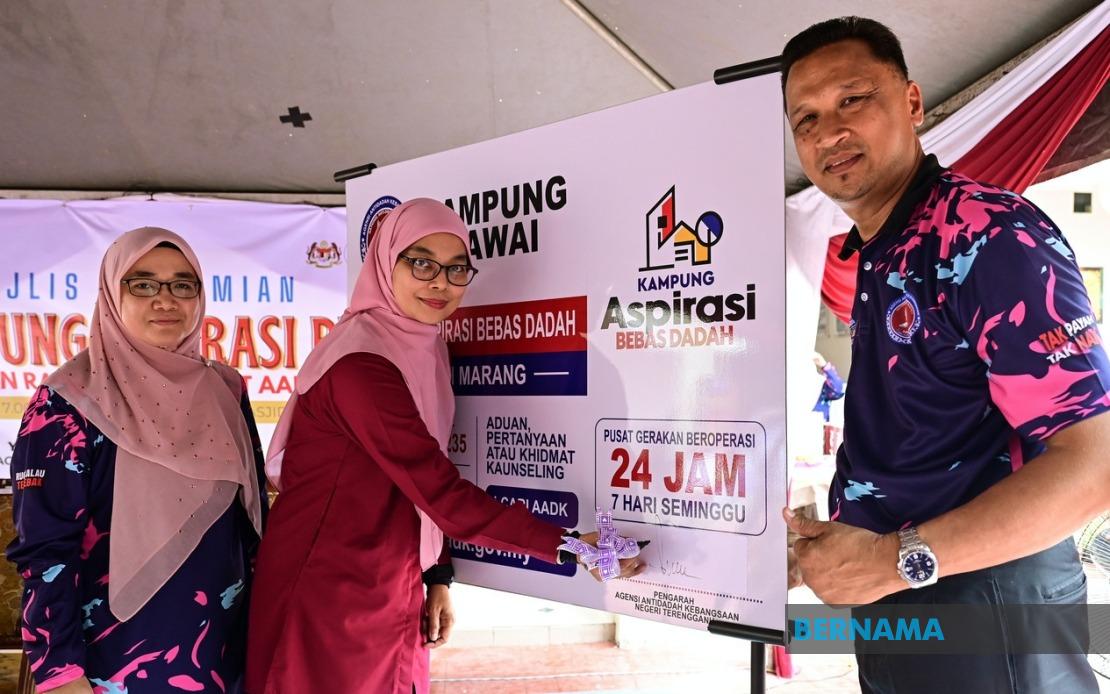
The Terengganu National Anti-Drug Agency (AADK) has achieved a 94 per cent rehabilitation success rate among 6,000 individuals battling drug dependence and substance abuse since 2010, reflecting a sustained commitment to tackling addiction through flexible, community-centred approaches. This significant milestone, unveiled during the launch of the Kampung Aspirasi Bebas Dadah (KABD) 2026 programme in Marang, underscores the viability of treatment models that integrate recovery efforts into daily life rather than isolating patients from their communities and support networks.
Ruzlin Hafinaz Redzuan, assistant director of Treatment and Rehabilitation at Terengganu AADK, stressed that the agency's multifaceted approach accommodates varying patient circumstances and preferences. The programmes operate on the principle that individuals can seek healing whilst maintaining their professional responsibilities, family relationships, and social engagement. This flexibility has proven especially important given that the majority of treatment-seekers fall within the 35 to 50 age bracket—a demographic often juggling employment, parental duties, and other life obligations that cannot be suspended during recovery.
The agency distinguishes between two primary pathways into its rehabilitation ecosystem. Individuals placed under court-mandated supervision typically undertake a two to three-year community-based recovery period, during which they remain subject to structured oversight and regular reporting. Those who voluntarily seek treatment are offered more autonomy, committing to a minimum six-month programme without incurring legal consequences. Both cohorts must maintain consistent engagement with scheduled treatment sessions, though the voluntary route permits participants to continue working, studying, or pursuing other constructive activities.
The variance in treatment duration reflects the individualised nature of addiction itself. Recovery timelines depend heavily on the severity of each person's dependency history and the specific substances involved. Terengganu AADK recognises that a standardised approach would be counterproductive, as opioid addiction, methamphetamine dependency, and substance abuse patterns require tailored interventions. This nuanced methodology has likely contributed to the exceptionally high success rate reported, as patients receive protocols calibrated to their particular circumstances rather than generic one-size-fits-all curricula.
Accountability mechanisms embedded within the voluntary treatment framework ensure that dropouts do not escape intervention. AADK officers conduct systematic follow-up with participants who miss scheduled sessions, seeking to identify obstacles to continued engagement and reinforce commitment to recovery. This proactive monitoring balances the autonomy granted to voluntary clients with the reality that addiction recovery demands consistency and institutional support. The approach acknowledges human frailty whilst maintaining firm boundaries around programme participation.
Kampung Rawai, a settlement of approximately 3,600 residents, has now become the second location in Terengganu selected for the KABD 2026 initiative this year. The selection process prioritises villages demonstrating strong grassroots commitment to drug prevention and community wellness. Local leadership and resident engagement proved decisive factors in identifying Kampung Rawai, suggesting that the agency views community readiness as essential to programme effectiveness. This targeting strategy reflects recognition that top-down initiatives alone cannot transform drug-affected communities without authentic local ownership.
The KABD framework explicitly aims to decentralise anti-drug efforts, shifting responsibility and agency from government structures to communities themselves. Non-governmental organisations, volunteer groups, and informal community networks are positioned as equal partners with state institutions in combating substance abuse. This participatory model recognises that villagers possess intimate knowledge of local risk factors, vulnerable populations, and social dynamics that external agencies cannot easily discern. Empowering these actors transforms drug prevention from a surveillance-heavy enterprise into a collective responsibility anchored in shared aspiration.
Campung Rawai is being positioned as a prototype for drug-free communities throughout Terengganu and potentially across Malaysia. The selection of a modest-sized village suggests intentionality: smaller settlements may offer optimal conditions for demonstrating that comprehensive, community-driven approaches can achieve transformative results. If Kampung Rawai successfully embeds anti-drug values across multiple social domains, it could provide a replicable blueprint for other localities confronting similar challenges.
For Malaysia's broader public health landscape, Terengganu's achievements offer encouraging evidence that addiction is treatable through sustained, intelligent intervention. The 94 per cent success rate challenges fatalistic assumptions that drug dependence inevitably leads to incarceration, marginalisation, or societal rejection. By permitting individuals to recover whilst maintaining economic productivity and family connections, the state facilitates reintegration and reduces collateral damage to vulnerable household members. Treatment success translates into restored earning capacity, reduced criminal justice system strain, and preservation of human capital.
The emphasis on community participation carries particular significance for Southeast Asia, where drug trafficking networks exploit weak institutional capacity and fragmented governance. When citizens actively resist drug availability and actively support rehabilitation efforts, they strengthen social fabric and create environments inhospitable to narcotics distribution. Terengganu's experience suggests that bottom-up mobilisation can complement enforcement efforts, creating multiple barriers to drug market expansion.
However, the 94 per cent figure warrants careful interpretation. Rehabilitation success might encompass various outcomes—sustained abstinence, reduced usage, improved social functioning, or programme completion—and definitions vary across agencies. Understanding precisely what constitutes success matters for evaluating genuine progress versus nominal achievement. Nevertheless, the sheer scale of engagement (6,000 individuals across 14 years) demonstrates substantial institutional capacity and community willingness to seek treatment, both positive indicators regardless of how success is defined.
Looking forward, the KABD 2026 initiative represents Terengganu's wager that intentional community development can address root causes of substance abuse: unemployment, social dislocation, family breakdown, and absence of positive identity. By investing in villages as integrated systems rather than targeting isolated individuals, the state addresses the ecosystem within which addiction flourishes. Whether this ambitious vision can be sustained and scaled depends on consistent political commitment, adequate resourcing, and genuine community participation extending beyond programme launch fanfare.

