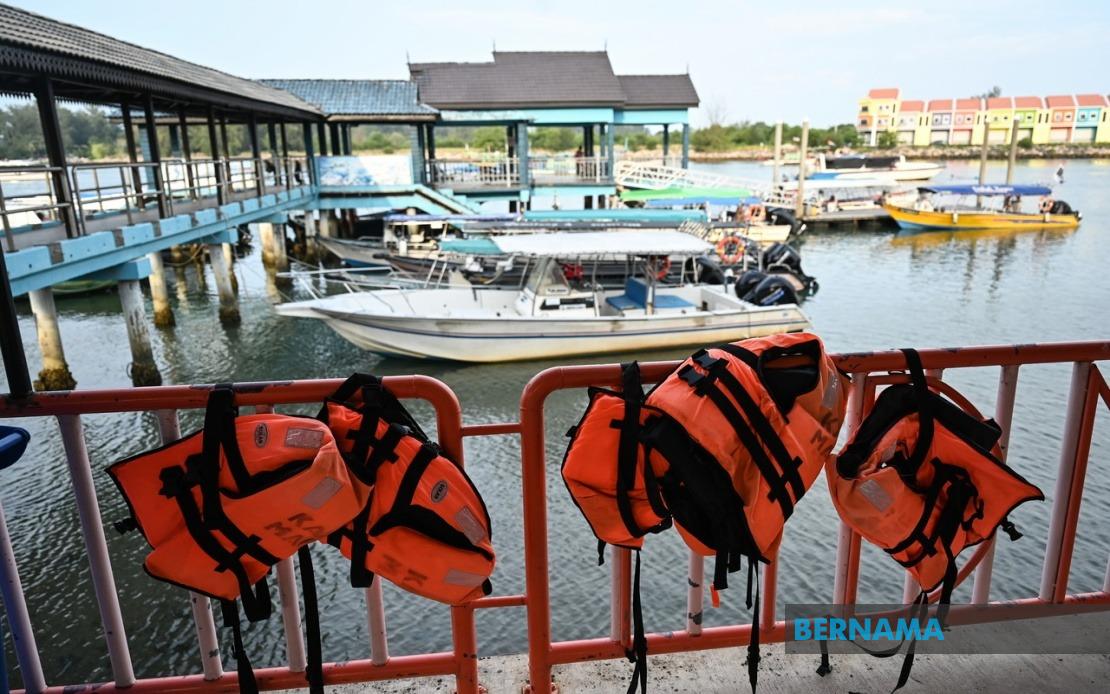
A fatal boat capsize off the coast of Kuala Nerus has prompted Terengganu state authorities to reinforce maritime safety protocols, with government officials stressing that life jacket use must become an unwavering practice rather than an occasional precaution. The incident, which occurred on July 3 approximately nine nautical miles from Dataran Kuala Nerus, resulted in one fatality and multiple injuries among participants engaged in squid jigging activities.
Datak Razali Idris, the State Tourism, Culture, Environment and Climate Change Committee chairman, has taken the opportunity to articulate a comprehensive safety framework for all water-based operations. His intervention signals the state government's determination to prevent similar tragedies through heightened awareness and stricter adherence to established maritime conventions. The emphasis on life jacket compliance extends beyond emergency situations to encompass periods when passengers are at rest or sleeping aboard vessels, a detail that underscores the unpredictable nature of maritime hazards.
The tragedy claimed the life of Ahmad Nasaruddin Mohmad Jalil, a 37-year-old crew member, whilst three squid jigging participants sustained injuries. Eight additional individuals were successfully rescued from the water. Two of the injured received outpatient treatment at Hospital Sultanah Nur Zahirah in Kuala Terengganu, while a third continues under medical supervision. The incident has reinvigorated discussions about operational standards within an industry that has functioned along Malaysia's eastern coast for generations.
Razali's directives encompass broader vessel requirements beyond personal flotation devices. Every boat carrying passengers must now be considered a platform requiring comprehensive safety infrastructure, including fire extinguishers and all mandated safety apparatus. This regulatory perspective positions boat operators as custodians of human lives, with responsibility extending equally to crew members, tourists, and recreational participants. The official's comments reflect an understanding that maritime safety represents a shared obligation rather than an individual concern.
Boat skippers occupy a critical role in this safety ecosystem, bearing responsibility for pre-departure briefings that educate passengers about procedures, environmental conditions, and proper life jacket deployment. The proposed standardisation of these briefings mirrors practices already established within the tourist boat sector, where safety orientations precede every departure. Razali noted that skippers, possessing intimate knowledge of prevailing sea conditions, hold unique authority to delay or cancel departures when safety is compromised, a decision he characterised as responsible rather than commercially disadvantageous.
The state official highlighted that most Terengganu-based skippers demonstrate professional responsibility by willingly refunding customers when adverse conditions prevent safe operations. This observation suggests that the sector's reputation need not depend upon revenue maximisation at the expense of passenger welfare. Passengers, conversely, must recognise that skipper warnings represent protective guidance rather than obstacles to enjoyment, requiring them to resist pressure for departure under unsafe conditions.
Regarding the specific capsizing incident, Razali indicated that preliminary investigations suggest the vessel had been maintained appropriately and was helmed by an experienced operator. What distinguished this particular event was the ingress of substantial quantities of water into the engine compartment, ultimately precipitating the vessel's submersion. Significantly, passengers aboard were equipped with life jackets at the moment of capsizing, a fact that likely prevented additional fatalities. The sea conditions, though rough, did not constitute a storm, positioning this as an incident occurring within ostensibly acceptable operational parameters yet producing catastrophic consequences.
The incident has not prompted the state government to revise existing standard operating procedures for squid jigging activities. Razali characterised the current guidelines as adequate, positioning compliance rather than rule creation as the primary intervention strategy. This stance reflects a pragmatic assessment that operational standards already exist in sufficient form; what remains needed is consistent adherence among operators and participants. The distinction between having policies and implementing them represents a critical juncture for maritime safety governance.
Crucially, Razali emphasised that operational authority rests partially outside state purview. The Malaysia Marine Department holds licensing authority and jurisdiction over vessel approvals, while the state government functions in an advisory capacity. This delineation of responsibilities creates potential coordination challenges, particularly when weather warnings issued by the Marine Department require rapid cascade to individual operators. Participants in squid jigging and related maritime activities must therefore maintain awareness of Marine Department directives prohibiting operations during adverse weather patterns.
The broader context within which this incident occurs encompasses Malaysia's significant maritime recreational and commercial sectors. Squid jigging represents both a recreational pursuit attracting enthusiasts and a commercial operation generating employment and economic activity. Balancing accessibility to these activities with stringent safety requirements presents ongoing governance challenges. The capsize serves as a potent reminder that the sea's unpredictability cannot be negotiated with and that human precautions, whilst potentially burdensome, remain fundamentally protective.
For Malaysian travellers and recreational boaters, the incident reinforces several practical imperatives. Life jackets constitute non-negotiable safety equipment rather than optional accessories or indicators of excessive caution. Pre-departure safety briefings merit serious attention rather than dismissal as routine bureaucracy. Skipper warnings regarding weather or sea conditions warrant respect based on operational expertise. These principles, whilst seemingly elementary, require cultural reinforcement within recreational maritime communities where normalisation of risk occasionally undermines safety consciousness.
The incident also carries implications for regulatory convergence across Southeast Asian maritime sectors. As countries grapple with balancing tourism, recreation, and safety, consistent standards and information-sharing become increasingly valuable. Malaysia's approach to addressing this incident through official reinforcement of existing protocols rather than reactive regulatory expansion may offer lessons for neighbouring nations managing similar tensions between economic benefit and public safety.

