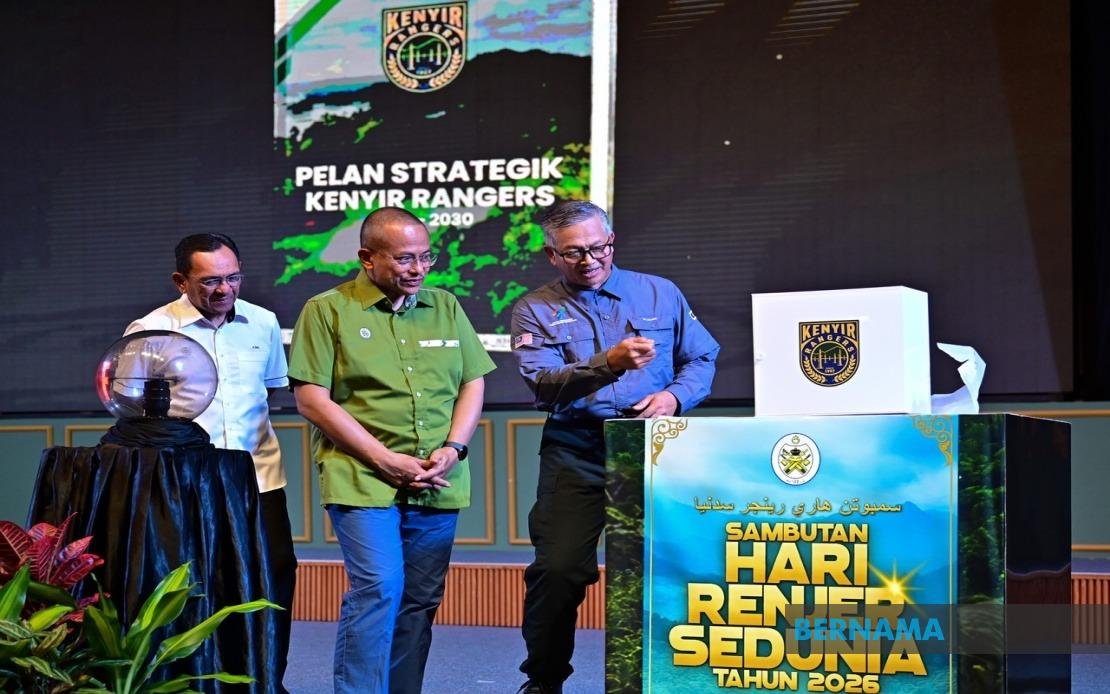
Terengganu Menteri Besar Datuk Seri Dr Ahmad Samsuri Mokhtar has emphasized the critical need for coordinated action across government agencies and road authorities to stem the growing tide of incidents in which wildlife, particularly elephants, come into fatal contact with vehicles on major expressways. Speaking at the state-level World Ranger Day 2026 celebration at Wisma Darul Iman in Kuala Terengganu, Ahmad Samsuri underscored that addressing this challenge requires a unified, multi-agency approach involving the Wildlife and National Parks Department, the Malaysian Highway Authority, and other stakeholders working in tandem to develop and implement preventative strategies.
The urgency of Ahmad Samsuri's call reflects the real human and ecological toll of these incidents. On August 5, a Toyota Estima collided with a herd of elephants at kilometre 274.6 of the East Coast Expressway 2 (LPT2), just after the Cheneh Toll Plaza as the highway approaches Kuala Terengganu. The accident left both occupants of the vehicle injured, a stark reminder that such conflicts endanger not only wildlife but also the lives of unsuspecting road users who find themselves unexpectedly confronted with large animals on the expressway.
Acknowledging the severity of this incident, the menteri besar characterized it as a tragedy highlighting mutual vulnerabilities. He stressed that both animal and human lives hold equal value, and expressed sympathy for those caught in such dangerous situations. This framing reflects a growing recognition in Malaysia that wildlife conservation and public safety need not be positioned as competing priorities—rather, they represent interconnected challenges requiring holistic solutions that protect communities whilst preserving the nation's biodiversity.
Among the practical measures Ahmad Samsuri proposed is a significant expansion of patrol operations along identified collision hotspots, particularly during the monsoon season when heavy rainfall drives animals from their natural habitats in search of shelter and water. The correlation between seasonal weather patterns and wildlife displacement is well documented in conservation literature, and Terengganu's rainy climate makes this consideration especially pertinent. Enhanced patrols during these high-risk periods could provide early detection and warning systems to alert highway users and potentially facilitate controlled animal management before accidents occur.
The menteri besar also raised the prospect of installing electric fencing along sections of major highways adjacent to wildlife habitats and known animal migration routes. While acknowledging the substantial financial implications of extending such infrastructure across the entire length of expressways like LPT2, he indicated that selective application along critical sections could offer a cost-effective compromise. Electric fencing technology, proven effective in other jurisdictions with similar conflicts, creates a psychological and physical barrier that discourages animals from crossing into roadway spaces without causing permanent injury or disruption to natural movement patterns.
Beyond conventional infrastructure, Ahmad Samsuri signaled openness to exploring emerging technological solutions for long-term conflict mitigation. He specifically mentioned investigating early warning systems capable of detecting and communicating wildlife movements in real time, potentially alerting drivers and traffic management centres before dangerous encounters develop. Such technology might range from motion-sensor systems integrated with highway management platforms to satellite or GPS-based tracking of wildlife populations in proximity to major transport corridors.
This multi-layered approach reflects international best practices in human-wildlife conflict zones. Many countries facing similar challenges have moved away from single-solution models toward integrated frameworks combining enhanced enforcement, infrastructure modification, technology adoption, and habitat management. The involvement of multiple agencies ensures that solutions account for perspectives from both conservation and transportation sectors, reducing the likelihood of unintended consequences or the emergence of new problems from narrowly focused interventions.
For Malaysian readers, particularly those in Peninsular Malaysia's eastern corridor where elephant populations remain significant and major expressways traverse wildlife territory, Ahmad Samsuri's statements carry particular relevance. The region's rapid economic development and infrastructure expansion have incrementally compressed available habitat, forcing wildlife populations into closer proximity with human settlements and transportation networks. The East Coast Expressway 2 incident exemplifies this growing tension between modernization and conservation that characterizes Malaysia's development trajectory.
The menteri besar's emphasis on interagency coordination also hints at systemic challenges that have historically impeded comprehensive wildlife management in Malaysia. Different government bodies often operate within separate regulatory and budgetary frameworks, sometimes prioritizing divergent objectives. Achieving the level of cooperation Ahmad Samsuri advocates would require establishing formal coordination mechanisms, shared information systems, and joint decision-making protocols—administrative reforms that extend beyond his authority but which his public backing could help advance at the federal level.
Terengganu's situation reflects broader Southeast Asian trends. Across the region, countries with significant remaining wild elephant populations, including Thailand, Cambodia, and Laos, confront similar pressures. The solutions emerging from Malaysia's experience, whether successful or challenging, hold resonance for neighbouring nations grappling with comparable issues. The regional economic importance of expressways and freight corridors means that solutions must balance ecological and economic imperatives.
The framework Ahmad Samsuri has outlined—combining enhanced enforcement, selective infrastructure investment, technological innovation, and coordinated governance—represents a pragmatic acknowledgment that neither conservation absolutism nor unfettered development offers viable answers. Instead, the path forward requires deliberate integration of wildlife management considerations into transportation planning and operations from the outset, rather than attempting retroactive fixes after incidents occur.
As Terengganu and other states implementing these measures move forward, monitoring outcomes will prove essential. Data collection on collision frequencies, injury and fatality rates, animal movement patterns, and the efficacy of specific interventions will inform adaptive management approaches. Success will ultimately depend not only on the vision articulated by political leaders but on sustained commitment to implementation, adequate resourcing, and genuine cross-agency collaboration in pursuit of shared objectives.

