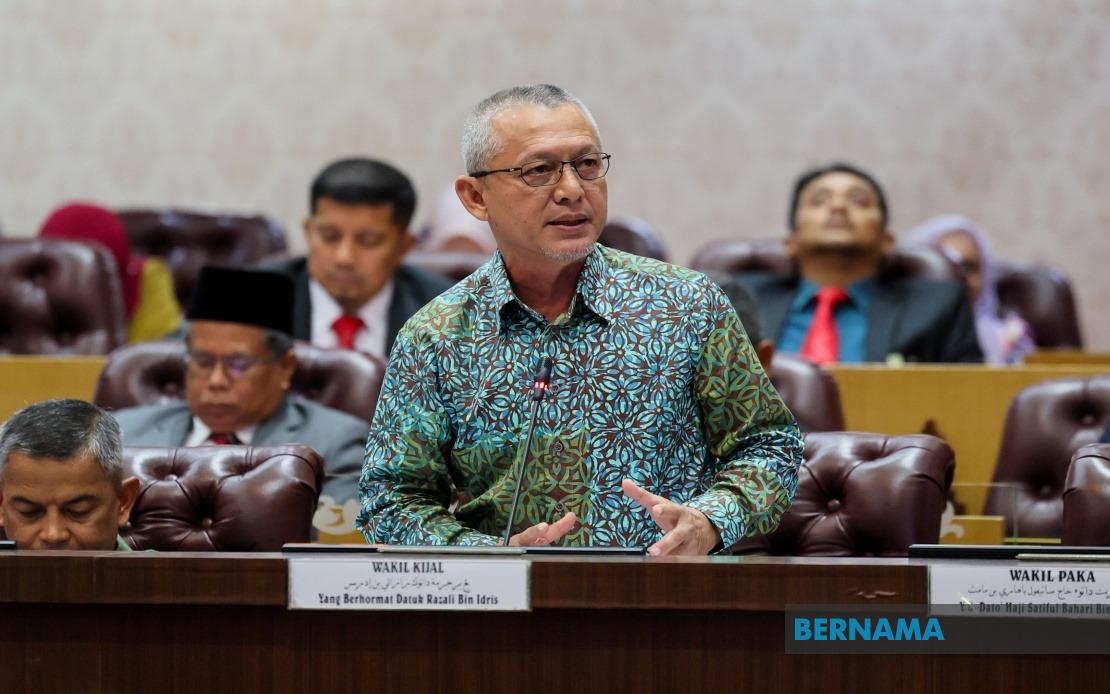
The Terengganu state government has earmarked RM3.78 million for comprehensive development initiatives at Kenyir Geopark in Hulu Terengganu, channelling funds through the district office to strengthen the site's geological and cultural significance. This financial commitment, spanning from 2024 onwards, represents a strategic investment in what authorities view as one of the state's most valuable natural and heritage assets, combining geological formations with rich cultural and biodiversity dimensions.
According to Datuk Razali Idris, chairman of the State Tourism, Culture, Environment and Climate Change Committee, the funding strategy encompasses multiple interconnected objectives that extend beyond mere site maintenance. The primary goal involves sustaining Kenyir Geopark's existing National Geopark status while simultaneously building the institutional and physical infrastructure necessary to pursue designation as a UNESCO Global Geopark—a recognition that would elevate the site's international profile and potentially unlock additional research and tourism opportunities.
The allocated resources address five principal development streams that collectively form a holistic management approach. Geoheritage conservation efforts form the foundation, protecting sites of significant scientific value from degradation while documenting their geological importance for future research. Alongside conservation, the funds support development of geotourism products designed to attract visitors while maintaining ecological integrity, a balance increasingly critical as tourism demand in Southeast Asia intensifies. Infrastructure provision ensures that growing visitor numbers are accommodated safely and sustainably, while public awareness and education programmes work to connect local communities and tourists with the geopark's scientific and cultural narratives.
The final component—capacity building initiatives targeting local residents—reflects recognition that sustainable geopark management depends on community engagement and economic participation. By equipping residents with skills relevant to geotourism, hospitality, heritage interpretation, and environmental stewardship, authorities aim to distribute economic benefits while building local ownership of conservation objectives. This approach aligns with broader regional trends toward community-based tourism management, particularly relevant for Malaysian destinations seeking to differentiate themselves through authentic, locally-driven experiences.
Kenyir Geopark's scale and composition underpin the development investment's strategic importance. The site encompasses approximately 244,900 hectares across Hulu Terengganu, making it a substantial geographical and administrative entity. Within this expanse, managers have catalogued 15 distinct geosites representing significant geological formations and processes, 10 biosites reflecting the area's ecological richness, 11 cultural sites connected to human heritage and settlement patterns, and one geo-archaeological site linking geological and human history. This inventory demonstrates the site's multifaceted appeal—it functions simultaneously as a geological laboratory, ecological reserve, cultural repository, and archaeological resource.
Specific conservation priorities highlight the scientific and heritage value driving the investment strategy. Gua Bewah, Gua Taat, and Batu Bersurat represent particularly significant locations warranting focused preservation efforts. These sites possess accumulated geological, cultural, or archaeological importance that justifies dedicated resources for documentation, stabilization, and managed public access. By concentrating conservation efforts on high-value sites, authorities adopt a triage approach recognizing that comprehensive site management across 244,900 hectares requires strategic prioritization.
The financial commitment's significance becomes apparent when contextualised against visitor performance data. Kenyir Geopark attracted 454,765 visitors during 2024, representing a dramatic 108.5 percent increase from 218,157 visitors in 2023. This doubling of annual visitation within a single year demonstrates surging demand for geotourism experiences in Southeast Asia and validates the state government's confidence in the site's development potential. However, such rapid growth simultaneously creates management pressures, as infrastructure, staffing, and environmental monitoring must scale proportionally to prevent visitor-induced degradation.
For Malaysian readers and policymakers, Kenyir Geopark's trajectory offers valuable lessons about positioning natural heritage assets within the competitive regional tourism landscape. As Thailand, Indonesia, and the Philippines develop their own geopark initiatives, Terengganu's investment in UNESCO recognition and geotourism infrastructure represents an attempt to secure competitive advantage through international validation and specialized tourism markets. The RM3.78 million allocation, while substantial for a single state initiative, likely reflects calculations about return on investment through enhanced visitation, extended tourist stays, and premium pricing for specialized geotourism experiences.
The pursuit of UNESCO Global Geopark status carries implications extending beyond tourism economics. Such designation facilitates international research collaboration, attracts geoscience expertise, and creates platforms for knowledge exchange about geological processes, climate change adaptation, and sustainable resource management. For Terengganu specifically, UNESCO recognition could enhance the state's reputation for environmental stewardship and scientific engagement, counterbalancing perceptions of regions viewed primarily through economic development or resource extraction lenses.
The initiative also intersects with Malaysia's broader sustainable development agenda. By monetizing geological and cultural heritage through responsible geotourism rather than extractive industries, Terengganu models alternative economic pathways that preserve environmental assets while generating local employment. This diversification matters particularly for regions facing pressure to maximize resource exploitation; demonstrating viable alternatives supports policy choices favoring long-term sustainability over short-term extraction revenue.
Implementation success will depend on coordinated execution across multiple government levels and stakeholder groups. The Hulu Terengganu District Office's role as funding intermediary requires effective project management, transparent financial stewardship, and accountability mechanisms ensuring resources translate into planned outcomes. Community participation in conservation and geotourism development proves essential; sites managed against local interests rather than with community support typically experience reduced effectiveness and sustainability.
Looking forward, Kenyir Geopark's development trajectory will reveal broader lessons about geopark management in tropical Southeast Asian contexts. The site's biodiversity dimensions, cultural layering, and rapid tourism growth create complexities distinct from many established global geoparks in temperate regions. Success in navigating these complexities while pursuing international recognition could establish Terengganu as a model for other Malaysian and Southeast Asian jurisdictions contemplating heritage-based development strategies. The RM3.78 million investment thus represents not merely a state initiative but a test case informing how the region integrates geological heritage conservation with economic development and community wellbeing.

