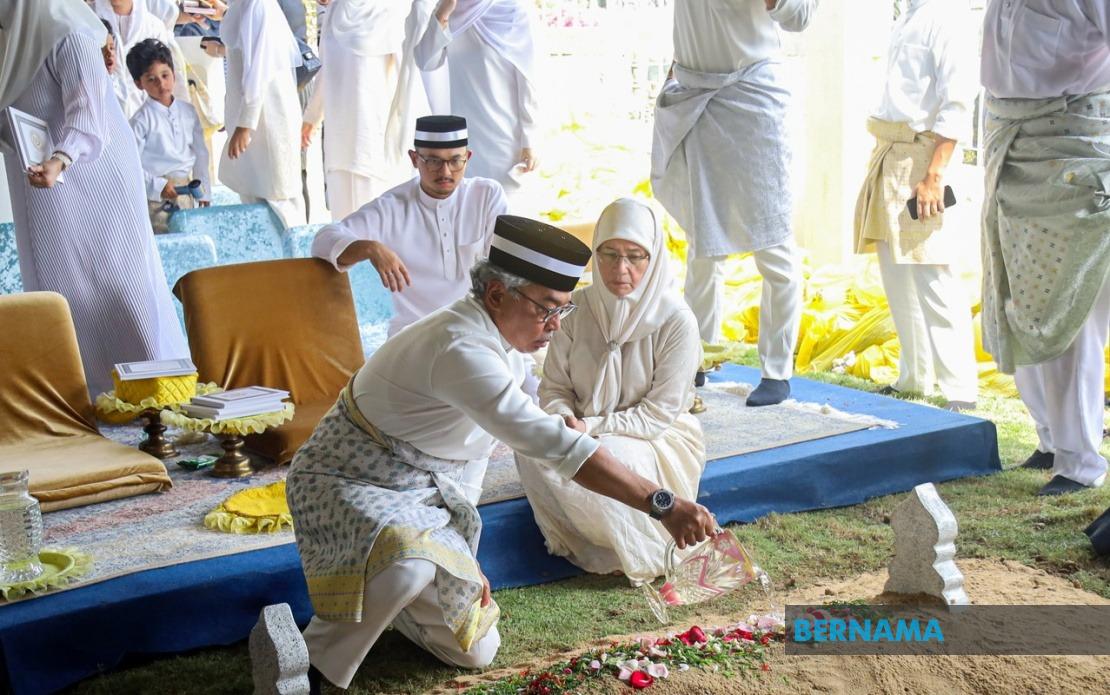
The royal family of Pahang gathered in the constituency town of Pekan on August 27 to pay final respects to Tengku Puteri Seri Kemala Tengku Datuk Seri Aishah, who passed away at 9.25 pm the previous evening at a Kuala Lumpur hospital. The 69-year-old was the elder sister of the reigning Sultan of Pahang, Al-Sultan Abdullah Ri'ayatuddin Al-Mustafa Billah Shah, and her death marks another significant moment in the royal household's recent calendar.
The burial ceremony took place at the Royal Mausoleum adjacent to Sultan Ahmad 1 Mosque in Pekan, conducted with full ceremonial honours befitting her status within the sultanate. Her remains arrived at the mosque at 1.25 pm following the recitation of zuhur prayers, with a second round of funeral prayers performed before the committal. The Pahang Mufti Datuk Dr Asmadi Mohamed Naim led the recitation of Yasin, followed by tahlil and prayers as part of the Islamic burial rites.
Al-Sultan Abdullah and the Tengku Ampuan of Pahang, Tunku Azizah Aminah Maimunah Iskandariah, were present throughout the proceedings, accompanied by the Tengku Mahkota of Pahang Tengku Hassanal Ibrahim Alam Shah. The Sultan's consort and heir, both prominent figures in state governance and public life, underscored the significance accorded to the burial. As a closing gesture of respect and affection, the Sultan and Tengku Ampuan sprinkled rose water and scattered flowers on the grave following the burial ceremony.
Representatives from neighbouring states and the Pahang administration attended to pay their respects. Melaka Yang Dipertua Negeri Tun Mohd Ali Rustam and Pahang Menteri Besar Datuk Seri Wan Rosdy Wan Ismail were among those present, reflecting the broader institutional acknowledgment of the royal family's loss. Such attendance demonstrates the interconnected nature of Malaysia's royal and political establishment, where expressions of condolence at significant state occasions serve both ceremonial and diplomatic functions.
The logistical arrangements for the funeral reflected the organisational protocols typically observed for senior members of reigning royal households. Funeral prayers were initially held at the Khalid bin Al-Walid Mosque situated on Jalan Padang Tembak in Kuala Lumpur, where the deceased had passed away. This preliminary ceremony allowed the extended royal family, government officials, and close associates in the federal capital to participate in mourning rites before the remains were transported back to Pahang.
Transportation of the remains from Kuala Lumpur to Pahang occurred via Subang Air Base, which facilitated the dignified conveyance of the casket for the afternoon burial in Pekan. This arrangement ensured that the funeral could proceed according to Islamic practice while accommodating the geographical distance between the place of death and the royal burial ground. The coordination between civil and royal authorities in executing such ceremonies demonstrates the established infrastructure for managing state-level mourning events in Malaysia.
Tengku Puteri Seri Kemala's passing represents a loss within the Pahang royal family at a time when the sultanate continues to navigate broader constitutional and political questions affecting Malaysia's system of hereditary monarchy. As the sister of the current Sultan, she occupied a unique position within the palace hierarchy, neither directly involved in governance yet connected to the principal decision-makers within the state. The reverence accorded to her burial ceremony reflects the protocols that structure royal succession and family responsibilities across Malaysia's constituent monarchies.
The choice of the Royal Mausoleum at Sultan Ahmad 1 Mosque in Pekan as her final resting place reinforces the significance of Pekan as the spiritual and administrative heart of Pahang's sultanate. This mosque and its adjoining burial ground serve as the repository for senior members of the Pahang royal house, making the location both symbolically and historically important to the state's identity. The proximity of the mausoleum to the mosque ensures that funeral prayers can be performed immediately adjacent to the grave, combining practical efficiency with religious observance.
For Malaysian readers, the funeral of prominent royal family members offers insight into the ceremonial dimensions of the constitutional monarchy. Unlike elected executives whose deaths are marked primarily through political eulogies, the passing of members of reigning royal families involves complex arrangements spanning religious observance, state protocol, and family tradition. Tengku Puteri Seri Kemala's burial thus exemplifies the intersection of these elements and their continued importance in structuring national and state-level institutional life.
The attendance of senior government figures from both Pahang and neighbouring Melaka underscores how royal deaths function as occasions for reaffirming horizontal relationships between state administrations. Such ceremonial gatherings, while ostensibly private family matters, carry implicit messages about political alignment and institutional respect within Malaysia's federal architecture. The presence of Menteri Besar Wan Rosdy and the Melaka Yang Dipertua Negeri signals both personal condolence and official recognition of the royal family's standing within the broader Malaysian political establishment.

