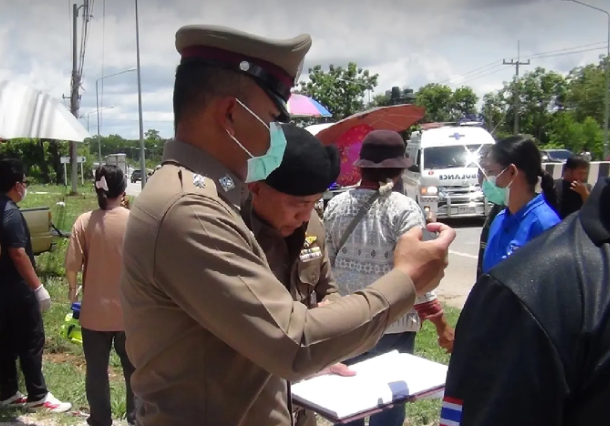
A devastating collision in Thailand's northeast has claimed the lives of ten Buddhist monks after an 11-year-old boy took control of a pickup truck without his parents' knowledge and drove it into a procession of religious followers on Thursday. The incident, which unfolded along a roadside in Mukdahan province, has sparked widespread grief across Thailand, where monks occupy a deeply revered place in society and spiritual life.
According to hospital officials and police statements released on Friday, the scale of the tragedy became apparent as the death toll mounted throughout the day. Five monks were killed instantly at the crash site, while another five succumbed to their injuries after being rushed to Mukdahan Hospital. The collision also left ten other individuals hospitalised, with two patients in critical condition requiring intensive care and eight others sustained varying degrees of injury requiring medical treatment.
The procession itself consisted of a significant religious gathering—35 monks and five lay followers were participating in a pilgrimage when the vehicle struck them without warning. The group had been walking along the roadside as part of their religious duties when the incident occurred, an ordinary moment of devotional practice that turned catastrophic in an instant. The scale of participation highlights how central such processions are to Buddhist practice and community engagement in rural Thailand.
Investigations by Mukdahan City Police, led by Chief Prayut Ruanthongkam, have established that the child had accessed his parents' vehicle without their permission and was unable to operate it safely. The young driver, who cannot be named due to his age, has proven unable to provide coherent statements to police investigators, reflecting both the psychological trauma of the incident and his limited capacity to comprehend what has occurred. He has been placed under child welfare authorities for comprehensive psychological and medical assessment, with his mother accompanying him through this process.
Thailand's legal framework provides specific protections for children in such circumstances. Under Thai law, individuals under the age of 12 possess no criminal liability for their actions, regardless of the consequences. This provision reflects international child protection standards and the recognition that young children lack the cognitive and moral development necessary to bear criminal responsibility. However, the legal immunity does not diminish the profound tragedy that has befallen the victims and their families, nor does it resolve the questions about vehicle access and child supervision that the incident raises.
The investigation remains ongoing as police gather testimony from surviving monks who witnessed the collision firsthand. These accounts from religious practitioners will prove crucial in reconstructing exactly how the incident unfolded and whether any additional circumstances contributed to the tragedy. Officers are treating the investigation with sensitivity, recognising the spiritual significance of the victims and the deep shock experienced by those who survived the ordeal.
Monks hold an extraordinarily significant position within Thai society and religious culture. These ordained practitioners are widely regarded as custodians of Buddhist teachings and spiritual wisdom, serving as vital links in the transmission of the Buddha's doctrines across generations. The public holds monks in profound reverence, and receiving alms from ordinary Thais represents a cherished spiritual practice and expression of devotion. Public processions featuring monks are common occurrences across Thailand, typically viewed as blessed events that bring communities together in shared faith and purpose.
The tragedy highlights the vulnerability that religious processions face on public roads, even during routine spiritual activities. In societies where such processions form an integral part of cultural and religious practice, balancing religious freedom and public safety presents ongoing challenges for traffic authorities and community planners. The incident may prompt discussions about traffic management during religious events and enhanced vehicle security measures to prevent unauthorised operation by children.
Wat Roi Phra Phutthabat Phu Manorom, the hilltop temple in Mukdahan province from which many of the victims came, has opened its facilities to accommodate surviving monks and recovering victims. The temple has become a centre for mourning and support, offering spiritual solace to the bereaved and medical care to the injured. This response reflects the traditional Buddhist emphasis on compassion and community support during times of suffering and loss, with the temple serving as both a sanctuary and a healing space for those affected by the tragedy.

