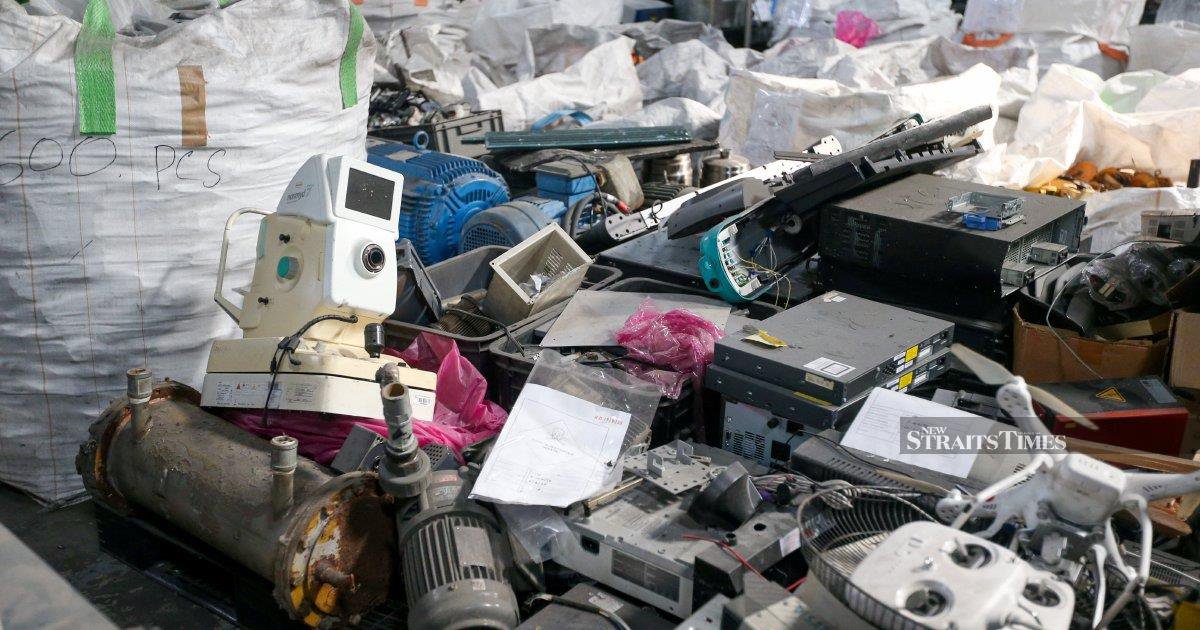
A significant accountability action has unfolded in Malaysia's law enforcement sector, with ten General Operations Force (GOF) personnel taken into custody to assist investigations into an alleged extortion scheme centred on an electronic waste processing establishment in Tasek Gelugor, Penang. The arrests represent a notable intervention into claims that uniformed officers may have exploited their authority to extract money or valuables from a commercial operation engaged in the nascent but strategically important field of e-waste recycling and processing.
The e-waste processing industry occupies an increasingly critical position within Malaysia's environmental and manufacturing ecosystems. As global electronics consumption accelerates and regulatory frameworks demand more responsible disposal practices, facilities that safely extract valuable materials from discarded equipment have become essential infrastructure. The alleged targeting of such an operation raises questions about how industrial sectors still developing market maturity and regulatory clarity are protected from misconduct by those sworn to maintain order.
E-waste processing represents both opportunity and complexity for developing economies. These facilities recover precious metals, rare earth elements, and recyclable materials from redundant electronic equipment, creating value chains that serve global markets whilst addressing environmental imperatives. Penang, as a major electronics manufacturing hub with historical strengths in semiconductor production and technology assembly, represents precisely the type of location where integrated e-waste management would logically develop. When such facilities encounter harassment or extortion from authorities, it undermines not only individual businesses but the viability of an entire sector attempting to establish itself within the Malaysian economy.
The decision to arrest GOF personnel rather than simply interview them signals the seriousness with which investigating authorities are treating these allegations. The GOF, formally responsible for internal security and public order maintenance, wields considerable operational discretion and access to communities and businesses across Malaysia. When members of such a force stand accused of abusing this access to demand unlawful payments, it strikes at fundamental questions of institutional integrity and public trust in law enforcement structures.
The Tasek Gelugor location carries particular significance. This industrial area in southern Penang Island hosts numerous manufacturing and processing operations serving both domestic and export markets. Its concentrated commercial density means that allegations of extortion in one facility could potentially indicate broader patterns affecting neighbouring businesses. Investigating authorities will likely assess whether this incident represents an isolated instance or reflects more systemic concerns about how uniformed personnel interact with the industrial sector in this region.
Extortion cases involving law enforcement personnel typically involve sophisticated dynamics. Officers may leverage their authority to conduct raids, inspections, or enforcement actions as leverage, suggesting that compliance with financial demands will prevent costly disruptions or legal complications. For businesses already navigating complex environmental regulations, waste disposal licensing requirements, and export documentation protocols—as e-waste processors inevitably must—such pressure becomes particularly effective. Complainants may initially hesitate to report fearing escalated enforcement attention or reputational damage.
The ten-person arrest figure suggests a coordinated operation rather than individual malfeasance. This scale indicates that investigating authorities believe multiple personnel may have participated systematically in the alleged extortion, possibly involving planning, coordination, and division of proceeds. Such coordination within a uniformed agency indicates deeper institutional concerns about oversight, supervision, and preventive mechanisms meant to detect and deter such conduct.
Malaysia's investigation and prosecution of law enforcement misconduct has evolved considerably, with several high-profile cases in recent years demonstrating willingness to pursue accountability regardless of rank. However, cases involving multiple personnel and allegations of conspiracy-level activity remain relatively uncommon in public reporting, making this incident noteworthy as a test case for how comprehensively authorities will pursue investigations into alleged abuse of power by security forces.
The e-waste sector itself faces a credibility test in Malaysian consciousness. Many business operators and observers remain sceptical about the environmental benefits and economic viability of domestic e-waste processing. When such facilities encounter what amounts to institutionalised harassment, it reinforces perceptions that industrial development in this space faces arbitrary obstacles. Conversely, successful prosecution of these cases could demonstrate that government mechanisms exist to protect legitimate business development in emerging sectors.
For investors and entrepreneurs considering entry into Malaysia's e-waste processing industry, this incident presents a cautionary narrative about operational risks extending beyond market competition and technical challenges. The costs of defending against extortion, documenting abuse, and assisting investigations represent hidden drains on business viability during critical early-stage periods. Establishing transparent, accountable relationships between industrial operators and enforcement agencies becomes therefore not merely a governance ideal but an economic necessity.
The investigation's progression will likely yield insights into how allegations against law enforcement are gathered, documented, and escalated within Malaysian institutions. Whether complainants came forward independently, whether regulatory inspections revealed inconsistencies, or whether peer officers triggered the investigation will shape understanding of the mechanisms through which institutional self-correction functions. Transparency regarding investigative methodology could itself contribute to public confidence in how the system addresses misconduct allegations.
The broader context encompasses international pressure regarding supply chain accountability and corporate responsibility in electronics manufacturing and recycling. Malaysian businesses increasingly face due diligence requirements from overseas partners seeking assurance that supply chains remain free from corruption and coercive practices. Allegations of extortion affecting domestic processors carry implications for Malaysia's international business reputation and the country's capacity to maintain partnerships with sustainability-conscious global corporations.

