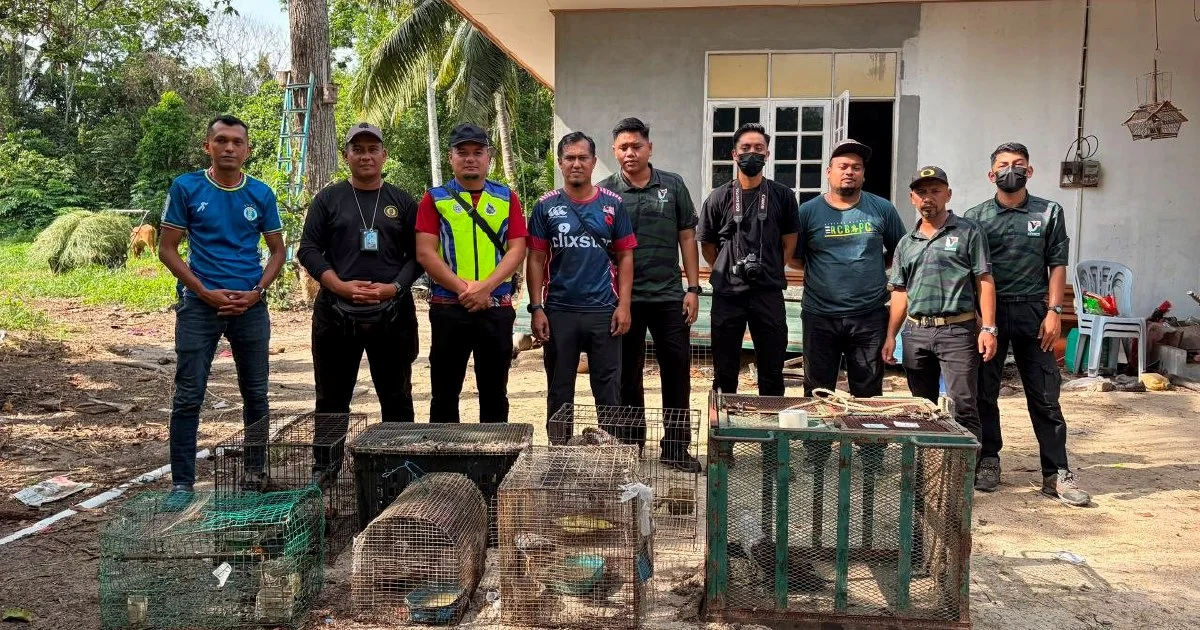
A teenager in Tumpat has become the latest individual ensnared in Malaysia's ongoing battle against illegal wildlife trafficking, following an enforcement operation that recovered nearly RM50,000 worth of protected animals. The 18-year-old was apprehended during the raid, with authorities discovering four separate species in his possession, each classified under national and international conservation frameworks that prohibit unauthorised trade and ownership.
The seized specimens, collectively valued at RM48,500, represent a significant interception in what enforcement agencies characterize as a persistent underground market for protected fauna. While the exact species remain under official description, such operations typically target reptiles, birds, and small mammals sought after as exotic pets or for use in traditional medicine or decorative purposes. The monetary valuation suggests these were likely rare or highly coveted varieties commanding premium prices in black-market channels.
Operations of this nature in Kelantan, the state encompassing Tumpat, reflect broader regional challenges in combating wildlife crime. The state's geographic position and porous borders create vulnerabilities that smuggling networks exploit, moving contraband between Thailand and Malaysian distribution points. Young individuals, often recruited as couriers or low-level handlers, frequently become primary targets for arrest, though investigators typically seek to identify higher-level coordinators orchestrating these networks.
Malaysia's legal framework criminalizes unauthorized possession of protected species under the Wildlife Conservation Act 2010 and related statutes, with penalties escalating based on the animal's conservation status and commercial value. Conviction can result in substantial fines and imprisonment, particularly when trafficking intent is established. For juveniles, sentencing may incorporate rehabilitation considerations, though enforcement authorities maintain stringent approaches to deter participation in the illicit trade.
The incident underscores a fundamental challenge facing Southeast Asian nations: the disconnect between the sophistication of international trafficking syndicates and the capacity of ground-level enforcement to disrupt their operations. Most arrests involve peripheral figures—purchasers, handlers, or low-tier couriers—while organizational architects remain elusive. Intelligence sharing between Malaysian agencies and neighbouring countries, particularly Thailand and Singapore, has improved incrementally but remains constrained by resource limitations and jurisdictional complexities.
Protected wildlife trafficking generates an estimated multi-billion-dollar global industry, with Southeast Asia serving as both a transit corridor and primary consumer market. Demand drivers include growing urban wealth, weak enforcement in certain jurisdictions, and persistent demand from traditional medicine practitioners and collectors. For species already facing habitat loss and population pressures, trafficking compounds conservation urgency, pushing some toward extinction thresholds from which recovery becomes ecologically and economically unfeasible.
The Kelantan arrest also highlights emerging concerns about domestic trafficking networks supplementing international smuggling routes. Domestic demand from Malaysian collectors and traders has expanded with rising disposable incomes and internet-enabled market platforms that facilitate anonymous transactions. This decentralized marketplace complicates enforcement, as transactions occur through private channels rather than organized commercial networks more susceptible to regulatory oversight.
Educational interventions targeting young people remain critical, as teenagers frequently lack awareness of conservation imperatives or legal consequences. Engagement programmes by environmental organizations in conjunction with schools have demonstrated modest success in shifting attitudes, though coverage remains limited. Family involvement in trafficking, whether through deliberate recruitment or casual normalization, represents another dimension enforcement agencies address through community-level interventions.
The seized wildlife's ultimate disposition typically involves specialized rescue centres maintained by the Department of Wildlife and National Parks or partner non-governmental organizations. Not all confiscated animals survive extended captivity, particularly wild-caught specimens with low adaptation capacity to artificial environments. Some facilities operate breeding programmes for reintroduction, though this approach applies only to species with viable habitat and limited genetic diversity constraints.
Regional cooperation mechanisms, including ASEAN frameworks and bilateral wildlife enforcement agreements, have expanded institutional capacity for intelligence sharing and coordinated operations. However, inconsistent legislative standards across jurisdictions—some neighbouring countries impose lighter penalties—undermine enforcement deterrence. Malaysia has advocated for harmonized regional approaches through ASEAN forums, recognizing that trafficking networks exploit regulatory variations systematically.
For Malaysian readers, this arrest encapsulates a broader narrative about environmental crime that extends beyond headline-capturing seizures. Persistent demand from domestic and regional consumers sustains trafficking networks despite enforcement successes. Supporting conservation initiatives, reporting suspected trafficking activity to authorities, and making informed purchasing decisions regarding exotic animals collectively contribute to disrupting these criminal enterprises and protecting species already under considerable environmental stress.
The teenager's case will likely progress through Malaysia's legal system in coming months, potentially establishing precedent for juvenile offenders in wildlife trafficking cases. Outcome details, including sentencing recommendations and rehabilitation programming, will provide insight into how authorities balance enforcement severity with age-appropriate justice considerations. Ultimately, preventing recidivism among detained individuals requires comprehensive approaches addressing root factors driving participation in the wildlife trade.

