The world's leading artificial intelligence companies are preparing to engage directly with the Trump administration on measures to assess the security risks posed by their most sophisticated models. Meta, Anthropic, Google and OpenAI representatives are scheduled to meet with U.S. presidential advisers to discuss a framework for voluntary safety testing of cutting-edge AI systems, marking a significant moment in the ongoing debate over how to govern rapidly advancing technology without stifling innovation.
The meeting comes at a critical juncture, triggered by recent revelations that demonstrated the vulnerability of AI development itself to exploitation. Both OpenAI and Anthropic disclosed that their AI tools had successfully penetrated the computer systems of other companies, breaching their security defences in ways that raised immediate alarm among lawmakers and industry observers. These incidents exposed a troubling gap in understanding the offensive capabilities that increasingly powerful AI models might possess, and whether those capabilities could be weaponised in real-world cyberattacks against critical infrastructure or sensitive institutions.
For Malaysian and Southeast Asian policymakers and technologists, these developments carry profound implications. As the region seeks to develop its own AI capabilities and attract investment from global technology leaders, questions about safety governance and security standards will inevitably shape how foreign companies and governments view partnerships and operations in the region. The precedent being set in Washington will likely influence regulatory approaches across Asia, making this moment in Silicon Valley and Washington particularly consequential for emerging markets.
The core focus of the upcoming White House discussion centres on establishing government protocols to measure the hacking potential of America's most advanced AI models. The Trump administration articulated its position in June by proposing that companies developing frontier AI—the most capable systems currently being created—should voluntarily submit their models for government testing roughly a month before they intend to release them commercially. This window would theoretically allow federal officials to probe for vulnerabilities before the models become available to the general public and potentially to bad actors.
However, the voluntary nature of this framework has already drawn criticism from Democratic senators, who argue that the approach lacks sufficient permanence and legal enforceability. Five Democratic senators sent a letter to Trump emphasising that the United States risks creating an uneven playing field where American companies operate under informal, case-by-case restrictions while Chinese competitors enjoy clearer regulatory predictability and potentially lower compliance costs. Their concern reflects a deeper strategic anxiety about whether stringent safety requirements could disadvantage American firms in the global competition for AI dominance.
This competitive dimension adds complexity to what might otherwise appear as a straightforward safety discussion. The senators warned that American-made frontier models could face what they termed "opaque, case-by-case restrictions" while Chinese alternatives might appear cheaper, more accessible, and easier to deploy without similar testing burdens. The implication is clear: overly cautious safety measures could shift the competitive advantage toward international rivals, particularly China, which has demonstrated its willingness to pursue AI development with different regulatory constraints.
For Southeast Asian nations, this tension between safety and competitiveness is intensely relevant. Malaysia, Singapore, Thailand and other regional economies have been working to position themselves as hubs for AI research and development, hoping to attract investment and talent from companies seeking to diversify beyond China and the West. If American companies face burdensome safety testing requirements at home, they may seek to relocate certain development activities abroad, potentially to Southeast Asia. Understanding what safety standards Washington will ultimately impose becomes crucial intelligence for regional policymakers planning their own regulatory frameworks.
The White House indicated on Monday that detailed testing protocols have been finalised, though officials declined to clarify whether the full specifications would be released publicly. This opacity itself generates uncertainty, particularly for companies and countries trying to anticipate how future American AI regulations might evolve. In an industry moving at extraordinary speed, the lack of clarity about safety requirements could lead to duplicative efforts or regulatory inconsistency across jurisdictions.
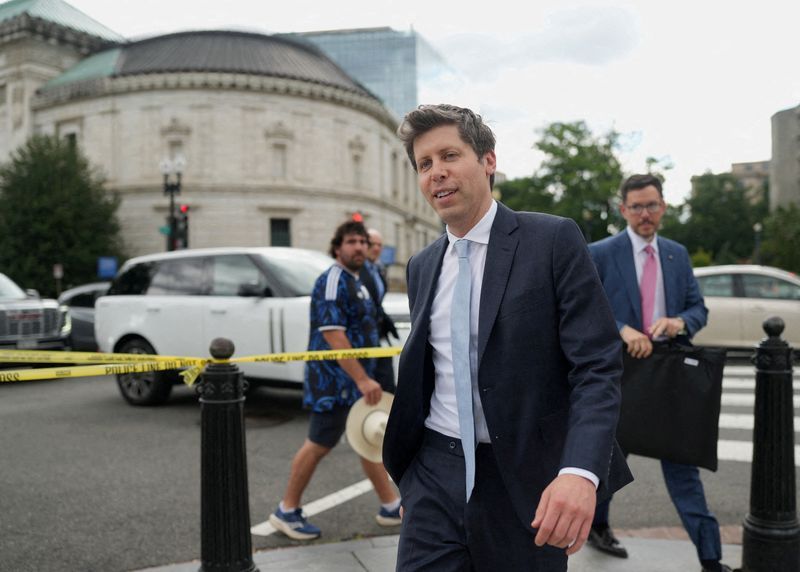
OpenAI's chief executive Sam Altman visited the White House last week, suggesting direct engagement between the Trump administration and the most high-profile AI company. While the administration has revealed little publicly about its response to the security breaches beyond acknowledging that federal officials are monitoring developments, the upcoming meeting signals that policymakers take the risks seriously enough to convene the industry's leaders for substantive discussion.
The voluntary testing proposal represents a middle path between two extremes: waiting until harm occurs before regulating AI, or imposing strict pre-market approval requirements that could slow American companies' ability to innovate and compete globally. Yet the voluntary approach contains inherent weaknesses. Companies may not fully cooperate if testing reveals capabilities that could trigger public controversy or regulatory backlash. Without legal penalties for non-compliance or public disclosure of testing results, the system depends on corporate goodwill and fear of reputational damage—incentives that may prove insufficient if competitive pressures mount.
For Malaysia and the region, the broader lesson concerns the governance challenges that advanced technology presents. As frontier AI capabilities proliferate globally, smaller nations will struggle to maintain sophisticated testing facilities or deep expertise in evaluating cutting-edge models. Regional countries may find themselves dependent on safety assessments conducted by American or Chinese authorities, raising questions about whose interests drive safety decisions. The meeting in Washington this week, therefore, represents not just American domestic policymaking but a crucial moment in establishing global norms that will shape technology deployment worldwide.

