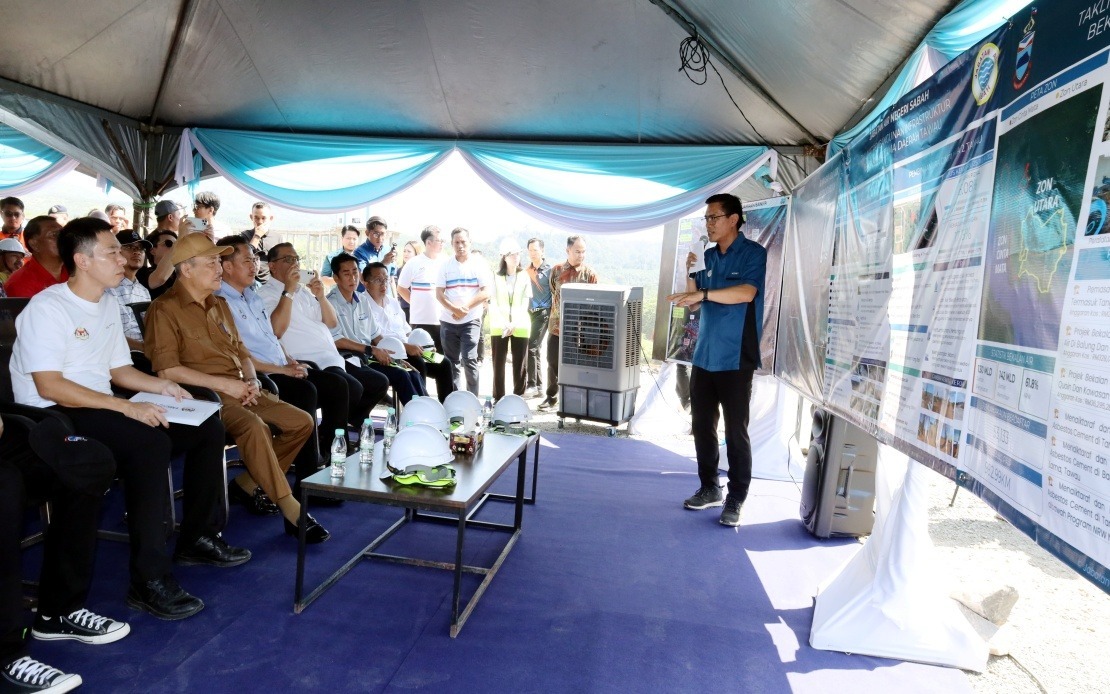
Tawau residents can expect their long-running water supply problems to finally end before 2027 concludes, once the RM450.5 million Tawau Water Supply Scheme Phase III reaches completion. Sabah Chief Minister Datuk Seri Hajiji Noor confirmed the project remains on track during a working visit to the construction sites, emphasising that despite the contractor's request for additional time, the overall delivery timeline has not slipped. The initiative represents the state government's commitment to solving infrastructure challenges inherited from previous administrations, with officials pledging to inject further resources if needed to keep the project moving forward.
At the heart of this ambitious undertaking lies the construction of a new dam designed to feed raw water into the existing Cinta Mata 1 and Cinta Mata 2 Water Treatment Plants, which currently struggle to meet demand across the district. According to Rodney Tinggas, senior assistant director of JANS's Monitoring Branch and the project's lead manager, the Tawau Dam had achieved 74.04 per cent completion as of late July, with construction progressing despite the typical delays that plague large-scale infrastructure work in Southeast Asia. Beyond addressing immediate supply shortages, the dam will serve a secondary but equally critical purpose: mitigating downstream flood risks that have historically threatened the community during heavy monsoon seasons.
The scale of Tawau's water deficit underscores the urgency driving this project. The district currently produces only 130 million litres of water daily against a demand of 142 million litres, leaving a shortfall of 12 million litres that forces water rationing and supply cuts. With 53,133 registered water accounts across Tawau and surrounding settlements, this gap directly impacts tens of thousands of households and businesses dependent on reliable water access for daily operations. The supply crunch has persisted for years, creating economic friction and public frustration—challenges that state authorities can no longer ignore without risking deeper social discontent.
Once operational, the new infrastructure will fundamentally reshape water availability across eastern Sabah. The Tawau Dam will store up to 30 million cubic metres of raw water, feeding into treatment facilities via 11.6 kilometres of 700-millimetre pipelines. These conveyance systems will supply raw water to three plants: the existing Cinta Mata 1, the soon-to-be-completed Cinta Mata 2, and the Utara WTP. Together, the three facilities will produce 161 million litres of treated water daily—a 24 per cent increase over current capacity. This expansion proves especially vital for Tawau, which has experienced steady population and commercial growth, with water demand climbing proportionally.
The largest single component of Phase III is the RM299.9 million Cinta Mata 2 Water Treatment Plant, slated for completion in July 2028 with a treatment capacity of 30 million litres per day. As of late July, this facility had achieved only 16.08 per cent physical progress, suggesting that while the dam may finish sooner, the treatment plant will likely carry into 2028. When operational, Cinta Mata 2 is expected to serve approximately 42,000 residents in Tawau and nearby areas, fundamentally improving water security for a population that has endured chronic supply disruptions. The plant represents a significant investment in local infrastructure and signals state government confidence in Tawau's continued development as a regional economic hub.
Chief Minister Hajiji's acknowledgement that the current administration inherited rather than created these problems reflects the complex political reality of infrastructure governance in Sabah. Previous state governments delayed addressing the water crisis despite mounting pressure, allowing the deficit to widen and the system to deteriorate. The present administration's willingness to allocate RM450.5 million and consider additional funding if technical reports warrant it demonstrates a departure from inaction. However, this approach also raises questions about long-term financial sustainability—how will Sabah fund ongoing maintenance and future expansions if this project consumes such significant capital resources?
For Malaysian observers beyond Sabah, the Tawau project illustrates broader challenges facing states dependent on aging water infrastructure. Many districts across Malaysia face similar supply-demand mismatches, often resolved through incremental upgrades rather than transformative new projects. Tawau's case is instructive: massive capital investment, multi-year implementation timelines, and contractor delays are becoming standard features of large water infrastructure work in the region. The project's progression offers a template—and a cautionary tale—for other states planning their own water security roadmaps.
The completion timeline carries significant political weight as well. If Phase III finishes before the end of 2027 as promised, Datuk Seri Hajiji and the Sabah government will have delivered tangible results on a major policy commitment. Conversely, further delays would deepen public scepticism about state capacity to execute large projects and manage inherited crises. Water supply is rarely an exciting political issue, yet it fundamentally affects public confidence in governance. Tawau's residents will judge their government largely by whether taps flow reliably and water rationing ends—metrics far more concrete than political rhetoric.
The broader strategic context matters too. Sabah is positioning itself as an investment destination and economic engine for eastern Malaysia, competing with Sarawak and peninsula states for capital and talent. Water security is foundational to this ambition; investors and skilled workers typically avoid regions plagued by supply disruptions. Phase III therefore transcends local concern, becoming an essential platform for Sabah's regional competitiveness. Success would validate state investment in infrastructure; failure would reinforce perceptions that the state struggles with basic service delivery.
Looking ahead, the project's completion before end-2027 remains achievable but contingent on contractor performance, supply chain stability, and absence of major technical obstacles. The dam's 74 per cent completion as of July suggests steady momentum, though the WTP's lower progress rate (16 per cent) indicates potential scheduling pressure. Sabah authorities' readiness to fund additional contingencies if needed provides a buffer against typical delays, though cost overruns remain a risk on projects of this magnitude. Given that water supply challenges rarely resolve decisively—demand typically rises as populations grow and economies develop—Phase III should be viewed as a major step forward rather than a final solution. Future phases will likely be required within a decade as Tawau continues expanding.

