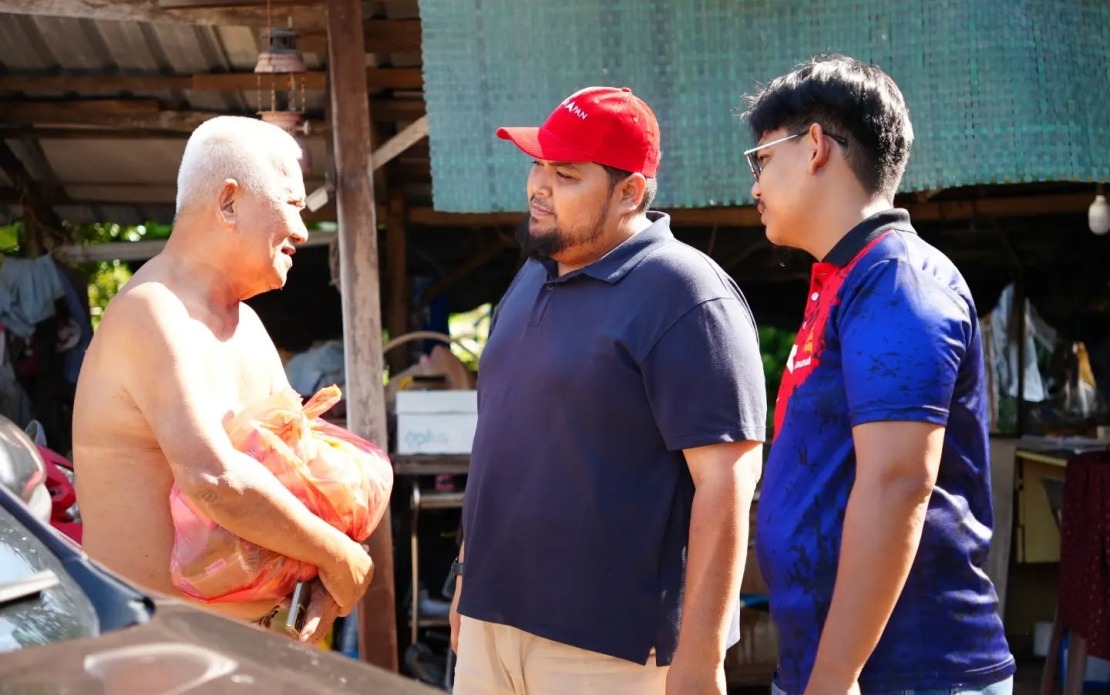
The race for the Maharani state seat in Johor's 16th state election is heating up as Pakatan Harapan candidate Muhammad Taqiuddin Cheman, known widely as Taqi, pivots his final campaign push toward the young electorate—a demographic struggling with employment prospects and limited entrepreneurial opportunities in the district. With just four days remaining before polling day on July 11, the former Pulai Sebatang assemblyman is intensifying direct engagement with youth communities across Muar, seeking to understand firsthand the barriers preventing them from building stable futures in their own constituency.
Taqi, who previously worked in the business sector, has identified a recurring theme in his conversations with young people: the departure of talent from the district in search of better livelihoods. Muar has earned an unflattering reputation as a "retirement town," a label rooted in the reality that its younger residents frequently relocate to pursue work elsewhere, particularly in the semiconductor sector. This outmigration represents both an economic loss and a demographic challenge that any prospective state representative must address. The candidate frames his campaign around reversing this trend by creating conditions that make staying in Muar economically viable and professionally rewarding.
A concrete example emerged from Taqi's recent engagement with young traders at District 84, where approximately 70 entrepreneurs operate in severely constrained conditions. The lack of adequate commercial space has forced a rotation system, allowing traders to occupy prime locations only sporadically—an arrangement that undermines business viability and growth potential. The young entrepreneurs themselves have identified potential sites within the Muar district where they could expand, but lack the institutional support and advocacy needed to navigate applications and secure these locations. Taqi's positioning as a champion willing to champion their cause and facilitate their access to available commercial space represents a bottom-up approach to economic development grounded in direct constituent feedback.
The broader policy framework underpinning Taqi's campaign promises derives from Pakatan Harapan's "Johor For All" manifesto, which commits RM500 million specifically to support young entrepreneurs seeking to expand their business operations. This significant allocation signals the coalition's recognition that youth entrepreneurship, when properly resourced, can drive both job creation and economic resilience at the local level. The fund represents a tangible mechanism through which young people can access capital that conventional banking channels might not readily provide, particularly for startups and expanding ventures in secondary cities like Muar.
Beyond immediate employment and business concerns, Taqi advocates for strengthening the district's technical and vocational education infrastructure. He envisions establishing quality TVET institutions within the Maharani constituency itself, reducing the need for young people to travel elsewhere for skills training while ensuring that vocational curricula align with actual industry needs. This localized approach to workforce development holds particular resonance in Muar, where fishing and agricultural sectors employ significant portions of the population. Taqi's specific mention of empowering second-generation fishermen through improved livelihoods programmes indicates recognition of how traditional industries can be modernized and sustained through targeted skills development and economic support.
The Maharani Energy Gateway project, expected to reach completion in the near term, introduces an additional economic dimension to Taqi's campaign narrative. This infrastructure investment promises to generate fresh economic opportunities and potentially attract industries aligned with the district's development trajectory. A functioning energy gateway could catalyze broader industrial growth, creating employment across multiple sectors and anchoring investment to the region. Taqi's positioning of this project as a foundation for future prosperity ties his candidacy to tangible development outcomes that young voters can visualize and anticipate.
Taqi's campaign also addresses infrastructure deficits that directly impede economic activity. Poor drainage systems affecting oil palm plantations and the inadequate depth of the river mouth at Parit Raja Laut represent practical governance failures that diminish agricultural productivity and hamper fishing operations. These are not abstract policy concerns but rather day-to-day challenges that limit income opportunities for rural and semi-rural constituents. By identifying and committing to address these specific issues, Taqi demonstrates grasp of the district's unglamorous but essential infrastructure needs—the kind of problems that, when solved, create meaningful economic impact.
The race itself has become a four-way contest, with Taqi facing competition from Mohamad Anuar Hayan of Perikatan Nasional, Datuk Ashari Md Sarip of Barisan Nasional, and Muhammad Amir Fiqri of Parti Ikatan Demokratik Malaysia. This fragmented opposition potentially advantages Taqi if his focused outreach to young voters translates into consolidation of youth support around a single candidate, though the proliferation of choices also reflects genuine political competition for the seat. The involvement of MUDA, the relative newcomer to Malaysian electoral politics, adds an interesting dynamic, as both MUDA and PH compete for younger voters concerned with economic futures and political reform.
For Malaysian observers beyond Johor, this campaign exemplifies how regional elections increasingly hinge on addressing localized economic concerns rather than broad national narratives. The focus on commercial space allocation, TVET infrastructure, and sector-specific livelihood improvement reflects recognition that young voters care less about abstract political ideology than about concrete pathways to economic security. Taqi's campaign strategy, if successful, may offer a template for other states grappling with youth unemployment and regional brain drain, particularly in smaller towns where infrastructure and economic opportunity remain constrained compared to major metropolitan centres.
The emphasis on youth engagement also reflects demographic realities shaping electoral competition. As Malaysia's population structure shifts and younger cohorts become larger proportions of the electorate, candidates and parties must address their distinct economic anxieties and aspirations. In Muar specifically, where age-related outmigration represents a visible problem, mobilizing young voters requires offering credible solutions rather than relying on traditional appeals. Taqi's detailed focus on entrepreneurship, skills development, and sectoral improvement suggests recognition of this shift in electoral dynamics.

