The political temperature in Tamil Nadu spiked dramatically when Udhayanidhi Stalin, the Leader of Opposition and former deputy chief minister, was detained for questioning and later released on station bail late Tuesday evening. The incident centered on remarks he made at a DMK-led protest in Thanjavur district, sparking accusations of offensive conduct directed at actress Trisha Krishnan, who is perceived to have political connections with Chief Minister Vijay. The case has become emblematic of the intensifying rivalry between the DMK opposition and the ruling TVK government, with both sides leveraging the episode for political advantage.
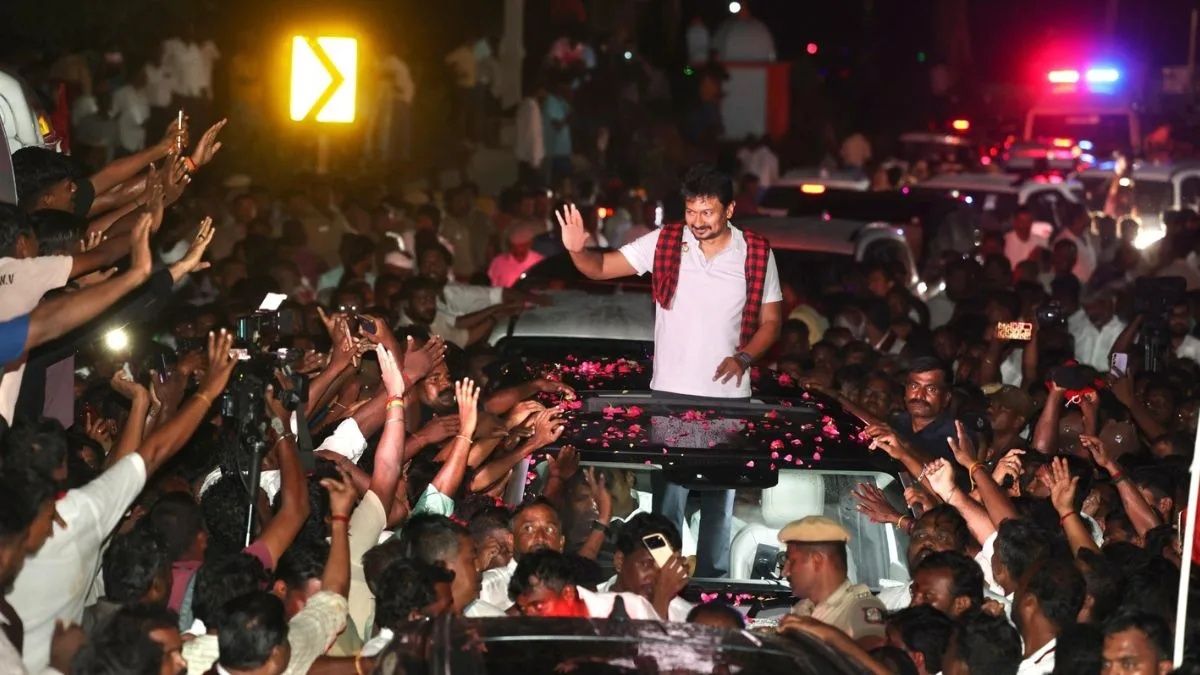
Staling's detention drew immediate public response, with hundreds of DMK cadres assembling outside the Sengipatti police station where he was held after his arrest. The gathering transformed into a demonstration of party strength, with supporters chanting slogans directed at Chief Minister Vijay and his relatively fledgling TVK government. The show of solidarity underscored how the DMK, despite losing power in the 2024 elections, retains significant organizational capacity and grassroots backing across the state. The spectacle also highlighted the polarized nature of Tamil Nadu politics, where legal proceedings increasingly become theater for partisan mobilization.
The controversy originated during a public protest where Stalin was addressing supporters on agrarian grievances, specifically targeting the state government's handling of Cauvery water disputes and Karnataka's proposed Mekedatu dam project. These are sensitive topics in Tamil Nadu, where water-sharing disputes with neighboring states have long held emotional and political significance. When Stalin paused his speech after hearing a supporter mention Trisha's name, he responded with the remark: "Wherever water comes, whether it comes or not, water should come there." Observers interpreted this statement as containing double entendre, a characterization Stalin vehemently rejected during his subsequent press address.
Staling's immediate response following his release focused on denying any malicious intent behind his words. He characterized his remarks as straightforward commentary supporting agricultural interests and drought-affected communities, insisting that detractors were deliberately misconstruing his language. His assertion that he harbors no disrespect toward women attempted to neutralize accusations of gender-based harassment. However, Stalin's broader statement that the TVK government operates as "nothing more than a circus" and his accusation that ruling party ministers reflexively arrest opposition figures when perceiving any criticism suggested he views the entire proceedings as political persecution rather than legitimate law enforcement.
The TVK administration's handling of the matter reveals the calculated nature of the response. Rather than pursuing charges through standard channels, the ruling party escalated the controversy by filing complaints with the National Commission for Women and formal police petitions. This multi-pronged approach ensured maximum public visibility and political positioning. By framing Stalin's words as "verbal harassment" and deliberate objectification of a woman, the TVK shifted narrative focus from the substantive issues Stalin raised regarding water management and agricultural distress toward allegations of impropriety and gender-based misconduct. Such strategic recalibration is common in contemporary Indian politics, where controversies are weaponized for maximum partisan benefit.
The actress herself, Trisha Krishnan, did not issue any formal statement, yet her proximity to the ruling establishment meant that her perceived status as a victim advanced the ruling party's political interests. In Tamil Nadu's media ecosystem, where film industry personalities maintain significant cultural influence, association with such controversies carries substantial reputational implications. The TVK's decision to invoke institutional mechanisms like the National Commission for Women suggested an attempt to internationalize and legitimize its grievance rather than relying solely on political rhetoric. This approach transforms what might have been dismissed as garden-variety political barbs into matters of purported national importance.
The detention itself, though relatively brief, carries implications for democratic norms in the state. Opposition leaders arrested and interrogated for remarks made during political speeches establish concerning precedents regarding free expression and assembly rights. While governments maintain legitimate interests in protecting individuals from harassment, the threshold at which political commentary crosses into actionable offense remains contested. Stalin's detention without immediate charges suggested authorities deliberately maintained ambiguity regarding the legal basis for detention, extending the period of uncertainty and discomfort.
The episode reflects broader patterns in Tamil Nadu politics where the transition from DMK to TVK rule introduced new tensions into the state's competitive political landscape. The TVK, led by actor Vijay through his newly established party, displaced the DMK in recent elections partly by positioning itself as an alternative to decades of DMK governance. As the DMK rebuilds from opposition benches, confrontations like the Stalin incident become opportunities for the ruling party to assert dominance and establish boundaries around acceptable political discourse. Simultaneously, such confrontations mobilize DMK supporters and provide fodder for opposition narratives about authoritarian governance.
The implications extend beyond Tamil Nadu's borders to the broader Southeast Asian region, where comparable tensions between film industry personalities and political establishments exist in Malaysia, Thailand, and the Philippines. The use of institutional mechanisms to prosecute political opponents through accusations of gender-based harassment reflects global trends in democratic backsliding, where traditional separation between political competition and legal systems erodes. Malaysian observers, familiar with similar dynamics in their own political context, recognize in Stalin's detention echoes of debates regarding the politicization of law enforcement and selective prosecution.
Moving forward, the case's trajectory through the judicial system will shape political dynamics in Tamil Nadu considerably. If charges are pursued, the trial becomes a platform for both parties to litigate broader questions about governance quality and state authority. The DMK, currently opposition-led, faces the challenge of mobilizing support while lacking institutional mechanisms to counter the TVK's legal and administrative advantages. Stalin's release on bail suggests at least preliminary recognition that the case presents evidentiary and legal difficulties, yet the underlying political animosity will persist as long as both parties remain in electoral competition.

